

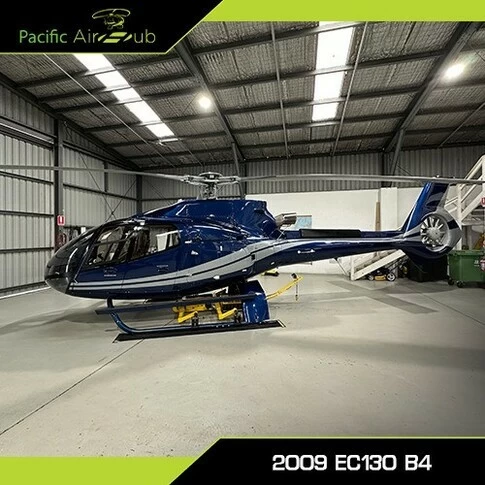
Specifications
Aircraft Details
- Model: EC130B4
- Configuration: VIP passenger
- Air Conditioning: RSG Air Conditioning System
- Engine Type: Arriel 2B1
- Total Airframe Hours: 2,915 hours
- Avionics:
- GPS/NAV/COM: GTN650H
- NAV/COM: KX165A
- Transponder: GTX330
- Audio: GMA350H
- ELT: KANNAD
- TCAS: TAS600
- Additional Features:
- Aerometals IBF
- Cargo Cheeks
- Fixed provisions for floats
- Bose headsets
- Interior: Tanned leather seats, brown carpeting
- Exterior: Dark metallic blue with silver accents
- Engine Module Times Remaining:
- Module 1: 584 hours
- Module 2: 584 hours
- Module 3: 584 hours (10 months calendar time remaining)
- Module 4: 584 hours
- Module 5: 584 hours
- Freewheel Assembly: 584 hours remaining
About this Model
Overview
The Airbus EC 130B4 (H130 family) is a single-engine light helicopter known for its roomy cabin, strong out-of-ground-effect performance for its class, and a low-noise profile that supports tourism, private transport, and utility work. It is commonly configured for passenger operations with wide external visibility, making it a frequent choice where cabin experience and community noise considerations matter alongside simple single-engine operating economics.
Mission Fit
The EC 130B4 fits best into short-to-medium-range helicopter missions where passenger comfort, straightforward loading, and operating simplicity matter. It can be equipped for specialized roles, but buyers should align intended use with the specific aircraft’s certification basis and installed equipment (VFR/IFR avionics, mission kits, and weight-and-balance configuration).
Cabin
Cabin design emphasizes openness and visibility, with a flat floor and seating typically arranged to maximize passenger comfort and sightseeing sightlines. The type’s fenestron (shrouded tail rotor) and noise-focused design contribute to a calmer cabin and reduced perceived noise footprint outside, which can be important for tour routes and urban/suburban operations. Practical access through large doors supports passenger turnover and loading in high-cycle environments.