

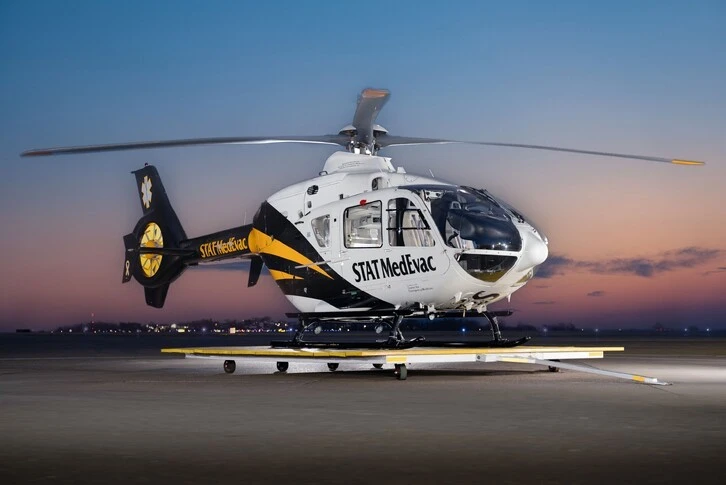
Specifications
Broker
Aircraft Details
- Model: AIRBUS EC135T2+
- Configuration: Single Pilot IFR, NVG EMS interior
- Center panel display system
- Air conditioning system by Metro
- Tanis heater system
- Engines: Safran Arrius SB2
- Engine #1: 11,774 TSN, 11,941 cycles
- Engine #2: 6,492 TSN, 7,135 cycles
- Avionics:
- SPIFR/NVG EMS completion by Metro
- Garmin GNS 430 and GNS 530 Nav/Comm
- KR-21 marker beacon
- Honeywell DNE
- Dual GTX 33ES transponders with ADSB Out
- Weather radar: Honeywell ART-2000 & KMD-850
- Interior features:
- Metro EMS install with medical floor and litter
- Aft facing and stowable seats
- Cascade oxygen system
- Medical suction and inverter systems
- Window storage and medical panel
- Additional equipment:
- Saft battery 40 AH, 24 V
- Pulse chip detector
- ASU supplemental lighting system
- Skytrac satellite tracking system
- EPGWS
- Artex C406-NHM ELT system
- Optional EMS equipment available.
About this Model
Overview
The Airbus EC135 is a light, twin-engine helicopter designed around low external noise, straightforward single-pilot operations (where approved), and a versatile cabin that can be configured for passengers, medical equipment, or mission systems. It is commonly selected where a balance of safety redundancy, urban/community acceptance, and rapid reconfiguration matters more than outright payload or long-range cruise performance.
Mission Fit
The EC135 tends to fit missions built around frequent legs, fast turnarounds, and operations into space-constrained sites such as hospital pads, city heliports, and remote clearings. It is less suited when the mission is dominated by maximum payload, long overwater legs, or sustained hot-and-high performance with a full cabin and large fuel reserves.
Cabin
Cabin layout depends heavily on role. In passenger configurations, the EC135 typically provides club-style seating options with large doors that simplify boarding. In HEMS configurations, the cabin is shaped for medical access and equipment mounting, prioritizing caregiver working space and patient loading over passenger amenities. Noise and vibration levels are generally managed to support headset-free communication in some mission profiles, though comfort varies by interior package and rotor/engine variant.