

Specifications
Broker
Aircraft Details
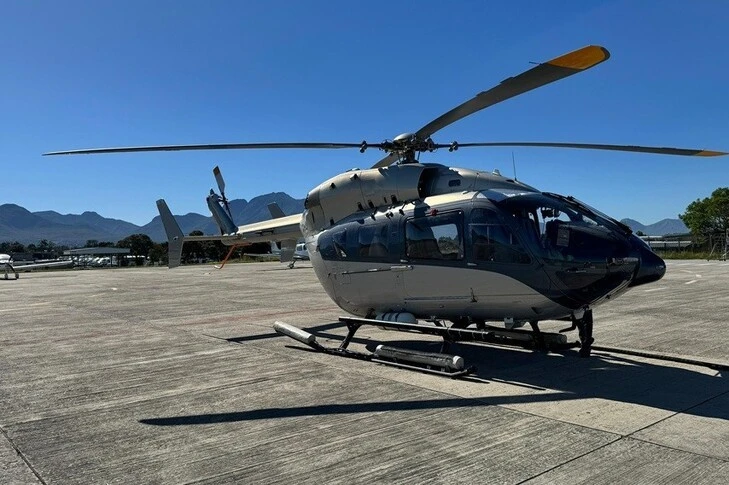
- Model: EC145/BK117C2
- Type: Corporate/Utility helicopter
- Flight Rules: IFR
- Dual IFR Pilot Instrument equipped
- 3-Axis Auto Pilot
- Air Conditioning System (STC)
- Basic Sound Proofing
- Floats (FP+RP)
- Hoist (FP)
- Dual Cargo Hook System (FP)
- M’ARMS CVFDR
- MEGHAS - SMD-45 H-NVG x4
- Corporate interior with leather upholstered passenger seats (8 seats)
- Engines under SBH Program (transfer not included)
- Additional avionics include:
- VOR/ILS/MKR Navigation System
- Flight Navigation Management System – CMA 3000
- VHF-NAV x2 & UHF-NAV x2
- Transponder – Mode S – MST 67A
- Color Weather Radar – RDR 2000
- Moving Map – EURONAV IV – RN6
- Additional equipment includes:
- Dual Flight Controls
- Bleed Air Heating System
- Landing and Search Light (400/200W)
- Strobe Lights
- HUMS Control P.
About this Model
Overview
The Airbus EC145 (BK117 C2) is a light, twin‑engine helicopter commonly selected for missions that need a practical cabin, strong OEI (one‑engine‑inoperative) capability, and straightforward reconfiguration between passengers, medical interior, and cargo. Its defining feature is a flat-floor cabin with wide sliding side doors and rear clamshell doors, supporting stretcher loading, bulky equipment, and rapid turnarounds. Typical operators include HEMS, law enforcement, utility/inspection, and corporate or offshore shuttle missions where a light twin is preferred for redundancy and operational flexibility.
Mission Fit
The EC145 is generally a short- to mid-range rotorcraft platform used for high-cycle, day-to-day missions where access, cabin flexibility, and twin-engine redundancy matter more than cruise speed. It fits well in mixed environments (urban rooftops, hospitals, confined LZs) and supports rapid role changes. It is less suited to missions that are dominated by maximum hook load, very long legs, or operations that consistently push hot/high margins without performance planning.
Cabin
The cabin is designed around a flat floor and easy access rather than luxury fit-and-finish. Seating and interiors vary widely by role: corporate shuttle configurations prioritize passenger seating and noise treatments; HEMS/public-service configurations prioritize equipment mounts, stretcher space, and crew workflow. Large side doors and rear clamshell doors are a practical advantage for loading patients, bicycles/ski gear, or mission equipment, and for working in tight landing zones.