

Specifications
Broker
Aircraft Details
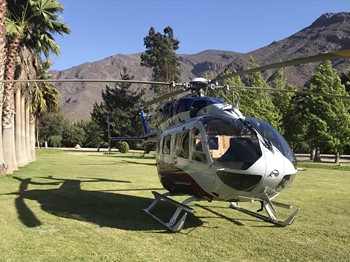
• Low hours, one-owner since new, always hangared, Airbus Service Center maintained
• Corporate configuration for 10 seats (9 passengers + 1 pilot or 8 passengers + 2 pilots)
• Flat passenger cabin floor, premium saddle-color leather interior, soundproofed executive cabin
• Dual controls, single/dual pilot IFR certified, NVG compatible/capable cockpit
• Thales MEGHAS/FCDS glass cockpit, 2 x Garmin GNS 430 GPS/Nav/Com, Honeywell KRA 405B radar altimeter
• Airbus AFCS autopilot, Ryan TCAD9900BX traffic alert system, Garmin GTX 330 Mode S transponder
• 2 x Safran Arriel 1E2 engines, each with 1,186 hours since new
• Main rotor blade time remaining: 23,813 hrs; tail rotor blade time remaining: 8,113 hrs
• No incidents/exceedances, no damage history, complete records since new
• Air conditioning, bleed air heater, wire strike protection, 400W landing/search light, dual hydraulic boost system
• Two passenger sliding doors, two rear hinged clamshell doors, club seating arrangement, long boarding steps
• All ADs and mandatory SBs up to date, airworthy
About this Model
Overview
The Airbus EC145 (BK117 C2) is a light, twin‑engine helicopter commonly selected for missions that need a practical cabin, strong OEI (one‑engine‑inoperative) capability, and straightforward reconfiguration between passengers, medical interior, and cargo. Its defining feature is a flat-floor cabin with wide sliding side doors and rear clamshell doors, supporting stretcher loading, bulky equipment, and rapid turnarounds. Typical operators include HEMS, law enforcement, utility/inspection, and corporate or offshore shuttle missions where a light twin is preferred for redundancy and operational flexibility.
Mission Fit
The EC145 is generally a short- to mid-range rotorcraft platform used for high-cycle, day-to-day missions where access, cabin flexibility, and twin-engine redundancy matter more than cruise speed. It fits well in mixed environments (urban rooftops, hospitals, confined LZs) and supports rapid role changes. It is less suited to missions that are dominated by maximum hook load, very long legs, or operations that consistently push hot/high margins without performance planning.
Cabin
The cabin is designed around a flat floor and easy access rather than luxury fit-and-finish. Seating and interiors vary widely by role: corporate shuttle configurations prioritize passenger seating and noise treatments; HEMS/public-service configurations prioritize equipment mounts, stretcher space, and crew workflow. Large side doors and rear clamshell doors are a practical advantage for loading patients, bicycles/ski gear, or mission equipment, and for working in tight landing zones.