

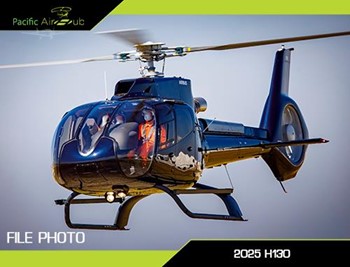
Specifications
Aircraft Details
- Model: H130
- Condition: New
- Configuration: Corporate / Utility
- Engine Type: Safran Arriel 2D
- Airframe Hours: New
- Avionics Package: VFR Day and Night
- Emergency Locator Transmitter: Kannad Integra AP-H
- Radios:
- VHF/VOR/LOC/GS: Garmin GNC 255A
- Intercom System: Garmin GMA 35
- Transponder (Mode S): Garmin GTX 335R - ADS-B Out
- VHF/VOR/LOC/GS/GPS: Garmin GTN650XI
- Avionic Display System: Garmin G500H TXI
- Electronic Standby Instrument: EFD
- Multifunction Display: Dual Screen Vehicle and Engine Multifunction Display (VEMD)
- Additional Equipment:
- Enhanced Engine Air Particle Separator
- Dual Controls
- Enhanced Air-Conditioning System
- 200 A Starter-Generator Upgrade
- Short Protective Skid Shoes
- Dual External Cargo Sling Mirrors
- External Cargo Sling (1,500 kg – Fixed Parts)
- Exterior Color: Royal Blue
- Interior: Factory Standard Interior
About this Model
Overview
The Airbus H130 is a single-engine, high-performance helicopter in the Ecureuil family, positioned for operators who need a roomy, quiet cabin in a simple, proven airframe. It is commonly selected for sightseeing, private transport, and utility missions where visibility, a flat cabin floor, and straightforward ground handling matter as much as speed. Its Fenestron shrouded tail rotor and cabin-focused design emphasize community noise reduction and passenger experience over maximum cruise performance.
Mission Fit
The H130 fits missions that prioritize cabin access, visibility, and low perceived noise in populated areas. It works well for short-to-medium legs, frequent cycles, and operations where loading flexibility and passenger management are important. For missions dominated by instrument flying, all-weather schedules, or extended legs at higher cruise speeds, the type’s typical equipment level and single-engine profile may be limiting versus alternatives.
Cabin
The cabin is designed around passenger throughput and comfort, with a wide, flat floor and large windows that support sightseeing and executive transport. Seating is typically arranged to maximize forward visibility and reduce motion sensitivity for passengers, and the aircraft is commonly configured for higher passenger counts than many peers in the same general class, depending on interior and mission equipment. Large doors and a practical baggage area support quick turns for tour and shuttle work.