

Specifications
AI Description
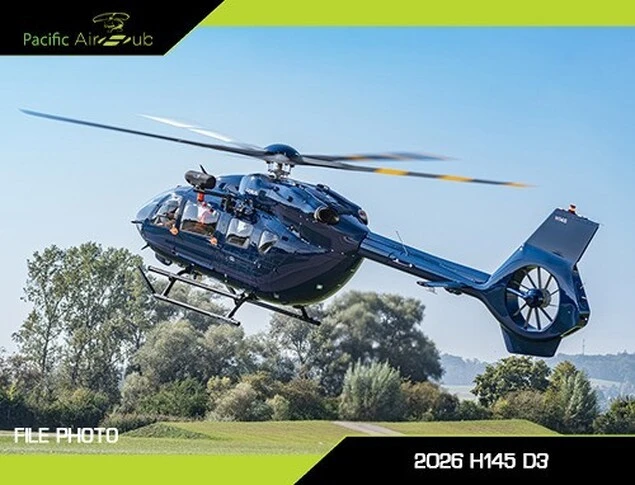
- Aircraft type: AIRBUS H145
- Delivery: Q3 2026
- Mission configuration options: HEMS or Corporate
- Engine type: Safran Arriel 2E
- Time since new: 0 hours
- Avionics package: SP/DP IFR GTN 750XI, Lynx, ACU6100
- Features:
- Helicopter Terrain Awareness and Warning System (H-TAWS)
- Synthetic Vision System (SVS)
- Cockpit camera
- Headset A30 ANR Lemo, Bluetooth capability
- USB power sockets in cabin and cockpit
- Weather radar RDR 2000 (Honeywell)
- Wireless intercom system
- Interior:
- Height adjustable pilot and copilot seats
- Multi-purpose fittings in cabin
- Soundproofing kit
- Clamshell doors
- Additional equipment:
- First aid kit
- Emergency Locator Transmitter (ELT)
- Air conditioning system (ACS)
- Internal long-range fuel tank system
- Inlet Barrier Filter (IBF) system
- Dual cargo hook system
- Exterior:
- Custom color choice until end of March, otherwise painted yellow
- Enhanced exterior painting option available
About this Model
Overview
The Airbus H145 (BK117 D-2 family) is a light twin-engine helicopter positioned for operators who need IFR-capable utility with a cabin designed around rapid reconfiguration. Its shrouded tail rotor (Fenestron) and four-axis autopilot architecture support stable handling in busy terminal areas and on demanding EMS or offshore-style profiles, while the large clamshell rear doors and flat-floor cabin favor loading, medical layouts, and mixed passenger/mission equipment use.
Mission Fit
The H145 is most effective where the mission alternates between passenger movement and work tasks—especially when cabin access and fast role changes matter. It suits routes and duty cycles that prioritize dispatch reliability, instrument capability, and safe handling in confined or obstacle-rich environments over maximum cruise speed or payload at the far end of the envelope.
Cabin
The cabin is designed around a relatively wide cross-section for the class, enabling seating, medical, or utility layouts without the constrained feel common to smaller twins. Large side doors plus rear clamshell doors support straightforward passenger boarding and stretcher or cargo loading. Noise and vibration levels depend on configuration and mission kit, but the type is widely used where crew communication and patient-care workspace are important.