

Specifications
Broker
Aircraft Details
• Located in Houston, Texas; operated under Part 135 certification
• 3,554 total airframe hours, 3,186 landings
• Engines: TFE731-40R-200G on EAP Comprehensive program (3,512/3,540 hours)
• APU: Garrett GTCP 36-150W (2,068 hours), on EAP plan
• Fresh C-check due May 2026
• Avionics: Collins Pro Line 4 suite, dual FMS, dual comm/nav, TCAS II, EGPWS, WAAS/LPV, ADS-B Out, high-speed data/WiFi
• Additional features: extended range tanks, winglets, lead acid batteries, external baggage, super soundproofing, additional cabin power supply
• Interior: refurbished 2021, 8-passenger executive layout, Andres gray leather, musket pinstripe carpet, ebony woodwork, forward refreshment center, aft externally-serviceable lav, Tapis Ultraleather headliner
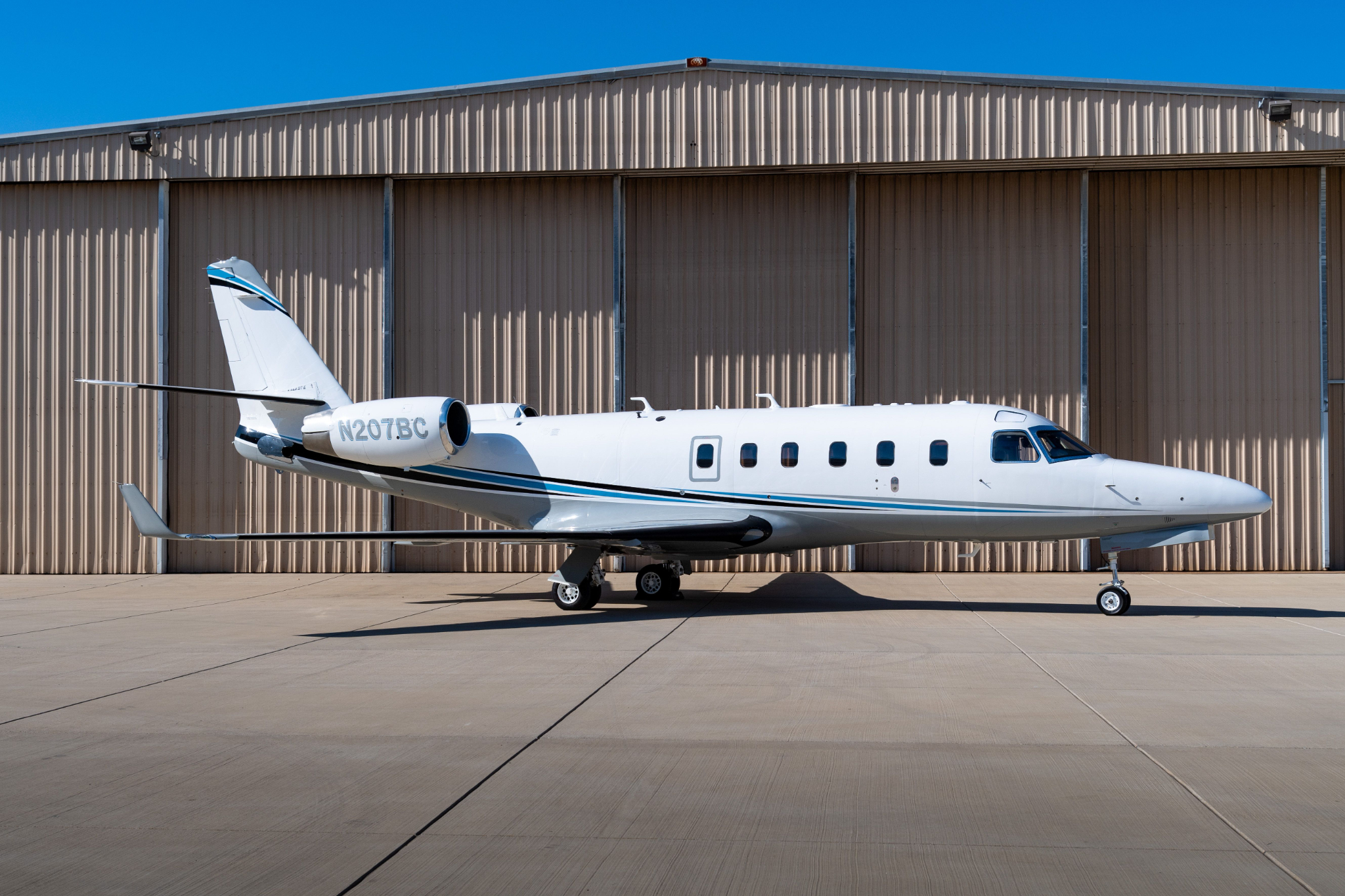
• Exterior: new paint by West Star Aviation in March 2022 (Matterhorn white, gray, blue haze, black trim)
• Equipped with RVSM, externally-serviceable lav, anti-skid, single-point refueling, thrust reversers, weather radar, and more.
About this Model
Overview
The IAI Astra 1125SPX is a later Astra variant aimed at operators who want a straightforward, long-range business jet with intercity and some transcontinental reach. It is commonly evaluated as a cost- and capability-bridge between lighter midsize jets and larger-cabin aircraft, with performance that can support nonstop city pairs that strain shorter-range designs. Buyers typically weigh it for mission utility and acquisition simplicity rather than the newest cabin tech.
Mission Fit
In service, the 1125SPX tends to fit missions where a small-to-mid group needs to go farther than typical midsize jets without stepping up to a true large-cabin aircraft. It can be a practical choice for mixed-use corporate flying, owner-operation with professional support, or charter profiles that emphasize range and payload flexibility over premium cabin amenities.
Cabin
Cabin experience is typical of late-1990s/early-2000s super-midsize design: a functional club seating layout, an enclosed aft lav on many aircraft, and a forward galley that supports light catering. Perceived space is strongly influenced by specific interior refurbishment, seat track positioning, and baggage access arrangements. Noise, connectivity, and lighting depend heavily on upgrades performed over the aircraft’s life.