

Specifications
Aircraft Details
• Maintained by Trimec Aviation, maintenance scheduled for March 2026
• Engines: 2 x Honeywell TFE731-40R-200G (5,264 hrs, 3,597 cycles, on MSP)
• APU: Honeywell GTCP36-150(W), 3,490 hrs, on MSP
• Avionics: Collins Pro Line 4 suite, dual Universal UNS-1EW FMS w/GPS/SBAS, dual Collins ADF-462, dual VHF-422C radios, Collins FCS-4005 autopilot, dual DME-442, SATCOM Iridium, Collins HF-9000 w/SELCAL, Honeywell Mark V EGPWS/TAWS, Collins TCAS-94 II, dual TDR-94D transponders, Collins WXR-850 radar
• Features: L-3 Wi-Fi (2023), ADS-B Out, winglets, anti-skid brakes, single-point refueling, thrust reversers, extended range tank (not installed), Canadian mods, LED pulse/taxi lights, 77 cu ft oxygen system, 350VA inverter, baggage compartment w/lighting & heating
• Interior: Accord Aviation (2023), executive configuration, 8 passengers + belted lav seat, tan leather, forward galley, high-gloss cabinetry, brushed aluminum fixtures, aft externally-serviceable lavatory
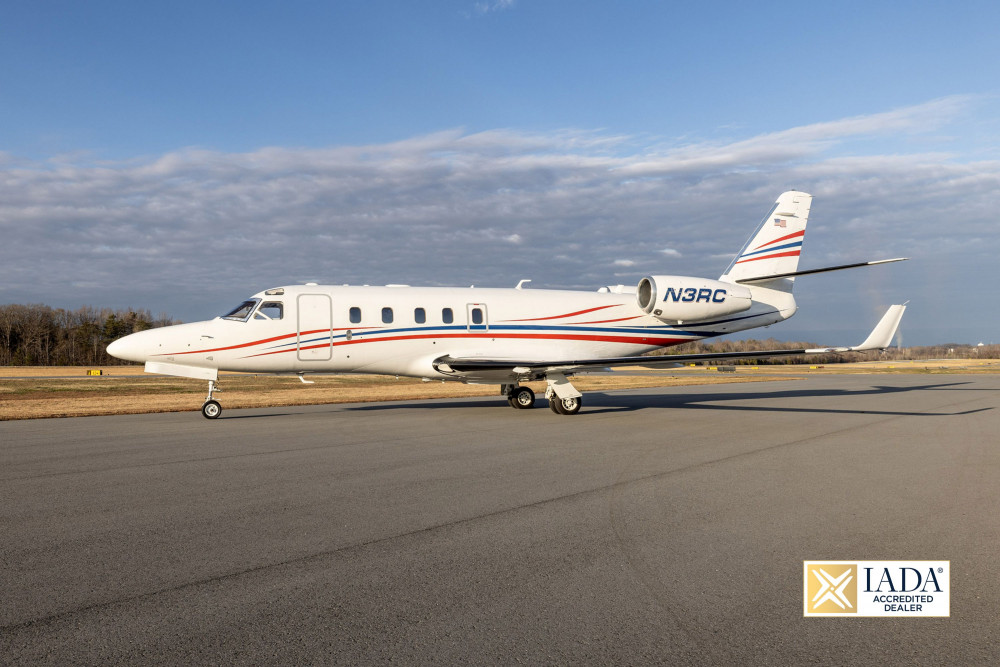
• Exterior: Eagle Aviation paint (2021), white w/red and black stripes
• Always hangared, RVSM certified, Gogo AVANCE L3 Wi-Fi installed 2023
About this Model
Overview
The IAI Astra 1125SPX is a later Astra variant aimed at operators who want a straightforward, long-range business jet with intercity and some transcontinental reach. It is commonly evaluated as a cost- and capability-bridge between lighter midsize jets and larger-cabin aircraft, with performance that can support nonstop city pairs that strain shorter-range designs. Buyers typically weigh it for mission utility and acquisition simplicity rather than the newest cabin tech.
Mission Fit
In service, the 1125SPX tends to fit missions where a small-to-mid group needs to go farther than typical midsize jets without stepping up to a true large-cabin aircraft. It can be a practical choice for mixed-use corporate flying, owner-operation with professional support, or charter profiles that emphasize range and payload flexibility over premium cabin amenities.
Cabin
Cabin experience is typical of late-1990s/early-2000s super-midsize design: a functional club seating layout, an enclosed aft lav on many aircraft, and a forward galley that supports light catering. Perceived space is strongly influenced by specific interior refurbishment, seat track positioning, and baggage access arrangements. Noise, connectivity, and lighting depend heavily on upgrades performed over the aircraft’s life.