

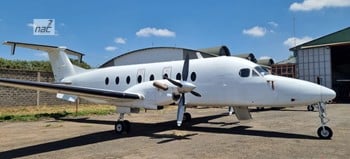
Specifications
Broker
Aircraft Details
- Model: Beechcraft 1900D
- Condition: Used
- Engine 1: PT6A-67D
- Hours Since New: 732.7
- Cycles Since New: 766
- Hours to Overhaul: 5,267.3
- Engine 2: PT6A-67D
- Hours Since New: 1,373.4
- Cycles Since New: 1,147
- Hours to Overhaul: 4,626.6
- Propellers:
- Left Prop:
- Time Since New: 30,247.6
- Hours Since Overhaul: 2,705.5
- Hours to Overhaul: 1,294.5
- Calendar Due: 14-Sep-26
- Right Prop:
- Time Since New: 13,030.1
- Hours Since Overhaul: 820.9
- Hours to Overhaul: 3,179.1
- Calendar Due: 23-Jul-30
- Avionics:
- ADF: Collins ADF-462
- NAV: Collins VIR-32
- DME: Collins DME-42
- GPS: Bendix King KLN-90B (2 units)
- TCAS II: Bendix King TPU-67B
- EGPWS/TAWS: Honeywell Mark VI
- Interior:
- Cabin Seats: 19 Passengers
- Flight Deck Seats: 2 Crew
- Baggage Compartment available
About this Model
Overview
The Beechcraft 1900D is a pressurized, twin‑engine commuter turboprop designed around high-cycle, short-sector flying with fast turnarounds. It is commonly configured for 19 passengers to fit typical commuter-category operating requirements, and it emphasizes dispatch reliability, straightforward systems, and operation into smaller airports with limited infrastructure. Buyer interest is typically driven by scheduled or shuttle service needs, crew-and-cargo utility, and a preference for an aircraft with broad in-service history.
Mission Fit
The 1900D aligns with missions that value cycle efficiency: multiple legs per day, short stage lengths, and consistent climb/cruise performance in the flight levels thanks to pressurization. It can also support mixed-use roles (passengers with limited baggage, light cargo) where operators need a certified, airline-style platform rather than a bespoke VIP cabin. Missions that prioritize premium comfort, large baggage volume, or long nonstop range are generally better served by larger regional turboprops or business aircraft.
Cabin
The “D” model’s defining cabin feature is its stand-up-height fuselage relative to earlier 1900 variants, improving boarding and in-cabin movement for a commuter layout. Seating is typically arranged in a high-density commuter configuration; comfort is functional, with cabin noise and vibration consistent with legacy turboprops. Environmental control is supported by pressurization for higher-altitude cruise, but the overall experience is oriented toward utility and short duration flights rather than executive refinement.