

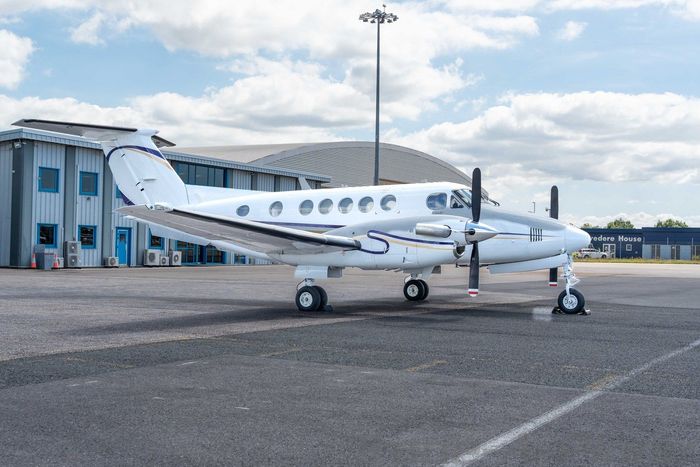
Specifications
AI Description
- Engine Type: Pratt & Whitney PT6A-41
- Left Engine: 363 hours since overhaul, total time 15,764 hours
- Right Engine: 64 hours since overhaul, total time 15,590 hours
- Propellers: 4-blade McCauley, left prop 1,244.8 hours since overhaul, right prop 1,375.7 hours since overhaul
- Avionics:
- Garmin GTN 750 GPS/NAV/COM
- Garmin GNS430W GPS/NAV/COM
- ADF60
- Sperry SPZ200 autopilot
- Dual Collins DME40
- Kannad 406AF ELT
- Dual Garmin GTX330ES transponder
- GWX70 weather radar
- GTS 800 TAS
- Dual PMA 7000 audio panel
- Interior:
- Medevac configuration with LifePort PLUS system
- Capacity: 4 passengers (single LifePort) or 3 passengers (dual LifePort)
- Coin-dot interior covering
- Exterior: Matterhorn white with purple and gold striping
- Modifications: Raisbeck Ram Air Recovery System, dual aft body strakes
- Maintenance: Landing gear overhaul completed April 2025, multiple phase inspections scheduled through 2025
- Airworthy Status: Yes
About this Model
Overview
The Beechcraft King Air 200 is a pressurized, twin-engine turboprop designed around reliable regional travel with the ability to use shorter runways than many light jets. It is commonly selected for mixed missions—business transport, government, medical, and special-mission roles—because it combines a practical operating footprint with a cabin that can be configured for passengers, equipment, or quick-change layouts depending on installation.
Mission Fit
The 200 series is well suited to point-to-point flying in the roughly 300–900 nm band, especially when the trip involves smaller airports or runway-length constraints. It is typically less compelling when the primary value driver is highest cruise speed, very high-altitude weather avoidance, or a large-cabin jet experience for longer legs.
Cabin
The King Air 200 cabin is a stand-up-in-the-aisle-for-some, pressurized turboprop cabin with club-style seating common in passenger configurations. It typically prioritizes practicality: good baggage access, large entry door, and a cabin that can be arranged for passengers, workstations, or mission equipment. Cabin noise and vibration are characteristic of turboprops and can vary significantly with interior refurbishment, insulation, and propeller/engine condition.