

Specifications
Aircraft Details
• Garmin G1000NXi avionics upgrade with dual PFDs (GDU1050A), MFD (GDU1550), dual Garmin GIA63W, dual GTX3000 Mode S transponders, Garmin GWX70 weather radar, and Garmin GTS-825/820 TCAS II
• Fresh Phase 1-4 inspection and freshly overhauled MT-5 blade composite propellers (0 hours since overhaul as of June 2026)
• Aerial survey and photogrammetry equipped; ADS-B Out, WAAS/LPV, and EASA compliant
• Airframe total time: 14,185 hours, 17,792 landings; maintenance tracking via Traxxall
• Engine 1: Pratt & Whitney PT6A-41, 624 hours since overhaul, 13,958 total hours, 11,999 cycles; Engine 2: PT6A-41, 1,154 hours since overhaul, 4,741 total hours, 4,666 cycles
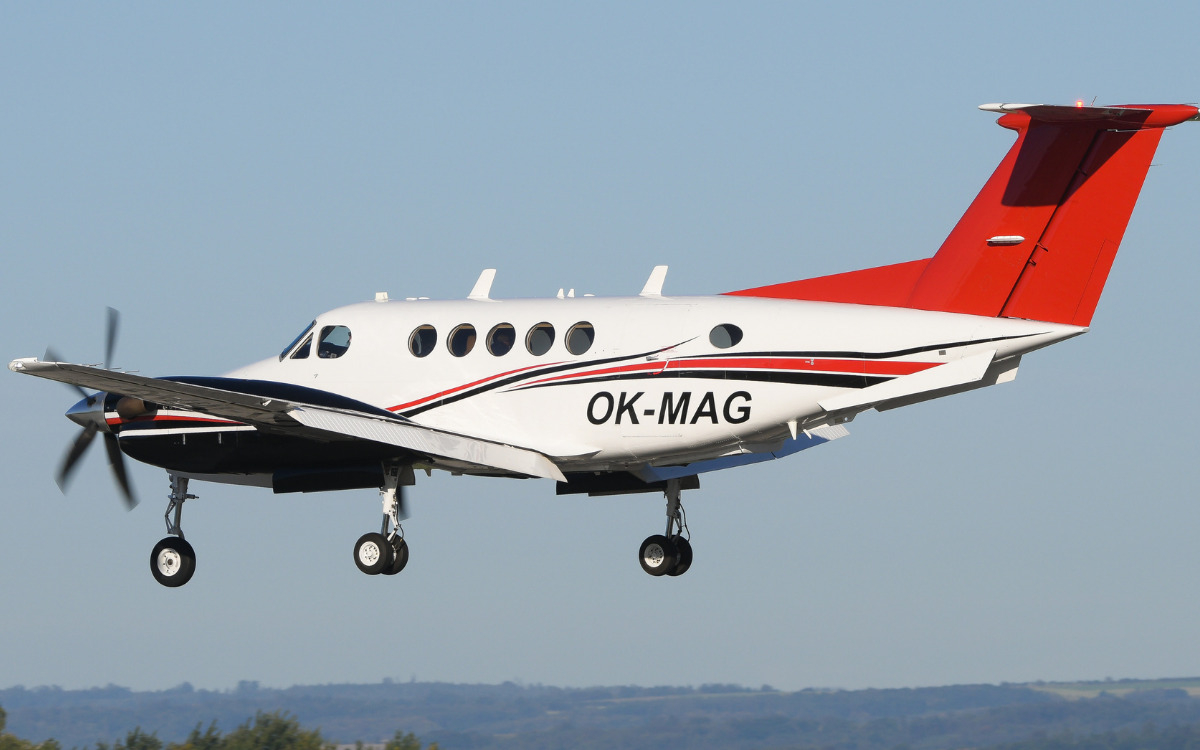
• New exterior paint in 2023: white with black and red stripes, red stabilizer
• Executive interior: 6-passenger configuration, two aft-facing seats, four-place club seating, non-belted aft lavatory
• Equipped with Raisbeck dual aft body strakes, lead acid battery, first aid kit, crash axe, flashlight, fire extinguisher, airstair door, emergency escape hatches
• Self-illuminating emergency exit signs and aft lavatory
• Maintained to EASA Part 145 standards
About this Model
Overview
The Beechcraft King Air 200 is a pressurized, twin-engine turboprop designed around reliable regional travel with the ability to use shorter runways than many light jets. It is commonly selected for mixed missions—business transport, government, medical, and special-mission roles—because it combines a practical operating footprint with a cabin that can be configured for passengers, equipment, or quick-change layouts depending on installation.
Mission Fit
The 200 series is well suited to point-to-point flying in the roughly 300–900 nm band, especially when the trip involves smaller airports or runway-length constraints. It is typically less compelling when the primary value driver is highest cruise speed, very high-altitude weather avoidance, or a large-cabin jet experience for longer legs.
Cabin
The King Air 200 cabin is a stand-up-in-the-aisle-for-some, pressurized turboprop cabin with club-style seating common in passenger configurations. It typically prioritizes practicality: good baggage access, large entry door, and a cabin that can be arranged for passengers, workstations, or mission equipment. Cabin noise and vibration are characteristic of turboprops and can vary significantly with interior refurbishment, insulation, and propeller/engine condition.