

Specifications
Broker
Aircraft Details
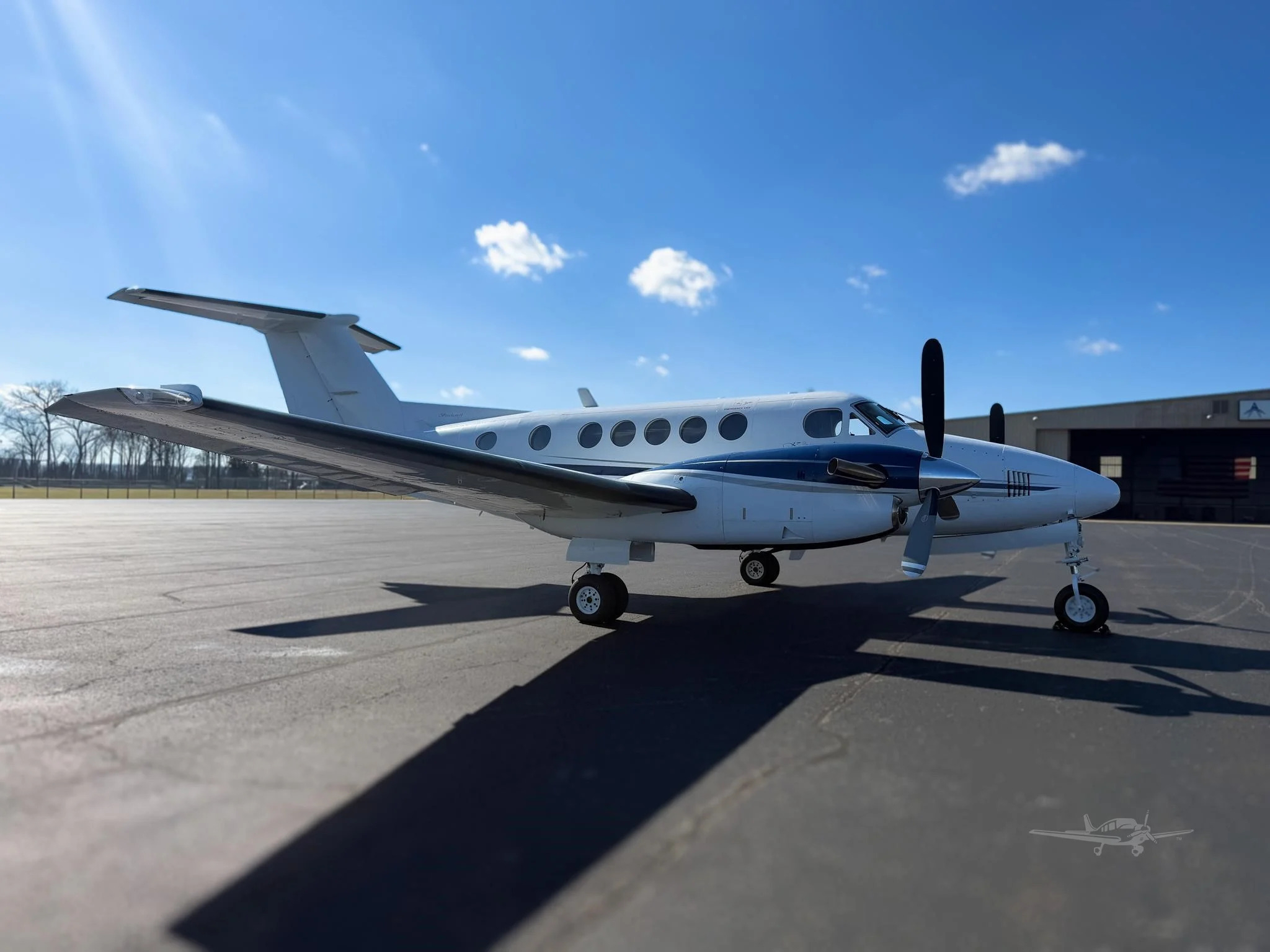
- Model: BEECHCRAFT KING AIR 200
- Engine: 2 x Pratt & Whitney PT6A-42
- Engine Time: 2,502.6 hours SNEW each
- TBO: 3,600 hours
- Hot Section Time: 658.2 hours each
- Blackhawk XP42 upgrade
- Propellers: 2 x Hartzell 3-blade
- Prop Time: 330 hours SOH each
- Avionics:
- Garmin G600 TXI (Primary Flight Display)
- Garmin GTN 750XI & GTN 625 (GPS)
- S-TEC 3100 (Autopilot)
- ADS-B equipped
- WAAS and LPV capable
- Interior:
- Configuration: Executive, 7 seats
- Aft lavatory, beige leather seating
- New carpeting installed in 2016
- Exterior:
- Painted in 2016, colors: Matterhorn White, Aristo Blue, Medium Silver Metallic
- Maintenance:
- Phase 1&2 inspections completed by 10 DEC 2025
- Phase 3&4 inspections completed by 21 FEB 2026
- Landing Gear Overhaul completed SEP 2023
- Additional Equipment: High flotation gear, Frakes exhaust stacks, tinted windows, engine fire extinguishers
About this Model
Overview
The Beechcraft King Air 200 is a pressurized, twin-engine turboprop designed around reliable regional travel with the ability to use shorter runways than many light jets. It is commonly selected for mixed missions—business transport, government, medical, and special-mission roles—because it combines a practical operating footprint with a cabin that can be configured for passengers, equipment, or quick-change layouts depending on installation.
Mission Fit
The 200 series is well suited to point-to-point flying in the roughly 300–900 nm band, especially when the trip involves smaller airports or runway-length constraints. It is typically less compelling when the primary value driver is highest cruise speed, very high-altitude weather avoidance, or a large-cabin jet experience for longer legs.
Cabin
The King Air 200 cabin is a stand-up-in-the-aisle-for-some, pressurized turboprop cabin with club-style seating common in passenger configurations. It typically prioritizes practicality: good baggage access, large entry door, and a cabin that can be arranged for passengers, workstations, or mission equipment. Cabin noise and vibration are characteristic of turboprops and can vary significantly with interior refurbishment, insulation, and propeller/engine condition.