

Specifications
Aircraft Details
- Engines: 2 x Pratt & Whitney PT6A-52
- Engine Time Remaining till Overhaul: ~2800 hours
- Avionics: Rockwell Collins Pro Line Fusion with synthetic vision, graphical flight planning, integrated electronic charts, weather radar, GPS Collins 4000S with WAAS/LPV, dual FMS Collins FMC-3000, dual VHF COMM and NAV, dual DME, dual mode S transponder, ADF, TCAS II, and TAWS A.
- Interior Configuration: 4-place club, 2 rear-facing seats, side-facing belted toilet, 2 optional foldable seats.
- Interior Features: Griege leather seating, gray lustre stretchcrepe headliner, carbon leather sidewalls, ebony flight carpeting, studio teak laminate cabinetry.
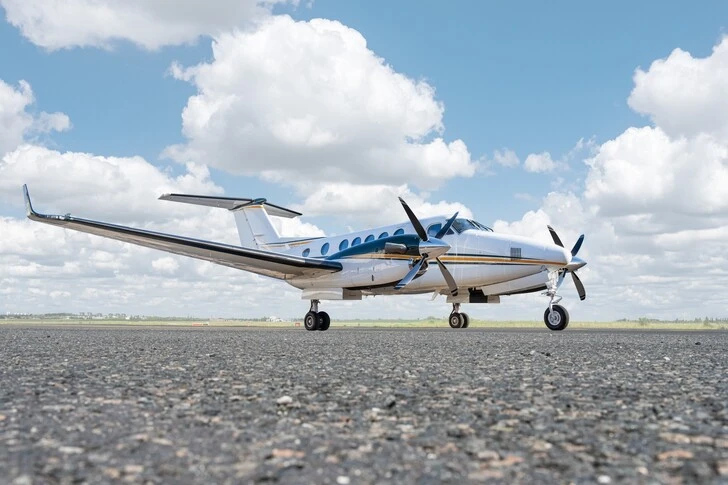
- Exterior: White with green and orange stripes.
- Additional Equipment: Pro Line Fusion software upgrade, Gogo Aviator 200 SwiftBroadband satellite Wi-Fi system, BLR 200 series winglets, Raisbeck EPIC performance kit (swept blade turbofan propellers, ram air recovery system, enhanced performance leading edges, dual aft body strakes).
- Inspection Status: Airworthy.
About this Model
Overview
The King Air 250 is a pressurized, twin‑engine turboprop positioned between legacy King Air utility and light-jet-like mission capability. It emphasizes flexible airport access (including shorter runways), strong climb and cruise performance for a turboprop, and a modern cockpit suite geared toward single-pilot or two-pilot operations depending on equipment and operator requirements. Buyers typically consider it when they want reliable regional-to-midrange trip capability with the ability to operate into airports that may be impractical for many jets.
Mission Fit
The aircraft fits missions where schedule reliability, runway access, and climb to weather-avoiding altitudes matter more than maximum cruise speed. It is well suited to multi-stop days and destinations with limited infrastructure. If your trip profile is dominated by longer stage lengths where time-to-arrival is the overriding driver, a jet may better match expectations.
Cabin
The King Air 250 cabin is pressurized with a typical club-seating business layout, a belted lavatory area in many configurations, and a practical baggage solution suited to regional travel. Compared with many light jets, the turboprop cabin experience can include more noticeable propeller/engine noise and vibration, though comfort is highly dependent on specific interior, soundproofing options, and prop balance/maintenance. The main value is a usable cabin for teams and clients combined with the ability to use smaller airports and shorter runways.