

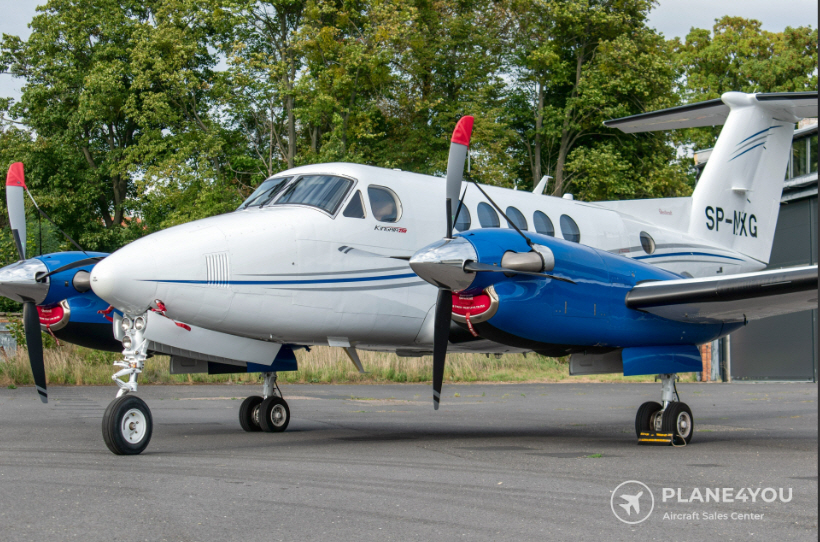
Specifications
Aircraft Details
- Model: Beechcraft King Air 250
- Low time: 600+ hours
- Raisbeck Platinum Performance Package
- EASA registered, used only for private flights
- 6-year inspection due by January 2025
- Engines: Pratt & Whitney Canada PT6A-52, both with 628 hours since new, TBO of 3600 hours
- Propellers: Hartzell HC-D4N-3A, both with 127 hours since major overhaul, TBO of 4000 hours
- Avionics: Rockwell Collins Pro Line Fusion, ADS-B equipped, dual FMS with WAAS/LPV
- Additional equipment: Gogo Aviator 200 Wi-Fi, synthetic vision technology, terrain awareness and warning system
- Interior: Corporate version, visual condition 9/10, Beechwood package, belted flushing aft lavatory
- Exterior: Visual condition 9/10, overall Matterhorn white with gloss gray and fighter blue stripes
- Maintenance: Part 145 compliant, all ADs up to date, complete logs available
- Availability: Immediate, no damage history, worldwide delivery possible
About this Model
Overview
The King Air 250 is a pressurized, twin‑engine turboprop positioned between legacy King Air utility and light-jet-like mission capability. It emphasizes flexible airport access (including shorter runways), strong climb and cruise performance for a turboprop, and a modern cockpit suite geared toward single-pilot or two-pilot operations depending on equipment and operator requirements. Buyers typically consider it when they want reliable regional-to-midrange trip capability with the ability to operate into airports that may be impractical for many jets.
Mission Fit
The aircraft fits missions where schedule reliability, runway access, and climb to weather-avoiding altitudes matter more than maximum cruise speed. It is well suited to multi-stop days and destinations with limited infrastructure. If your trip profile is dominated by longer stage lengths where time-to-arrival is the overriding driver, a jet may better match expectations.
Cabin
The King Air 250 cabin is pressurized with a typical club-seating business layout, a belted lavatory area in many configurations, and a practical baggage solution suited to regional travel. Compared with many light jets, the turboprop cabin experience can include more noticeable propeller/engine noise and vibration, though comfort is highly dependent on specific interior, soundproofing options, and prop balance/maintenance. The main value is a usable cabin for teams and clients combined with the ability to use smaller airports and shorter runways.