

Specifications
Aircraft Details
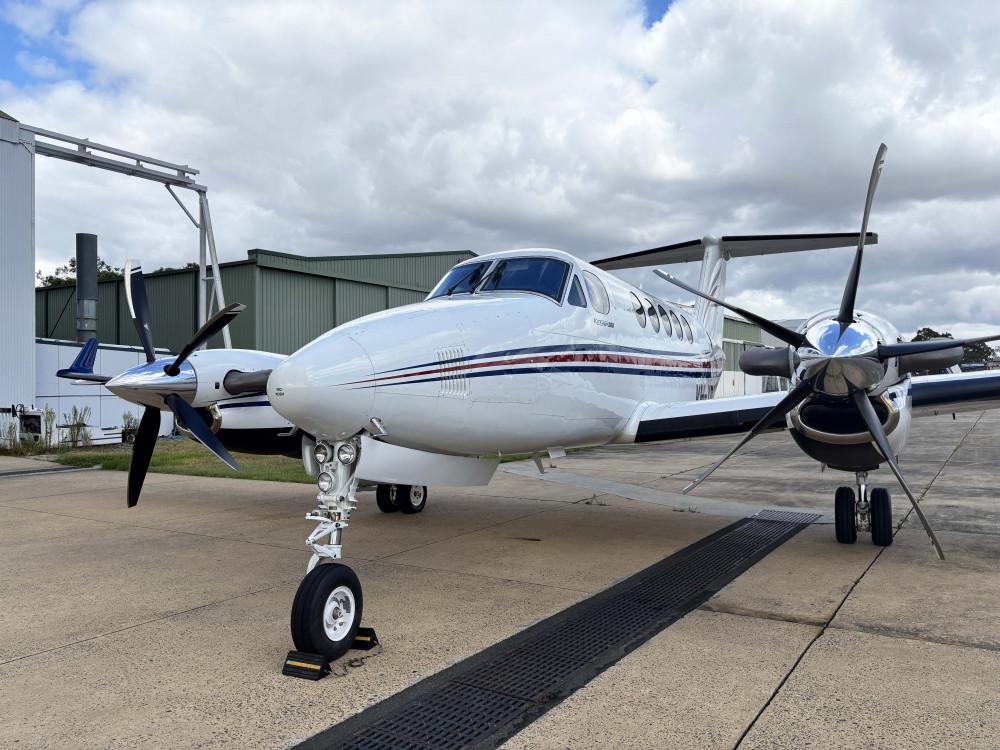
- Model: King Air 260
- Engine Model: PT6A-52
- Engine Time Since New: 992 hours (each engine)
- Engine TBO: 3600 hours
- Propeller Type: MT Five Bladed
- Propeller Time Since New: 698 hours (each propeller)
- Avionics: Rockwell Collins Pro Line Fusion
- Dual COM and NAV radios
- Solid-state Mode A/C/S transponders (ADS-B Out compliant)
- L3 Skywatch TCAS I
- Collins RTA-4112 MultiScan Radar
- Dual Integrated Collins FMS
- Cockpit Voice Recorder (120 minutes)
- iTAWS Class A
- Electronic Charts (subscription required)
- Synthetic Vision Technology
- Interior Features:
- Beechwood package with Toffee frieze carpet
- Cabin seating for six
- Refreshment center and two executive tables
- Aft belted flushing toilet
- 115V AC outlets
- Exterior: Matterhorn White with Elite Blue and Deep Red stripes
- Warranty: Airframe, Avionics & Engines until 3/3/2027
- Additional Equipment: Oceanic Package, Engine Fire Extinguisher System, High Float Main Landing Gear, Crown Wing Lockers
About this Model
Overview
The Beechcraft King Air 260 is a pressurized twin-turboprop positioned for operators who want King Air operating flexibility with an updated avionics suite and performance tailored to regional point-to-point flying. It fits missions where runway access, climb performance, and multi-role cabin use matter as much as cruise speed, while retaining the familiar King Air handling and systems architecture many flight departments and commercial operators already support.
Mission Fit
The 260 is typically selected for repeatable regional missions with payload flexibility and access to shorter or more constrained runways than many jets prefer. It is also a practical platform for operators balancing passenger comfort with utility needs such as baggage volume, special mission equipment, or quick reconfiguration—subject to the specific interior and certification basis of the aircraft.
Cabin
Cabin experience is characterized by a pressurized, stand-up-not-required environment with club-style seating options and a practical aisle width for in-flight movement relative to many small turboprops. Noise and vibration levels are typical of the class and are strongly influenced by propeller condition, balancing, and interior specification. Baggage and loading flexibility are key strengths, especially for mixed passenger-and-gear missions.