

Specifications
Aircraft Details
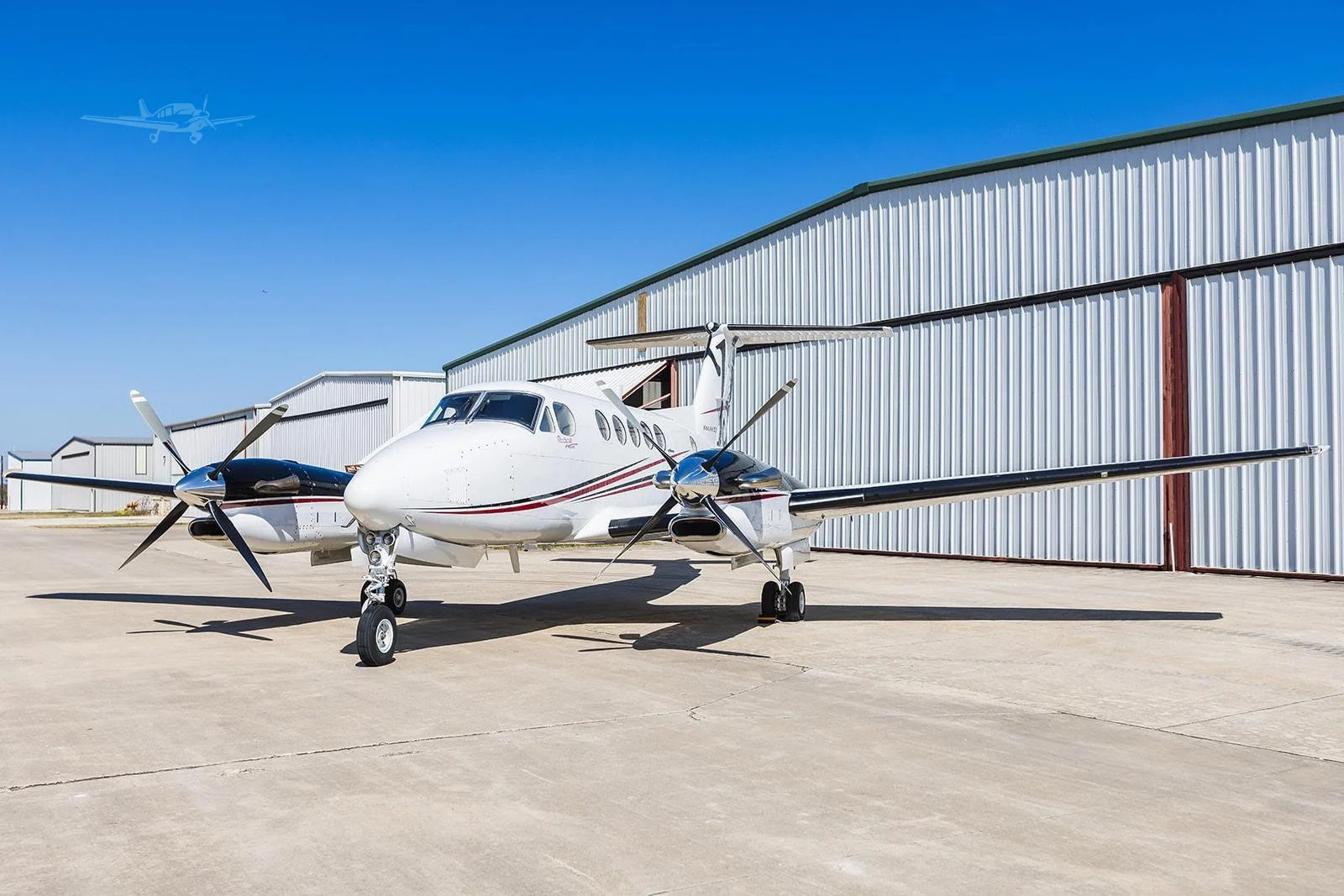
- Model: BEECHCRAFT KING AIR 300
- Type: Turboprop Aircraft
- Condition: Used
- Flight Rules: IFR
- Location: Greer, South Carolina
- Range: 1,500 NM
- Max Ramp Weight: 14,100 lb
- Max Takeoff Weight: 14,000 lb
- Max Landing Weight: 14,000 lb
- Fuel Capacity: 3,610 lb (538 gal)
- Complete Logs: Yes
- Landing Gear Overhaul: Yes
- Engines: 2 x PRATT & WHITNEY PT6A-60A
- Engine 1: 1,897.5 SMOH, TBO 3600, 7,704 cycles
- Engine 2: 1,995.6 SMOH, TBO 3600, 7,824 cycles
- Propellers: 4-blade HARTZELL
- Avionics: GARMIN G1000 NXI, ADS-B Equipped, WAAS, LPV, SVT
- Additional Equipment: Pressurized, FIKI, Oxygen System (77 cu ft)
- Interior: 10 seats, Executive configuration, Galley, Aft lavatory
- Exterior: Painted in 2017, Colors: Matterhorn white, black velvet metallic, deep red, Las Vegas gold
- Modifications: Dual aft body strakes, Ram air recovery, Enhanced performance leading edges
- Inspection Status: Airworthy, with recent maintenance items completed.
About this Model
Overview
The Beechcraft King Air 300 series (commonly referring to the King Air 350/350i family in many listings) is a pressurized, twin‑engine turboprop built around reliable regional performance, a stand-up style cabin for its class, and strong access to shorter and more constrained runways compared with many jets. It is typically selected for owners and operators who prioritize dispatch reliability, mixed-use utility, and the ability to operate into smaller airports while carrying a practical passenger load.
Mission Fit
This model is generally used for multi-stop regional days where airport access and schedule resilience matter. Its strengths show up when the mission includes shorter runways, variable weather, and a need to carry people plus bags without depending on major hubs. If most trips are long, nonstop city pairs where cruise speed dominates total trip time, a light or midsize jet may fit better.
Cabin
The King Air 300-class cabin is designed around practical comfort: pressurization for typical turboprop cruise altitudes, club-style seating in many configurations, and good baggage flexibility for its size. Cabin noise and vibration are generally higher than in comparable business jets, though later interior packages and operator-installed sound treatments can improve perceived comfort. Entry is via an airstair door, and many aircraft are configured to support easy loading for business, family, or mission equipment.