

Specifications
Aircraft Details
- Maintained under FAR Part 91 with extensive Phase 1-4 inspections completed in February 2013; landing gear inspection scheduled for November 2015
- Engines: Pratt & Whitney PT6A-60A, enrolled on ESP Gold Lite; Engine 1 SOH: 2691 hrs, SHI: 793 hrs; Engine 2 SOH: 2797 hrs, SHI: 793 hrs
- Avionics: Collins Pro Line II suite including ADF-60A, ALI-80A encoding altimeter, APS-65 IFCS autopilot, dual VHF-22 comm radios, dual DME-42, GPS King KLN-900 (IFR), dual VIR-32 nav radios, ALT-50A radar altimeter, BFGoodrich WX-950 stormscope, King KGP-560 EGPWS, BFGoodrich TCAS-791 TCAS-I, dual TDR-90 transponders, WXR-250 weather radar
- Features: Belted and flushing lavatory, Raisbeck nacelle wing lockers and dual aft body strakes, Hartzell 4-blade props with auto feather & prop synch, electric aft radiant heat, Cleveland nose wheel, Tel-Tail logo and wing-tip recognition lights
- Interior (2006): Executive configuration for 8 passengers, mushroom leather seats, 2-place side-facing couch, 4-place club, side-facing belted lav seat, aft jumpseat, beige carpeting, dark oak cabinetry, dual executive writing tables, refreshment center
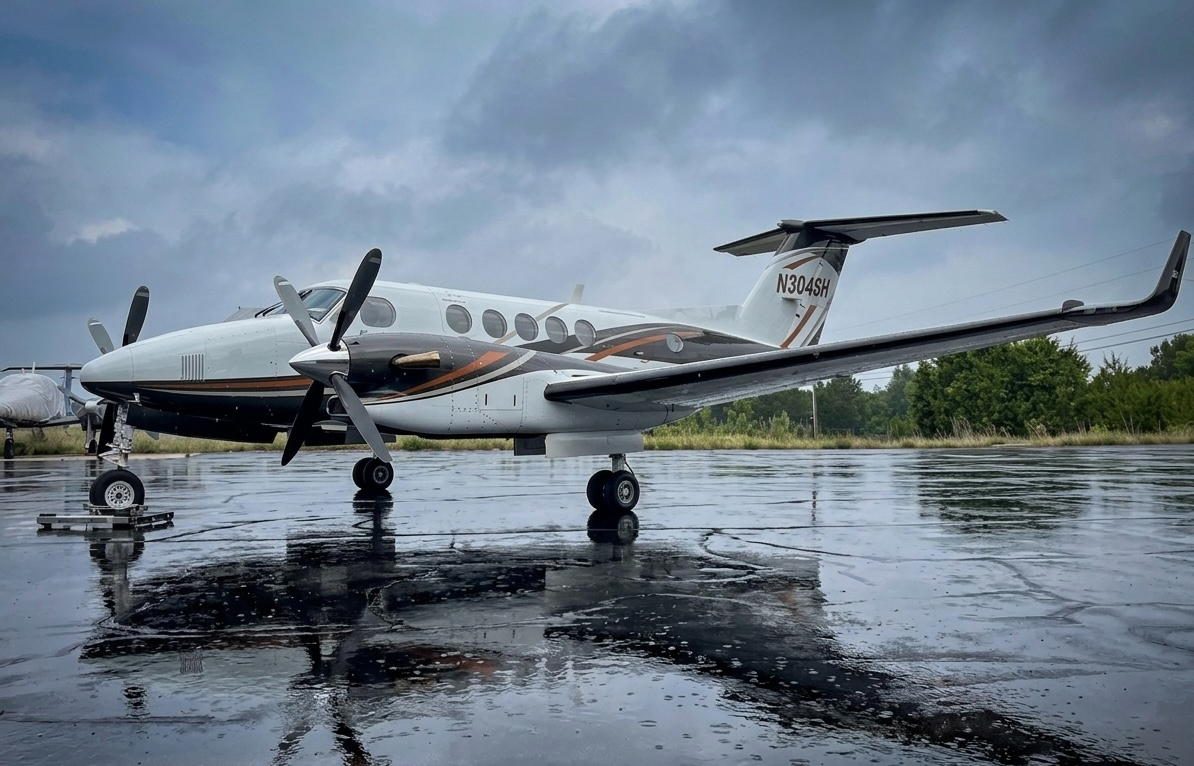
- Exterior (2006): White with black & gold accent stripes
- ADS-B capable, Engine Maintenance Program equipped, Terrain Awareness & Warning System, Traffic Collision Avoidance System, Weather Radar
About this Model
Overview
The Beechcraft King Air 300 series (commonly referring to the King Air 350/350i family in many listings) is a pressurized, twin‑engine turboprop built around reliable regional performance, a stand-up style cabin for its class, and strong access to shorter and more constrained runways compared with many jets. It is typically selected for owners and operators who prioritize dispatch reliability, mixed-use utility, and the ability to operate into smaller airports while carrying a practical passenger load.
Mission Fit
This model is generally used for multi-stop regional days where airport access and schedule resilience matter. Its strengths show up when the mission includes shorter runways, variable weather, and a need to carry people plus bags without depending on major hubs. If most trips are long, nonstop city pairs where cruise speed dominates total trip time, a light or midsize jet may fit better.
Cabin
The King Air 300-class cabin is designed around practical comfort: pressurization for typical turboprop cruise altitudes, club-style seating in many configurations, and good baggage flexibility for its size. Cabin noise and vibration are generally higher than in comparable business jets, though later interior packages and operator-installed sound treatments can improve perceived comfort. Entry is via an airstair door, and many aircraft are configured to support easy loading for business, family, or mission equipment.