

Specifications
Aircraft Details
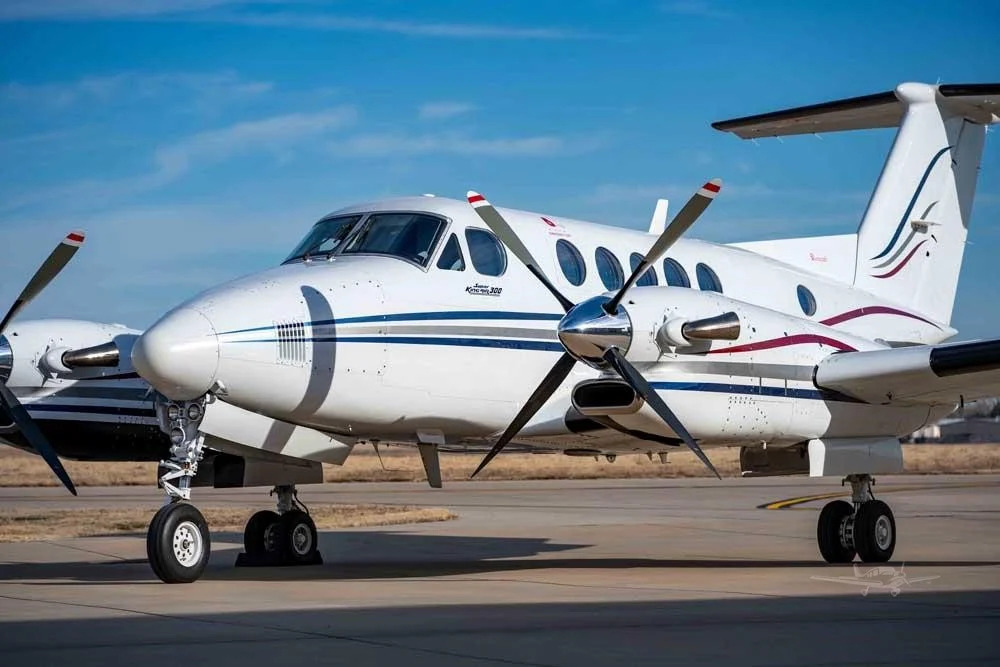
- Model: King Air 300
- Condition: Used
- Engine: Pratt & Whitney PT6A-60A (2 engines)
- Engine Time: 1,683 SOH
- TBO: 3,600 hours
- Avionics:
- Collins ADF-60A
- Collins APS-65 Autopilot
- Collins EFIS-85 2-tube/Pro Line II
- Dual Collins VHF-22A radios
- Garmin GTN 725 GPS
- L3 TCAS-I
- Weather Radar: Collins WXR-250B color
- Exterior:
- Paint: Matterhorn White with Ming Blue, Paisley Red, and Silver Metallic stripes
- Interior:
- Seating: 10 passengers, executive configuration
- Features: Gray leather seats, side-facing couch, belted lavatory seat, dual executive writing tables
- Refreshment center with heated MAPCO and storage
- Silver pearl Ultraleather headliner, Oceania Reef fabric side panels, gray heavy Berber carpeting
- Maintenance: Phase 3 & 4 inspections completed 10/2025, Landing Gear Overhaul and Wing Inspection completed 3/2026
- Modifications: Raisbeck dual aft body strakes, nacelle wing lockers, cabin active noise reduction
About this Model
Overview
The Beechcraft King Air 300 series (commonly referring to the King Air 350/350i family in many listings) is a pressurized, twin‑engine turboprop built around reliable regional performance, a stand-up style cabin for its class, and strong access to shorter and more constrained runways compared with many jets. It is typically selected for owners and operators who prioritize dispatch reliability, mixed-use utility, and the ability to operate into smaller airports while carrying a practical passenger load.
Mission Fit
This model is generally used for multi-stop regional days where airport access and schedule resilience matter. Its strengths show up when the mission includes shorter runways, variable weather, and a need to carry people plus bags without depending on major hubs. If most trips are long, nonstop city pairs where cruise speed dominates total trip time, a light or midsize jet may fit better.
Cabin
The King Air 300-class cabin is designed around practical comfort: pressurization for typical turboprop cruise altitudes, club-style seating in many configurations, and good baggage flexibility for its size. Cabin noise and vibration are generally higher than in comparable business jets, though later interior packages and operator-installed sound treatments can improve perceived comfort. Entry is via an airstair door, and many aircraft are configured to support easy loading for business, family, or mission equipment.