

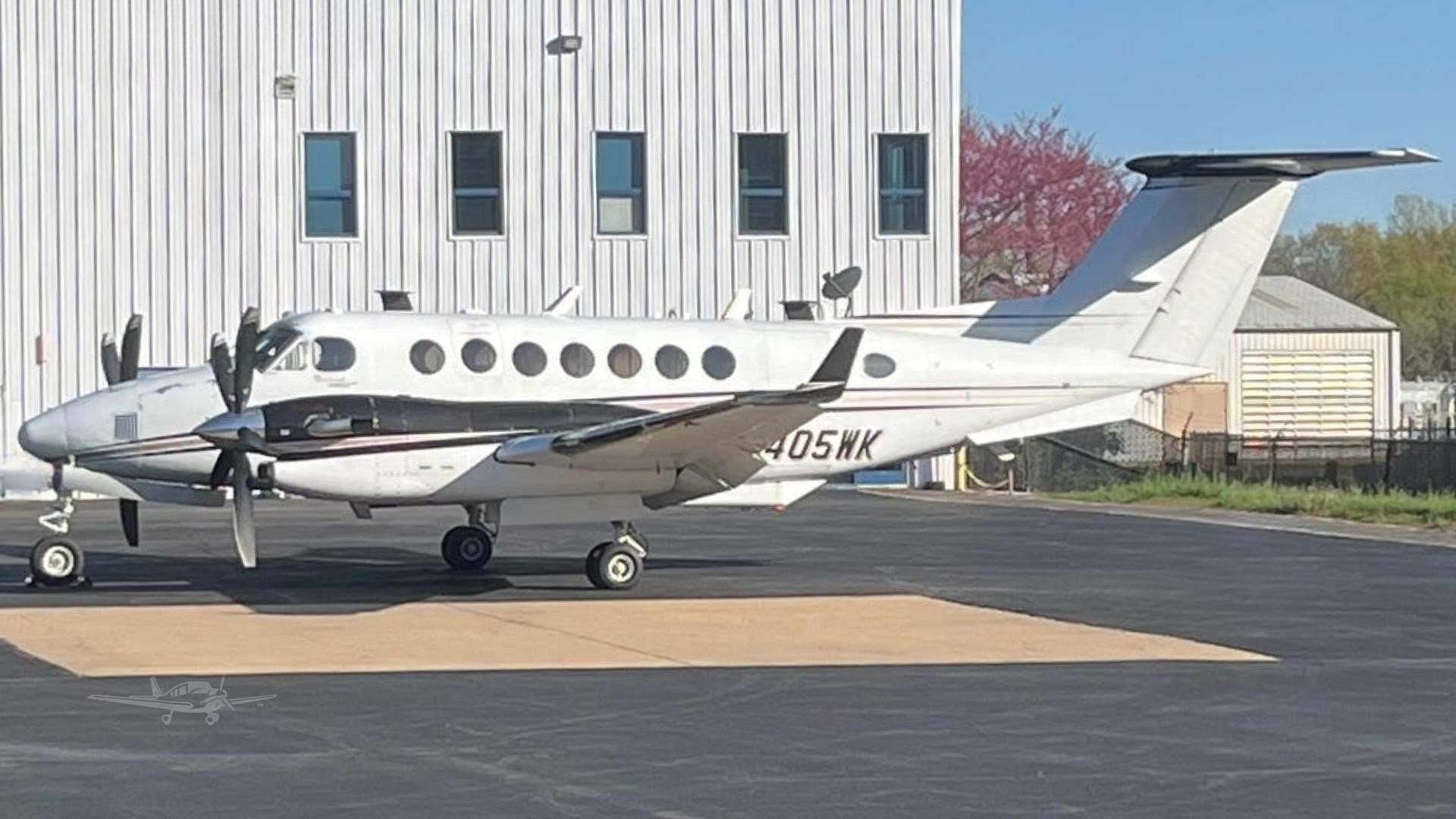
Specifications
Aircraft Details
- Model: BEECHCRAFT KING AIR 350
- FAA Restricted to Aerial Survey Missions
- AVMATS Modification for imaging and LiDAR sensors
- MT Propeller 5-Bladed, installed new in October 2022
- Auxiliary Fuel Saddle Tanks
- Complete log books since new
- Excellent ownership and maintenance history
- Engines: PRATT & WHITNEY PT6A-60A
- Engine 1: 3,020 SMOH, TBO 3,600, Hot Section completed July 2017
- Engine 2: 3,020 SMOH, TBO 3,600, Hot Section completed July 2017
- Avionics: Collins Pro Line 21 with 3-Tube EFIS, ADS-B equipped, WAAS
- Additional Equipment: RVSM Certificate, FIKI certified, dual heated windshields
- Interior: Original beige leather seats, beige carpet, 8-passenger executive configuration, belted aft lavatory
- Exterior: Original white with gray and gold stripes
- Fresh Phase I-IV Inspections completed
- No damage history
About this Model
Overview
The Beechcraft King Air 350 is a pressurized, twin-engine turboprop frequently selected for missions that need airline-like dispatch reliability without requiring long paved runways or major-airport infrastructure. It balances cabin volume with strong climb performance and the ability to operate into smaller regional fields, making it a common choice for corporate, government, and special-mission roles.
Mission Fit
The 350 fits missions typically in the 300–900 nm range where the combination of pressurization, weather capability, and runway flexibility matters more than pure cruise speed. It can also support mixed passenger/baggage loads and frequent-cycle schedules, but buyers prioritizing maximum speed or a larger, stand-up cabin often look to light or midsize jets.
Cabin
The King Air 350 cabin is designed for practical comfort: a pressurized environment, relatively low cabin altitude for a turboprop class, and a layout that can be configured for business travel, utility transport, or specialized interiors. Noise and vibration are generally well-managed for the category, though the experience remains distinctly turboprop compared with a jet. Baggage is typically split between internal and external compartments depending on configuration.