

Specifications
Broker
Aircraft Details
• Aircraft located in Guernsey, United Kingdom
• Undergoing fresh propeller and landing gear overhaul
• Fresh Phase 3 inspection in progress; Phase 1 completed June 2025, Phase 2 completed October 2025, Phase 4 completed October 2024
• Total airframe time: 13,250.3 hours, 10,481 cycles
• Engines (PT6A-52): Left engine 3,394.9 hours/2,355 cycles, Right engine 3,521 hours/2,423 cycles; Time until hot section: 362.7 hours (both engines)
• Propellers (Hartzell HC-B3TN-3N): Both currently being overhauled, next overhaul due April/May 2031 or at 16,750.3 hours
• Avionics include: Collins ADF-60A, ADS-65, EFD-85, Dual VHF-22, Loral Fairchild CVR, Dual DME-42, L3 Harris EFIS, Kannad 406 AP ELT, Collins 85B-3 FDS, UNS 1013-42 GPS, Garmin GTN 625 GPS, Collins MFD 85B, VIR-32 NAV, ALT-50A Radar Altimeter, Garmin GTX 345R and Collins TDR-94 transponders
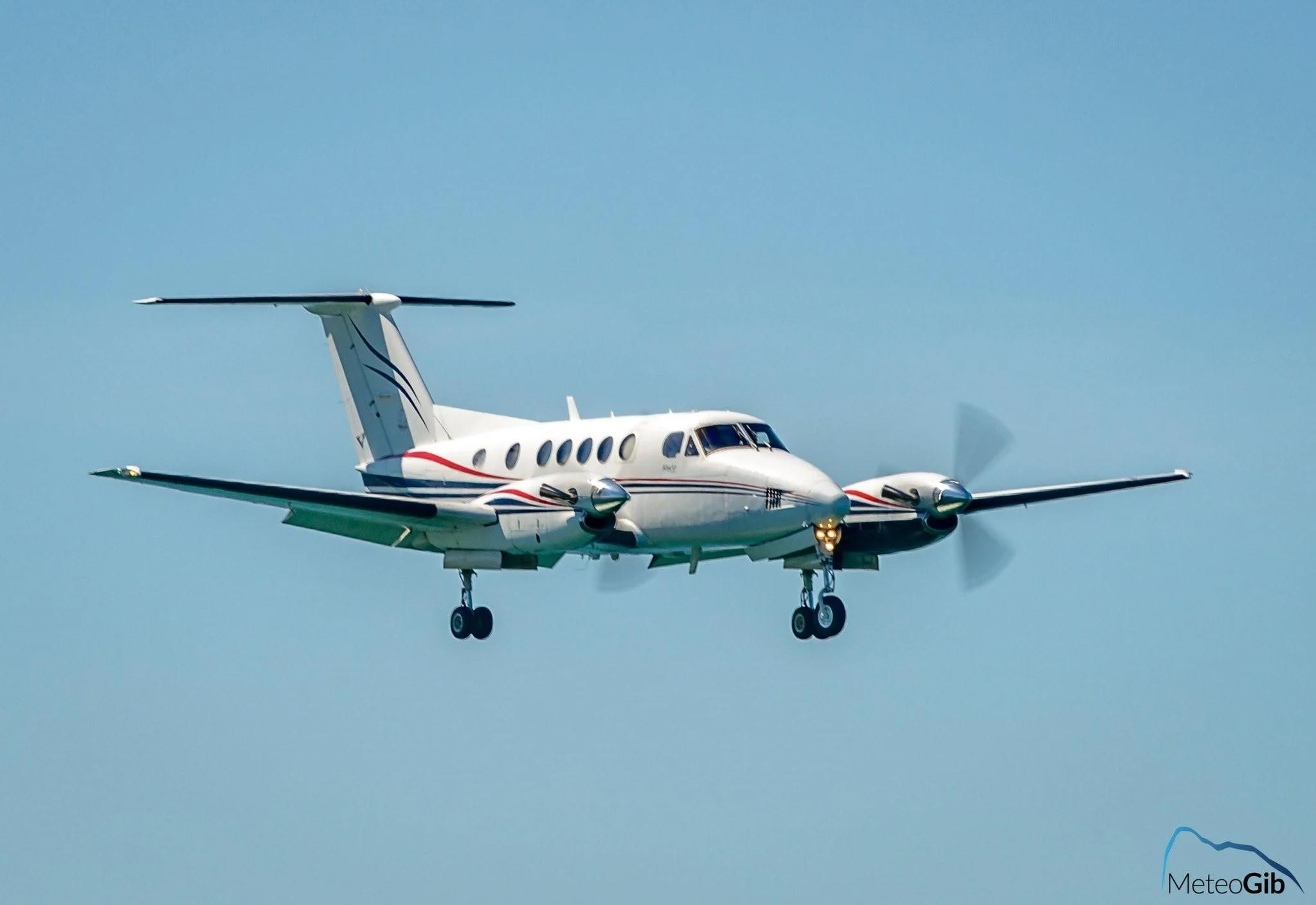
• Matterhorn White exterior with red and blue stripe
• Standard King Air 7-passenger interior; new interior scheduled for 2025
• Available immediately
About this Model
Overview
The King Air B200 is a long-running, pressurized twin‑engine turboprop commonly used for corporate transport, special missions, and owner-operator flying where runway flexibility and all-weather capability matter. Compared with light jets, it typically trades cruise speed for the ability to operate efficiently into a wider set of airports and to carry useful payloads with fewer infrastructure requirements.
Mission Fit
The B200 fits missions where reliability, payload flexibility, and access to shorter runways outweigh the need for jet speeds. It is well-suited to multi-stop days and to airports with limited ground support, while longer stage lengths may favor faster turbine aircraft.
Cabin
The pressurized cabin is typically arranged as a club-style interior with optional aft seating and an enclosed lavatory depending on configuration. Cabin height and width are modest versus jets, but the flat floor and large windows can make it comfortable for small groups on regional sectors. Boarding is via an airstair door, and baggage volume depends on interior layout and installed equipment.