

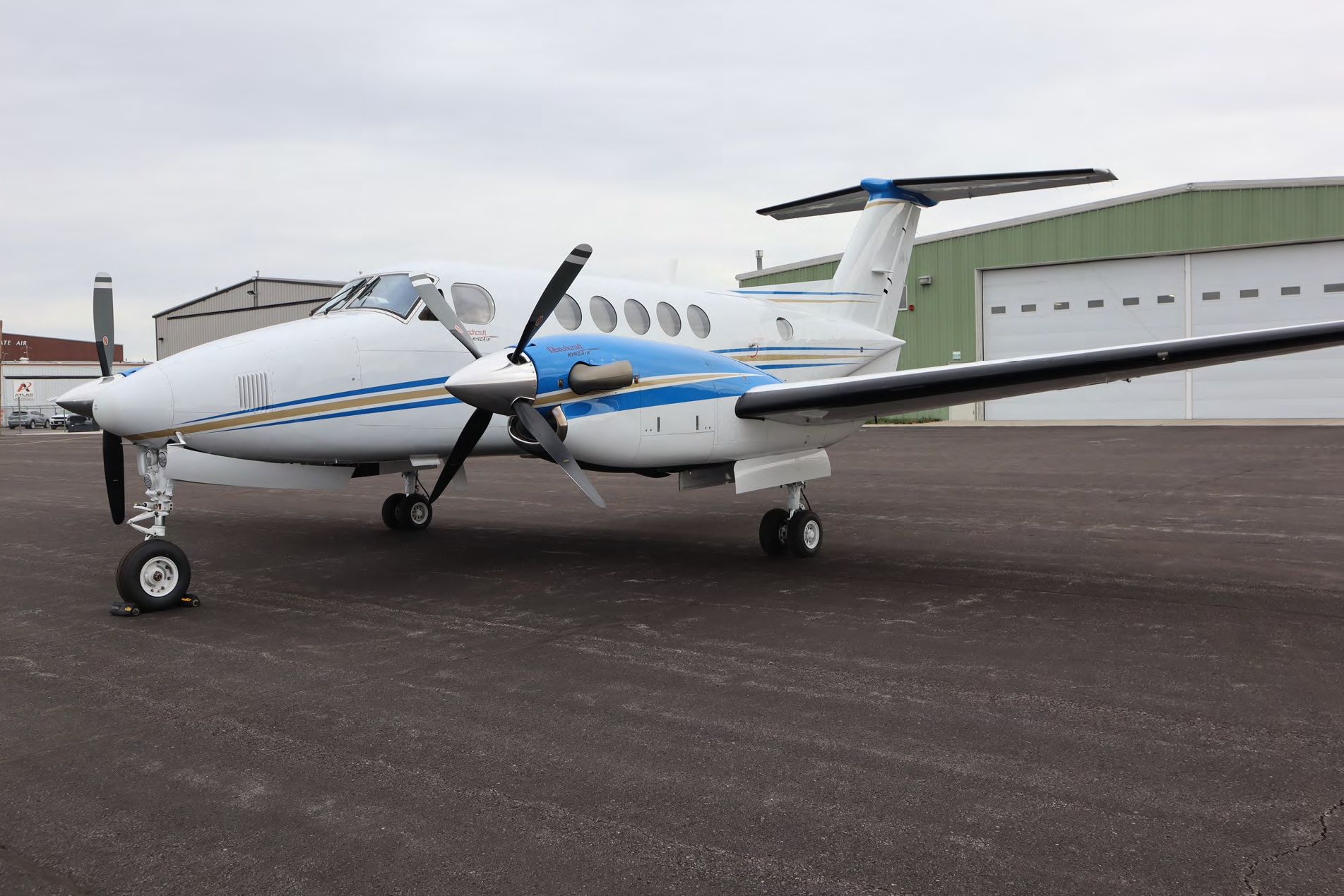
Specifications
Aircraft Details
- Max Passengers: 8
- Max Range: 1584 NM
- Max Cruise Speed: 308 KTAS
- Engines: 2 x PT6A-52
- Engine Hours: 3057.4
- Cycles: 2050
- TBO: 3600 hours
- Propellers: Overhauled on 05/17/2022
- Avionics: Collins Pro Line 21 integrated avionics system
- Dual COM, NAV, and audio control panels
- Collins DME-4000
- Collins TWR-850 turbulence weather radar
- Collins FMS-3000
- ACSS TAWS+
- Skywatch HP TCAS 1
- L3 FA2100 cockpit voice recorder
- ADS-B Out
- Synthetic vision system
- Cabin Features:
- Seating for 6
- Forward refreshment center
- 2 executive tables
- Aft belted flushing toilet
- 110 VAC outlets
- Interior: Beige with figured satinwood laminate cabinetry
- Exterior: Matterhorn white with Marlin blue and Champagne gold stripes
- Certifications: RVSM capable
About this Model
Overview
The King Air B200GT is a later B200 variant oriented around reliable, all-weather regional missions where runway flexibility and cabin practicality matter more than jet speeds. It retains the core King Air attributes—pressurization, robust systems, and a large baggage capability for the class—while using updated powerplants and avionics packages commonly seen on late-production aircraft. Buyers typically consider it for frequent short-to-medium legs, mixed passenger/cargo use, and operations into smaller airports with limited ground infrastructure.
Mission Fit
This model is most effective on frequent stage lengths where turboprop efficiency and airport access are valuable—typically a few hundred nautical miles at a time—with the ability to climb above weather and maintain a comfortable cabin altitude. It is less compelling when the mission is dominated by long, nonstop legs at high true airspeeds where a light jet can materially reduce block time.
Cabin
The B200GT offers a pressurized cabin sized for comfortable seated travel rather than stand-up movement, with club-type layouts common and an aft lavatory on many configurations. Cabin noise and vibration are typical of twin turboprops; condition varies noticeably with interior refurbishment quality, propeller/engine health, and insulation. External baggage volume and access are generally strong for the category, supporting multi-bag trips and bulky equipment when configured accordingly.