

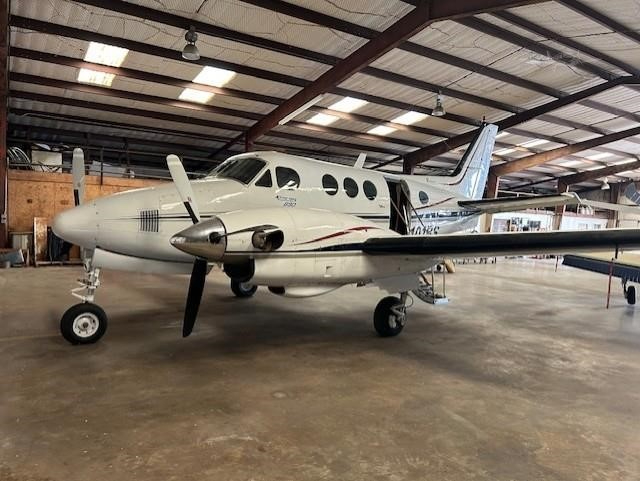
Specifications
Aircraft Details
- 10,792 hours total time
- 2,166 hours since engine overhauls (both engines)
- Engines: PT6A-20, 3,600 TBO
- ADS-B Out, WAAS, Garmin GDL-88, Garmin GTN-750 Comm/Nav/GPS
- Collins and Garmin avionics suite including autopilot, radar, ADF, and fuel totalizer
- Collins AP-103 autopilot, Bendix/King color weather radar, Sperry compass
- Cleveland brakes, factory air conditioning, FIKI (Flight Into Known Icing)
- Prop synch, spar mod, Rosen sun visors, slimline exhaust stacks
- Hartzell 3-blade props (125/270 hours since overhaul)
- Complete logs available, always hangared, all inspections current
- Recent maintenance: Prop overhaul (2023), phase inspections (2023), landing gear overhaul (2020)
- Executive interior: 6-passenger leather club seating, new interior and exterior in 2016, forward galley, desk, refreshment center
- Based at KLXY, Blue Ridge, Texas
- 1/2 fractional ownership offered at $50,000 (direct operating costs only)
About this Model
Overview
The Beechcraft King Air B90 is an early, compact member of the King Air family designed for operators who want pressurization, twin-engine redundancy, and the ability to use shorter runways and regional airports. It is commonly used for business transport, owner-operator missions, and light utility roles where jet speeds are not required but predictable all-weather capability and payload flexibility matter. Compared with later King Air variants, the B90 emphasizes simplicity and lighter weight over cabin volume and long-range cruise.
Mission Fit
The B90 fits missions that prioritize airport access, moderate stage lengths, and operational flexibility over maximum cruise speed. Typical use cases include 200–500 nm sectors with comfortable pressurized cruise and the ability to stage from smaller fields. Payload-range planning is important when trying to combine full seats, baggage, and higher fuel loads.
Cabin
The cabin is pressurized and arranged to support small-group travel, typically in a club-style layout with an aft area used for additional seating or storage depending on configuration. As an older airframe design, interior fit, noise levels, and climate performance vary significantly with refurbishment quality and avionics/insulation upgrades. Boarding and baggage handling are generally straightforward for regional operations, but cabin volume is more limited than later King Air models.