

Specifications
Broker
Jet Aviation Brokers
John Carter
Aircraft Details
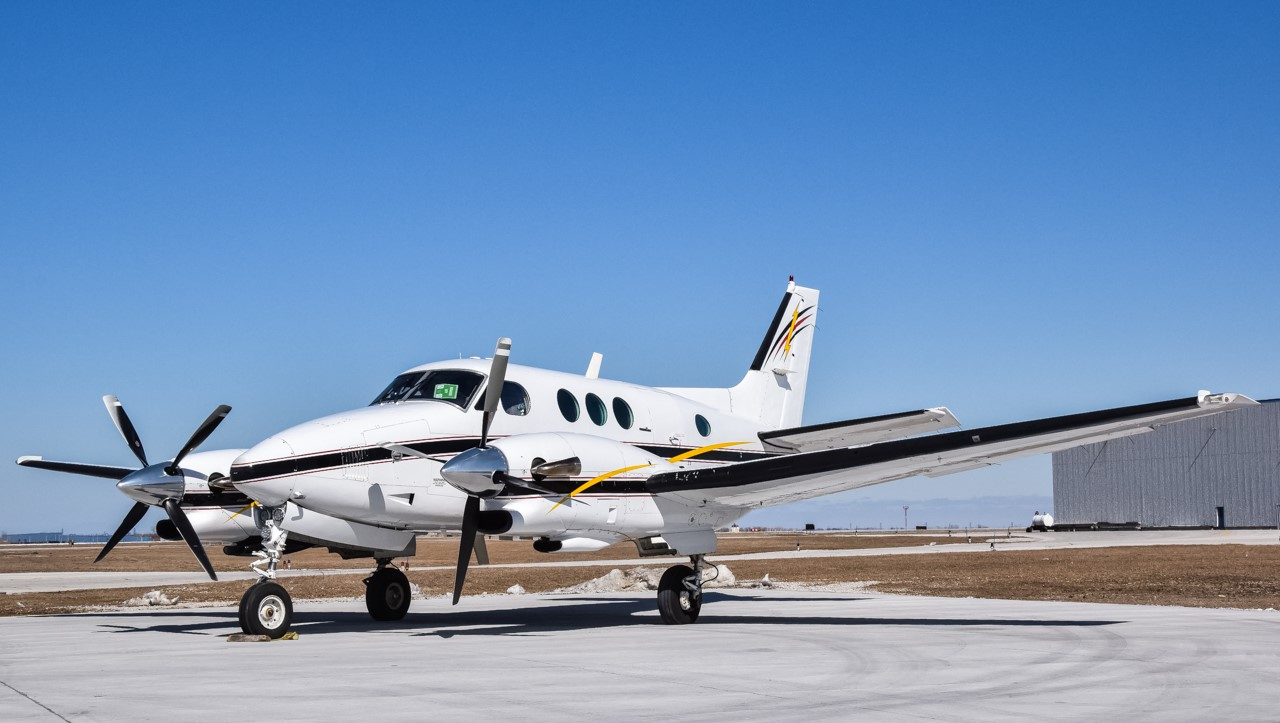
- Model: King Air C90
- Blackhawk PT6A-135A engine upgrade
- Engine 1 & 2: Pratt & Whitney PT6A-135A, 3,942 hours since new, TBO 4,000 hours
- Hot section inspection: 835 hours for both engines
- Propellers: Hartzell 4-blade, left prop overhauled in 2016, right prop in 2018
- Avionics: Garmin G600NXI, GTN 750, GTN 650, dual Garmin transponders with ADS-B Out
- Pressurized cabin with oxygen system (22 cu ft)
- Inadvertent ice protection and dual heated windshields
- Interior: Refitted in 2018, gray leather club seating for 5, aft belted lavatory with dual sliding doors
- Exterior painted in 2004, in good condition
- Landing gear overhauled in 2019
- Phases 1-4 inspections due by March 2024
- Equipped with TAWS and weather radar
- Based at KCTJ, IFR flight rules
About this Model
Overview
The Beechcraft King Air C90 is a compact, twin‑engine, pressurized turboprop typically used for regional passenger transport, corporate shuttle work, and utility missions that benefit from turboprop runway flexibility. It sits at the smaller end of the King Air family, emphasizing access to shorter runways and smaller airports, simple cabin service, and mission reliability over long-range cruise efficiency. Exact performance and avionics vary significantly by C90 variant (C90, C90A, C90B, C90GTx) and by equipment/weights.
Mission Fit
The C90 typically fits missions where airport access and schedule flexibility matter more than outright speed. It is commonly used for day-trip regional routes, multi-leg itineraries, and routes into airports with runway or infrastructure constraints. For buyers expecting consistent jet-equivalent block times or frequent near-max-range payloads, a larger turboprop or light jet may align better.
Cabin
The C90 cabin is a compact, pressurized environment generally arranged for executive seating with an aft baggage area, depending on configuration. Expect a smaller cross-section than larger King Air models, with a practical layout for short to mid-duration legs. Noise and vibration levels are typical of legacy turboprops and will depend on interior condition, insulation upgrades, and prop/engine configuration.