

Specifications
Broker
Aircraft Details
• Upgraded with -135A Blackhawk engines (2,995 hours since new) and McCauley 4-blade props (126 SMOH, overhauled 2025)
• Garmin avionics upgrades: Dual GTN 750s (WAAS/LPV), GTX 345R & 33ES (ADS-B In & Out), GMA 35 audio panel, Garmin GWX 70 radar
• Phase 1 & 2 inspections due September 2025/2026, Phase 3 due September 2024, Phase 4 and landing gear overhaul due March 2025
• 5-year wing bolt and 6-year gear inspections completed March 2025
• Basic empty weight: 6,882 lb; gross weight increase STC (+385 lb)
• Interior refurbished in 2024: six-passenger executive layout, forward double club, belted aft lavatory, light tan leather seats, new AvFab arm ledge system, new carpet
• R134A Freon air conditioning, LED downwash lights, 64 cu ft oxygen cylinder
• Certified known ice, FIKI, dual electrically-heated windshields, engine anti-icing, surface de-ice boots
• Complete logbooks, maintained under FAR Part 91
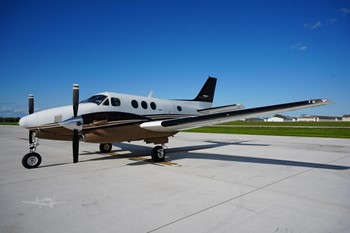
• Exterior: Overall white with camel and regimental brown stripes (painted 2007)
About this Model
Overview
The King Air C90A is a pressurized, twin‑engine turboprop positioned for operators who value access and flexibility over jet cruise speeds. It is commonly selected for reliable regional travel, mixed passenger/cargo use, and operations into shorter or less‑developed airports, while still providing a professional cabin environment and known handling qualities for single‑pilot or two‑pilot missions depending on configuration and regulatory context.
Mission Fit
In practice, the C90A excels on multi-leg days with quick turns and airports with shorter runways, limited services, or weather patterns where turboprop performance is useful. For longer stage lengths, the lower cruise speed versus jets can dominate total trip time, and payload/fuel tradeoffs become more noticeable.
Cabin
The C90A offers a compact, pressurized cabin typically arranged for executive transport with club seating and an aft refreshment/utility area depending on the interior. Expect a functional cabin suited to small groups rather than a stand-up environment. Noise and vibration are characteristic of turboprops; interior condition, insulation upgrades, and propeller/engine maintenance state can materially influence perceived comfort.