

Specifications
Aircraft Details
- Engine Model: PT6A-21
- Engine TBO: 3600 hours
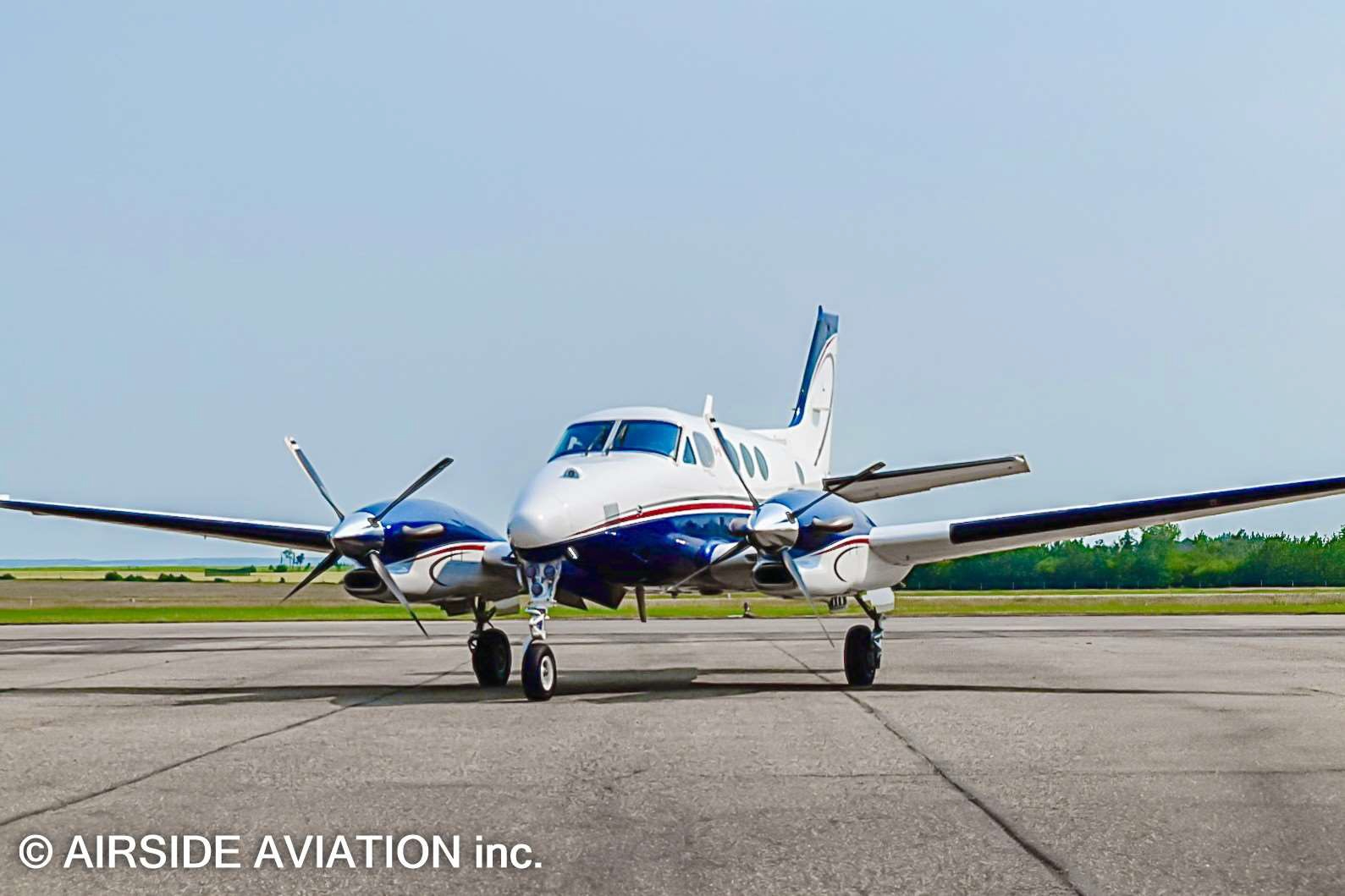
- Modification: Raisbeck Whisper Performance Package with Hartzell 4-blade Quiet Turbofan props, dual aft body strakes, and gross weight increase
- Avionics Package: Garmin G1000
- Communication Radios: Garmin GIA-63W
- Navigation Radios: Garmin GIA-63W
- Transponder: Garmin GTX-33ES
- Weather Radar: Garmin GWX-68
- Interior Configuration: Executive, seating for 7
- Interior Features: Beige leather interior, air conditioning, flushing belted lavatory
- Exterior Colors: White & royal blue with maroon & silver stripes
- Maintenance: Recent landing gear overhaul due on 2026-02-20
- Additional Equipment: Cleveland wheels & brakes, L3 IRIS nose camera, LED lights
- Equipped Features: Belted lav, flushing lav, synthetic vision system, Raisbeck mods, Cleveland wheels and/or brakes, ADS-B capable, Traffic Collision Avoidance System, Emergency Locator Transmitter
About this Model
Overview
The King Air C90B is a pressurized, twin‑engine turboprop positioned for operators who value runway flexibility, frequent-cycle reliability, and the ability to carry a small group plus baggage into a wide variety of airports. It sits below larger King Air 200/300-series aircraft in cabin size and payload/range capability, but typically offers lower complexity and strong suitability for regional schedules, owner-operation (where appropriate), and mixed passenger/cargo use.
Mission Fit
The C90B tends to fit best where stage lengths are moderate and the destination set includes smaller airports. It is commonly chosen for day-trip regional patterns, multi-stop itineraries, and missions that benefit from turboprop climb performance and runway performance rather than maximum cruise speed.
Cabin
Cabin comfort is oriented around a practical, club-style layout in a compact, pressurized fuselage. Expect a functional aisle and seating suitable for small teams rather than a large-cabin environment. Noise and vibration are typical of turboprops and vary with propeller setup, soundproofing condition, and interior refurbishment level. Baggage is generally accommodated in aft/side compartments depending on configuration, with tradeoffs between seating count and baggage volume.