

Specifications
Broker
Jet Aviation Brokers
+1 (305) 555-0142
Aircraft Details
- Glass cockpit with Garmin G600Xi suite (PFD, EIS, MFD), GTN 750Xi & 650Xi FMS/GPS, GFC600 autopilot, GI275 standby, GWX75 weather radar, radar altimeter, G600 TAWS B, Chartview, and Flight Stream 510.
- Engines: Pratt & Whitney PT6A-21, enrolled on MORE program with 8000-hour TBO, 6,829 hours since overhaul.
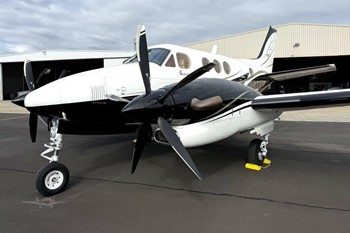
- 5-Blade MT Propellers installed September 2024.
- BLR winglets, LED exterior lights, Bose LEMO plugs, Hi-Power USB-C ports, Lumatech LED annunciator panel.
- Exterior repainted April 2022 (Matterhorn White with Black Accents).
- Interior refurbished November 2022 with late model B200 lateral tracking seats.
- Executive 7-passenger configuration with white leather seating, timber trim, four club seats, dual crew seats, dual folding tables, and belted aft lavatory.
- Cleveland wheels & brakes, forward & aft oxygen system, Coolview IR blocking windows.
- ADS-B equipped, standard weather radar, TAWS, RVSM, and ELT.
- Airworthy with fresh maintenance release as of December 2023.
About this Model
Overview
The King Air C90B is a pressurized, twin‑engine turboprop positioned for operators who value runway flexibility, frequent-cycle reliability, and the ability to carry a small group plus baggage into a wide variety of airports. It sits below larger King Air 200/300-series aircraft in cabin size and payload/range capability, but typically offers lower complexity and strong suitability for regional schedules, owner-operation (where appropriate), and mixed passenger/cargo use.
Mission Fit
The C90B tends to fit best where stage lengths are moderate and the destination set includes smaller airports. It is commonly chosen for day-trip regional patterns, multi-stop itineraries, and missions that benefit from turboprop climb performance and runway performance rather than maximum cruise speed.
Cabin
Cabin comfort is oriented around a practical, club-style layout in a compact, pressurized fuselage. Expect a functional aisle and seating suitable for small teams rather than a large-cabin environment. Noise and vibration are typical of turboprops and vary with propeller setup, soundproofing condition, and interior refurbishment level. Baggage is generally accommodated in aft/side compartments depending on configuration, with tradeoffs between seating count and baggage volume.