

Specifications
Broker
Aircraft Details
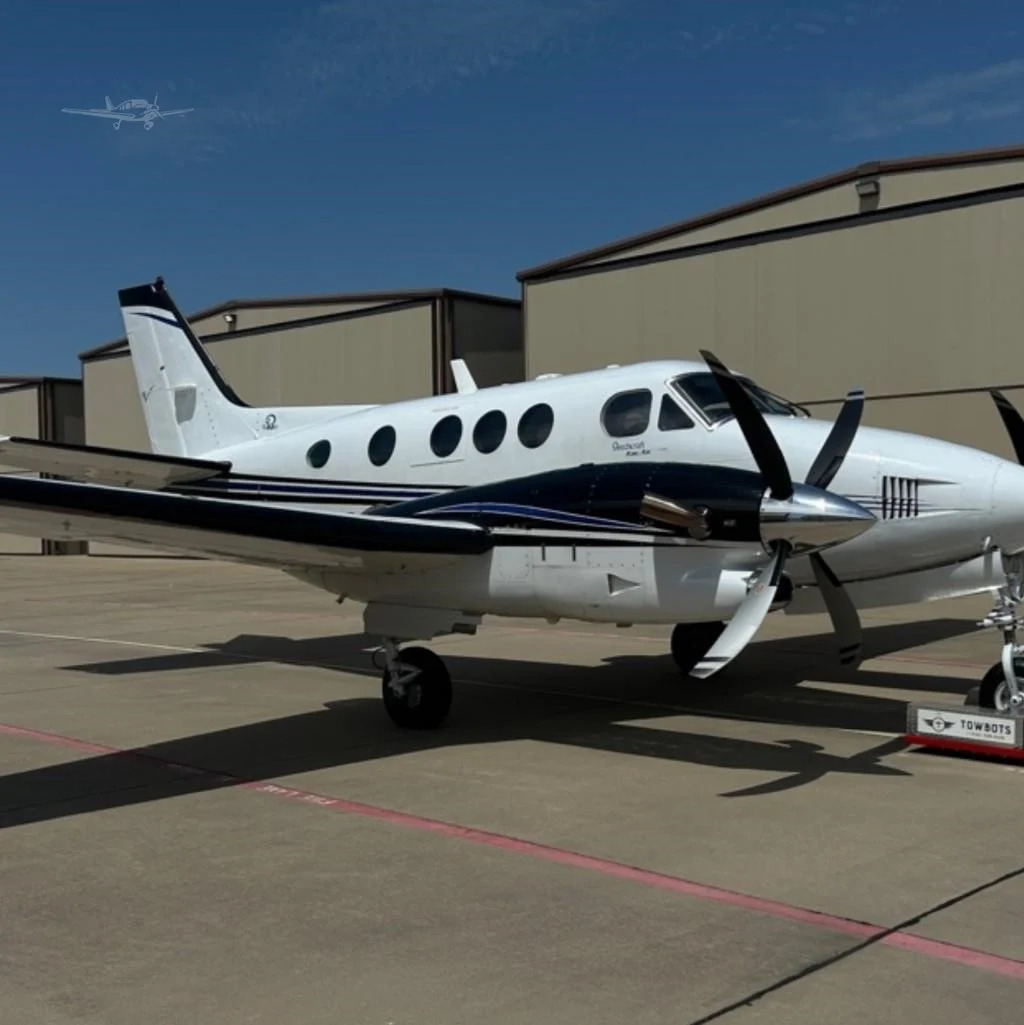
- Model: BEECHCRAFT KING AIR C90B
- Condition: Used
- No Damage History
- Logs Complete Since New
- Airframe Maintenance Program: CAMP
- Basic Empty Weight: 6,920 lb
- Useful Load: 3,580 lb
- Engines: 2 x PRATT & WHITNEY PT6A-135A
- Engine Time: 1,358.7 SNEW
- TBO: 3600 hours
- Blackhawk Conversion
- Props: Hartzell PN-HC-D4N-3/D9510SK Four Blade Raisbeck Swept Tip Props
- Overhaul: August 2023
- Avionics: Garmin G1000, Garmin GFC-700, Collins ADF-60A, Dual Garmin GTX-33ES
- Additional Equipment:
- Blackhawk XP135A upgrade
- Raisbeck Winglockers
- Engine Fire Detection
- 77 Cubic Foot Oxygen System
- Auto Feather with Prop Sync
- Interior: Executive non-smoking, refurbished April 2024
- Seating: 8 passengers, Aft 4-place club configuration
- Lavatory: Non-flushing aft lav
- Exterior: New paint in 2015, re-striped April 2024
About this Model
Overview
The King Air C90B is a pressurized, twin‑engine turboprop positioned for operators who value runway flexibility, frequent-cycle reliability, and the ability to carry a small group plus baggage into a wide variety of airports. It sits below larger King Air 200/300-series aircraft in cabin size and payload/range capability, but typically offers lower complexity and strong suitability for regional schedules, owner-operation (where appropriate), and mixed passenger/cargo use.
Mission Fit
The C90B tends to fit best where stage lengths are moderate and the destination set includes smaller airports. It is commonly chosen for day-trip regional patterns, multi-stop itineraries, and missions that benefit from turboprop climb performance and runway performance rather than maximum cruise speed.
Cabin
Cabin comfort is oriented around a practical, club-style layout in a compact, pressurized fuselage. Expect a functional aisle and seating suitable for small teams rather than a large-cabin environment. Noise and vibration are typical of turboprops and vary with propeller setup, soundproofing condition, and interior refurbishment level. Baggage is generally accommodated in aft/side compartments depending on configuration, with tradeoffs between seating count and baggage volume.