

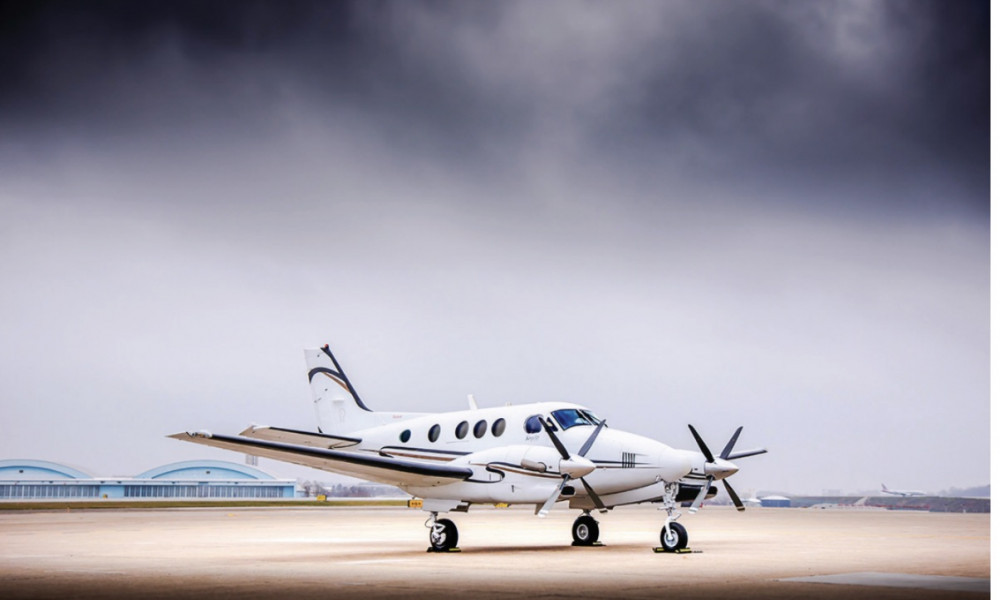
Specifications
Broker
Jet Aviation Brokers
John Carter
+1 (305) 555-0142
broker@example.com
Aircraft Details
- Engines: PT6-135A Blackhawk STC; Total Time: 1,331 SNEW; TBO: 3,600 hours; Cycles: 1,188 (both engines).
- Avionics: Rockwell Collins Pro Line II; Collins EFIS 84 (2 tubes); Collins APS-65H Autopilot; Dual Collins VHF-22 COMs; Dual Collins VIR-32 NAVs; Dual Collins TDR-94 Transponders; Collins DME-42; Collins ALT-55A Radar Altimeter; Garmin GPS-650; Honeywell RDR-2100 Radar; Fairchild Cockpit Voice Recorder.
- Props: Hartzell HC-E4N; Total Time: 2,322 TSN; TSO: 9.6.
- Interior: Seats 5 passengers + 1 belted lavatory; 4 beige leather swiveling seats in club configuration; forward cabin partition with door; refreshment center with coffee pot and ice bin; electric toilet.
- Exterior: Base paint snow white with black and brown stripes.
- Weights: MTOW 10,100 lbs; Fuel capacity: 384 U.S. gallons; Payload with full fuel: 380 lbs.
- Additional Equipment: ADS-B Out; electric heater; dual heat exchangers; Concord battery; cabin fire extinguisher.
About this Model
Overview
The King Air C90B is a pressurized, twin‑engine turboprop positioned for operators who value runway flexibility, frequent-cycle reliability, and the ability to carry a small group plus baggage into a wide variety of airports. It sits below larger King Air 200/300-series aircraft in cabin size and payload/range capability, but typically offers lower complexity and strong suitability for regional schedules, owner-operation (where appropriate), and mixed passenger/cargo use.
Mission Fit
The C90B tends to fit best where stage lengths are moderate and the destination set includes smaller airports. It is commonly chosen for day-trip regional patterns, multi-stop itineraries, and missions that benefit from turboprop climb performance and runway performance rather than maximum cruise speed.
Cabin
Cabin comfort is oriented around a practical, club-style layout in a compact, pressurized fuselage. Expect a functional aisle and seating suitable for small teams rather than a large-cabin environment. Noise and vibration are typical of turboprops and vary with propeller setup, soundproofing condition, and interior refurbishment level. Baggage is generally accommodated in aft/side compartments depending on configuration, with tradeoffs between seating count and baggage volume.