

Specifications
Broker
Aircraft Details
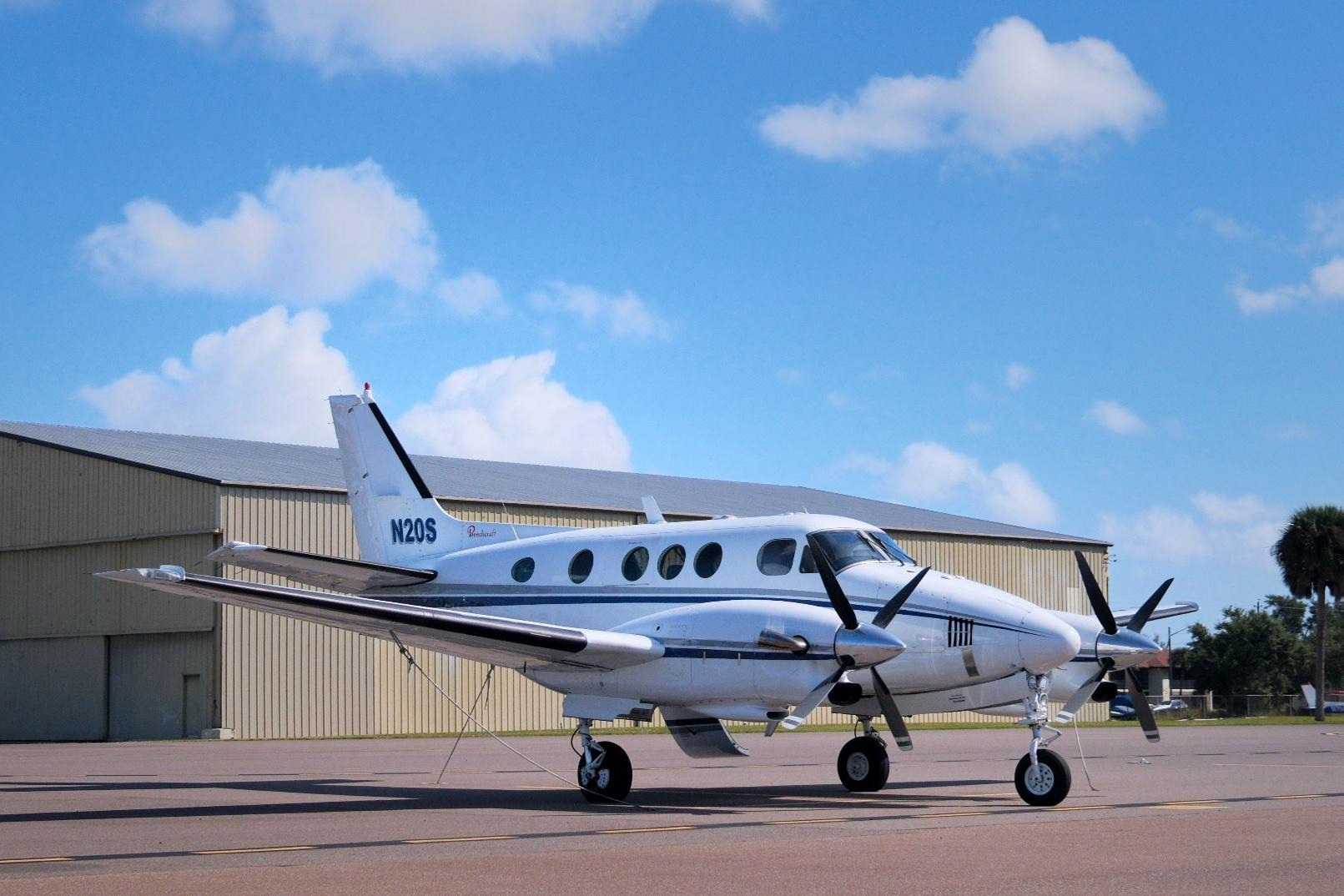
- Model: Beechcraft King Air E90
- Turboprop aircraft with Raisbeck 10,500-lb gross weight increase
- Equipped with nacelle lockers and dual aft body strakes
- Features Raisbeck/Hartzell 4-blade swept props
- Upgraded avionics: Aspen EV1000 Pro Max, WAAS/LPV IFR GPS, ADS-B Out
- 2014 8-passenger interior with aft galley and dual executive tables
- Modern gray cabin with retractable privacy panels and polarized window shades
- Aft lavatory configuration with belted seating flexibility
- Complete logbooks; engines on MORE program (8,000-hour TBO)
- FIKI (Flight Into Known Icing) equipped
- Additional equipment: Cleveland wheels & brakes, auto feather, prop synch, full de-ice
- Exterior painted in 2014: overall white with blue & red wave stripes
- Maintenance items include recent prop overhaul and landing gear overhaul due in 2025
- Equipped with various avionics including Sperry SPZ-200 autopilot and BFGoodrich SkyWatch TCAS
About this Model
Overview
The King Air E90 is an early, smaller-cabin member of the King Air family, combining a pressurized cabin, twin-engine redundancy, and strong short/rough-field flexibility relative to many light jets. It is commonly selected for owner-operation, corporate regional travel, and utility roles where runway access and operating simplicity matter more than maximum cruise speed or stand-up cabin volume.
Mission Fit
The E90 typically fits missions where stage lengths are short to mid-range and the ability to use smaller airports improves door-to-door travel time. It is often used for multi-stop days and for destinations with limited ground support. If your typical trip profile is longer nonstop legs at higher true airspeeds, later King Air variants or light jets may align better.
Cabin
The cabin is pressurized and generally arranged for a small group, with club-style seating common, a center aisle, and a separate baggage area depending on configuration. Compared with larger King Air models, the E90’s cabin cross-section is smaller, and the overall cabin length typically supports fewer passengers and less room to move about in flight. Noise and vibration levels are typical of an older-generation turboprop; interior and insulation upgrades vary widely by aircraft.