

Specifications
Broker
Aircraft Details
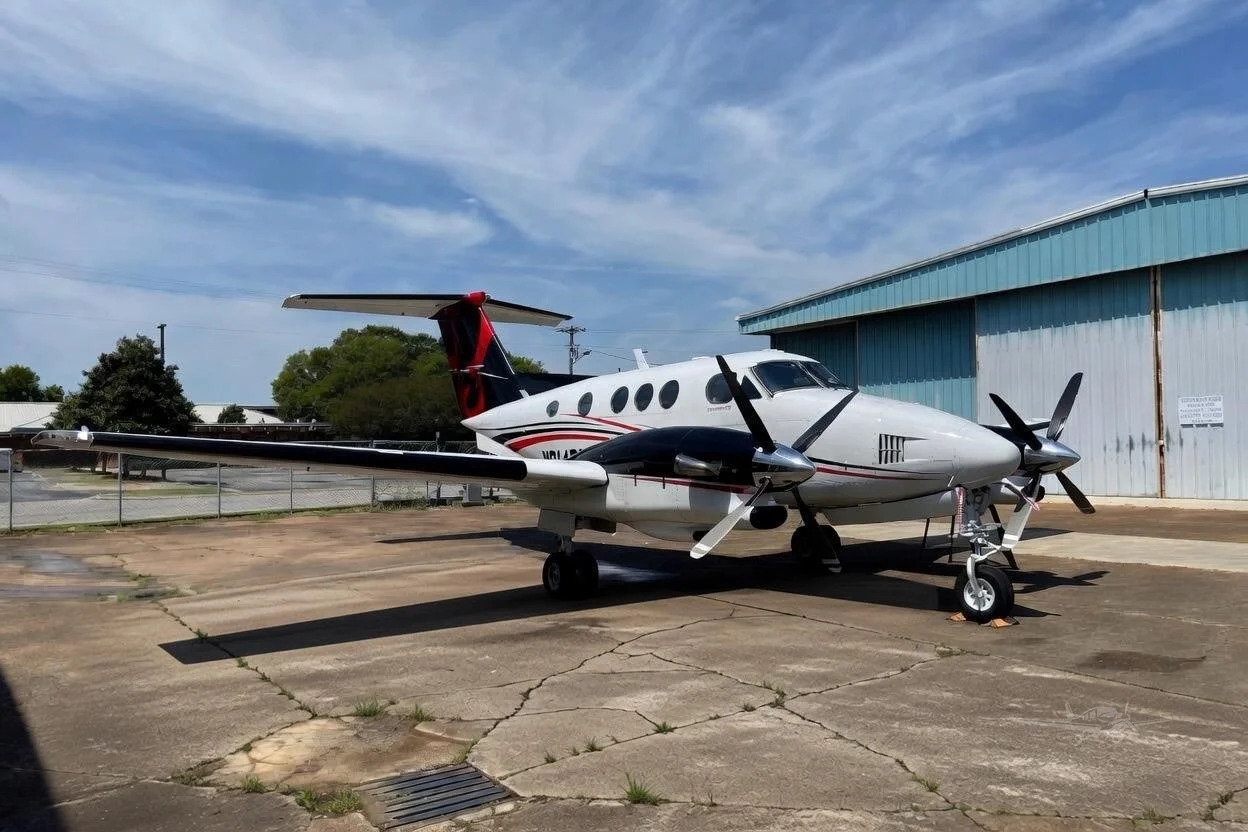
• Well-equipped King Air F90 with several upgrades and always hangared
• Traxxall maintenance tracking available
• Total airframe time: 10,327 hours
• Engines: Pratt & Whitney PT6A-135 (8,000 TBO), 1,093 and 1,031 hours remaining, 314 hours to next hot section
• Avionics: Garmin G600 MFD, GNS-430W, GTN-750, Sperry SPZ-200A autopilot, dual Garmin GTX-330ES transponders, King KY 196, synthetic vision, ADS-B Out, WAAS
• Additional equipment: High flotation gear, hydraulic landing gear, Hartzell 4-blade props with auto feather, Frakes speed stacks & cowlings, spar mod, front spar mod reinforcement, Concorde battery, 22 cu ft oxygen system, dual cabin door support cables, fourth cabin window
• Interior: Executive 6-passenger configuration, two-toned saddle brown leather, forward club seating, aft side-facing seat, belted lavatory (new in 2019)
• Exterior: Matterhorn white with red & black stripes, refinished in 2005 by Sturgis Aviation
• Maintenance: Engines enrolled on MORE program, wing bolt replacement in 2021, recent prop overhaul (2024), phases 1-4 and landing gear overhaul due June 2025
• Based at Pryor Field Regional Airport (KDCU), Alabama
• Available immediately
About this Model
Overview
The King Air F90 is a smaller-cabin member of the King Air family, designed to deliver turbine reliability, pressurization, and two-pilot-capable systems in a size that fits constrained ramps and shorter runways. It is typically chosen for regional business travel and utility missions where access and dispatch reliability matter more than cabin volume or jet-like cruise performance.
Mission Fit
In typical use, the F90 aligns with multi-stop days and mixed weather operations where pressurization and turbine performance reduce fatigue versus piston twins. Its strengths show on routes that benefit from airport choice and quick repositioning, while longer legs or larger parties can push the aircraft toward its cabin and payload limits depending on fuel and baggage carried.
Cabin
The cabin is arranged as a compact executive turboprop interior with club-style seating common, a fully enclosed cockpit, and a pressurized environment that improves comfort over longer climbs and in higher-terrain regions. Compared with larger King Air variants, the F90 feels narrower and lower, with less room for moving about in flight; comfort is strongest for smaller groups on shorter segments.