

Specifications
Broker
Aircraft Details
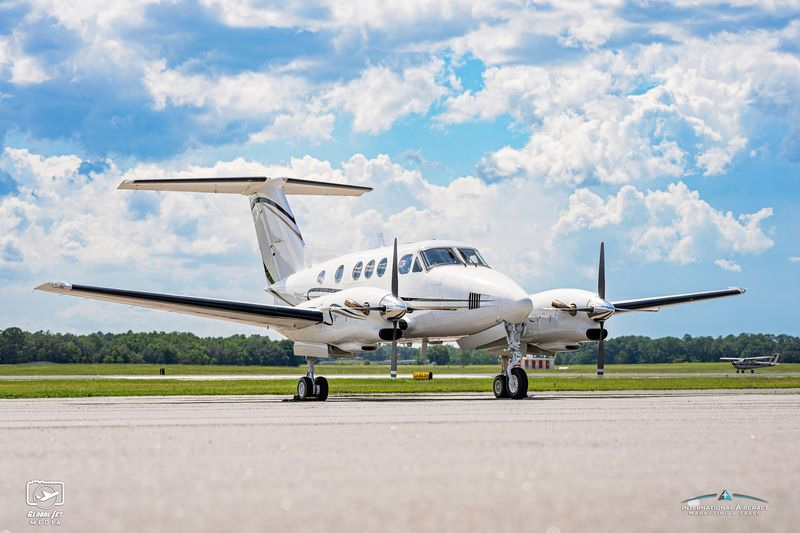
- Model: Beechcraft King Air F90
- Engine: Pratt & Whitney PT6A-135
- Left Engine Time: 6,603 SNEW, TBO: 3,600, TSOH: 3,125.5
- Right Engine Time: 8,185 SNEW, TBO: 3,600, TSOH: 3,044.8
- Propellers: Hartzell HC-B4TN-3B, 4-blade
- Total Time: 10,015 SNEW, TSO: 94
- Avionics:
- Dual Collins VHF 20A Communication Transceivers
- Avidyne EX-500 MFD with Chartview
- Dual Collins VIR 30 AGM Navigation Receivers
- Sperry SPZ-200A Autopilot
- Garmin GNS 625 GPS IFR & Approach
- Interior:
- Executive configuration for 6 passengers
- Fawn beige leather with camel carpet
- High gloss burlwood cabinetry, dual executive writing tables
- Belted flushing lavatory
- Exterior:
- Snow white with Las Vegas gold and onyx black accent striping
- Painted in 2008
- Maintenance:
- Phase I/II, III/IV inspections completed in 2024
- Landing gear overhaul completed in 2024
- Additional Equipment: Raisbeck dual aft body strakes, ram air recovery system, nacelle wing lockers
About this Model
Overview
The King Air F90 is a smaller-cabin member of the King Air family, designed to deliver turbine reliability, pressurization, and two-pilot-capable systems in a size that fits constrained ramps and shorter runways. It is typically chosen for regional business travel and utility missions where access and dispatch reliability matter more than cabin volume or jet-like cruise performance.
Mission Fit
In typical use, the F90 aligns with multi-stop days and mixed weather operations where pressurization and turbine performance reduce fatigue versus piston twins. Its strengths show on routes that benefit from airport choice and quick repositioning, while longer legs or larger parties can push the aircraft toward its cabin and payload limits depending on fuel and baggage carried.
Cabin
The cabin is arranged as a compact executive turboprop interior with club-style seating common, a fully enclosed cockpit, and a pressurized environment that improves comfort over longer climbs and in higher-terrain regions. Compared with larger King Air variants, the F90 feels narrower and lower, with less room for moving about in flight; comfort is strongest for smaller groups on shorter segments.