

Specifications
Broker
Aircraft Details
- Maintenance Programs: TAP - Blue for engines; B-Check (1200-Hour), A-Check (600-Hour), Engine Check 2 (600-Hour for each engine), Left & Right Engine Hot Section Inspections (2500-Hour).
- Certifications: RVSM certified.
- Engines: Model FJ44-2A; TBO 5000 hours; Engine 1: TTSNew 4037, TCSN 4432, SHI 597; Engine 2: TTSNew 4181, TCSN 4557, SHI 2437.
- Avionics: Collins Pro Line 21; includes ADF, AHRS, autopilot, dual communication radios, GPS, radar altimeter, TAWS, TCAS.
- Features: Equipped with Aft Lavatory, Engine Maintenance Program, ADS-B, SATCOM, Emergency Locator Transmitter, RVSM, Terrain Awareness & Warning System, Traffic Collision Avoidance System, Weather Radar, Flight Management System, Cockpit Voice Recorder.
- Interior: Executive configuration for 6 passengers; partial refurbishment in 2021; 4-place club seating with dual forward-facing seats; forward refreshment center; aft lavatory.
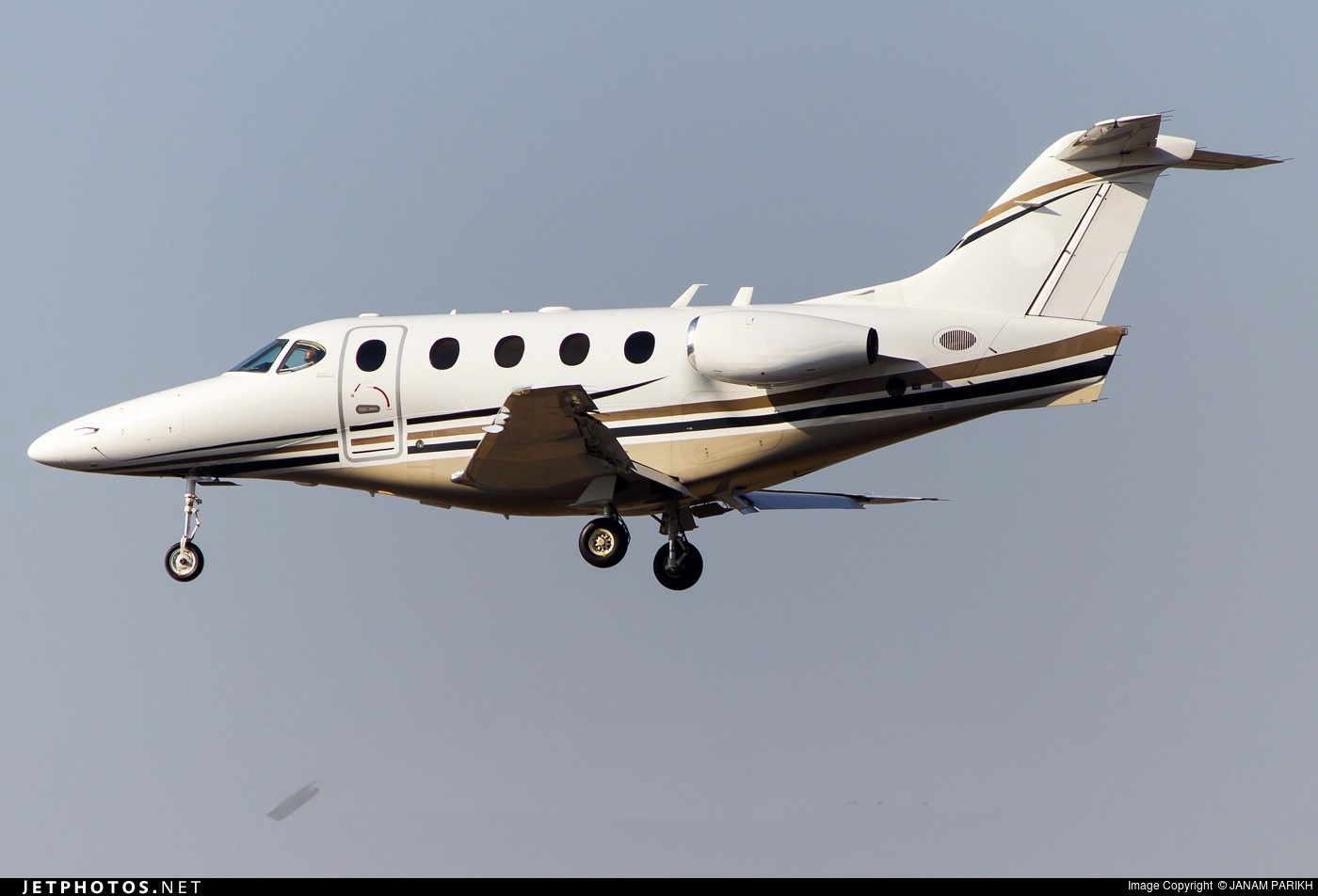
- Exterior: Refurbished by Textron Aviation in 2005; colors: Desoto white with black metallic, camel & dune stripes.
About this Model
Overview
The Beechcraft Premier I is a light business jet designed around fast regional and short cross-country travel with a relatively tall cabin compared with many contemporaries. It targets owner-operators and small teams that value jet speed and altitude capability without moving into the higher operating footprint of midsize aircraft. Typical use cases include day trips between regional business centers, two- to four-passenger legs with bags, and occasional longer segments with a fuel stop depending on winds and payload.
Mission Fit
The Premier I fits missions where time savings from jet cruise and the ability to top weather matter more than maximizing cabin volume. It works well for point-to-point legs in the roughly 300–1,000 nm range with comfortable reserves; longer missions are feasible but become more sensitive to payload, winds, and routing. If your typical flights involve full seats, heavy baggage, or routinely pushing range limits, larger light jets or small midsize jets tend to be a better match.
Cabin
The cabin is notable in the light-jet segment for its height and generally comfortable seating geometry, supporting productive travel for a small group. Expect a classic light-jet environment: compact galley provisions, an aft lavatory arrangement, and limited baggage accessibility in flight depending on configuration. Cabin comfort is strongest when passenger count is modest and baggage is managed to stay within weight-and-balance constraints.