

Specifications
Broker
Aircraft Details
- Avionics: Collins Proline 21 EFIS with E-Charts, Dual FMS 3000, TCAS II (7.1), EGPWS Mark V, CVR, XM-Weather.
- Engines: 2 x Williams FJ44-2A engines, TBO interval 5,000 hours, FADEC controlled, fully enrolled on Williams TAP Engine Program.
- Interior: "Global Interior" package, 6 passenger executive seating (4 swivel club seats, 2 single forward-facing seats), beige leather, high gloss wood laminate, two executive tables, flushing toilet with sliding door, air conditioning, cabin passenger flight data screen.
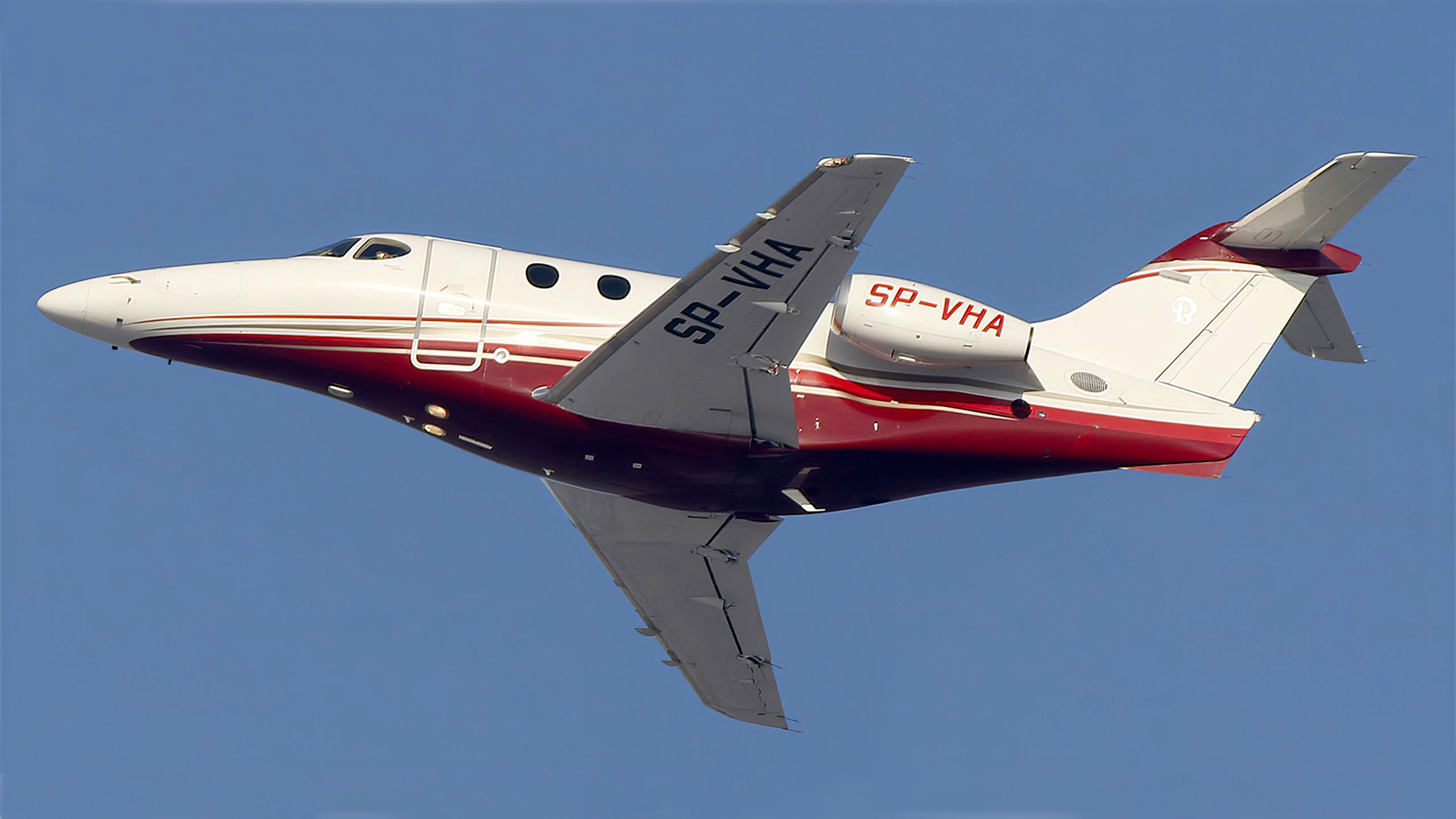
- Exterior: Matterhorn white with light and dark red and gold waves.
- Additional Equipment: 77 cubic foot oxygen, fire detector, anti-skid, VIP entry steps.
- Maintenance: Maintained under Williams TAP Engine Program, CAMP maintenance tracking, inspections done by Beechcraft Augsburg (AAS).
- Approvals: RVSM, MNPS, ADS-B Out, WAAS.
- Entertainment: Cabin passenger flight data screen, refreshment cabinet with hot coffee and water container, ice drawer, and trash container.
About this Model
Overview
The Beechcraft Premier IA is a single-pilot-capable light jet designed around efficient point-to-point trips and operation into many regional airports. It sits between entry-level very light jets and larger light jets, emphasizing a comfortable cabin cross-section for its class while keeping operating complexity closer to the light-jet end of the spectrum. The “IA” update is commonly associated with avionics and systems improvements over early Premier I configurations (exact fit varies by serial number and retrofit history).
Mission Fit
This model tends to fit missions where speed and altitude capability provide clear time savings over turboprops, but where typical stage lengths and passenger counts do not justify a larger cabin class. It is generally best used for efficient, repeatable day-to-day routing rather than as a dedicated long-range, full-load aircraft.
Cabin
Cabin comfort is a key differentiator for the type: the cross-section supports a more upright seating feel than some peers, which can improve perceived space on flights of one to two hours. Expect a typical light-jet layout with a forward club seating group and an aft area that may be configured for an enclosed lavatory, depending on aircraft configuration. Storage and baggage access are adequate for light-jet missions but should be evaluated against your typical passenger/baggage mix.