

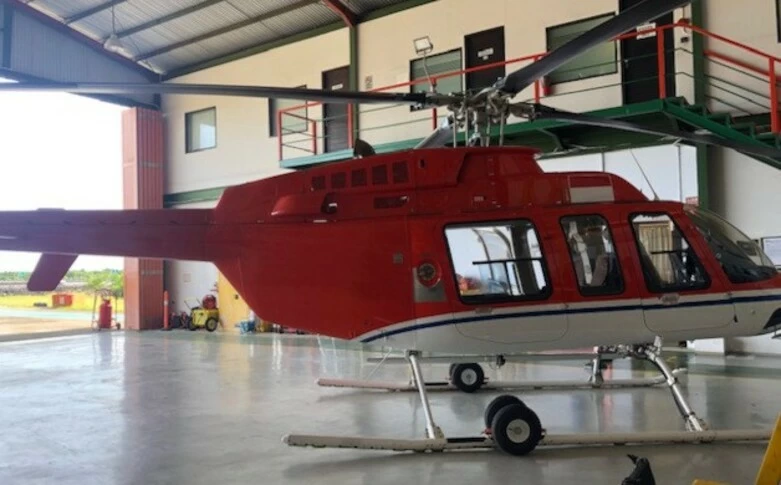
Specifications
Aircraft Details
- Utility configuration
- Avionics:
- Audio Controller: NAT AMS 44
- HF Radio: ICOM IC-F7000
- FM Transceiver: Technisonic TFM 138B
- Transponder: Bendix King KT-76A
- VHF Comm: Bendix King KY196
- Satellite Communication: Iridium 9555 with Flight Cell
- ELT: 406
- Satellite Tracking: Spidertrack S6
- Intercom System: 5-place
- Interior:
- Six (6) passenger seats
- Cabin floor protectors
- Litter kit provisions
- Additional equipment:
- Cargo hook with loadcell
- Jungle survival kit
- Concorde battery
- Sliding windows
- Folding maintenance step
- Baggage door retention strap
- Apical float with raft
- Avionics slant console
- First aid kit
- Cargo mirror
- Hydraulic door openers
- Inlet barrier filter
- Quick-release door pin
- Preflight step
About this Model
Overview
The Bell 407 is a five-place (plus pilot) single-engine light helicopter commonly selected for mixed utility work where speed, hover performance, and straightforward line maintenance matter. It pairs a 4-blade main rotor with a proven turbine powerplant, aiming for predictable handling and good ride quality across a broad range of weights and loading. Typical buyers consider it for business and public-use roles that need quick point-to-point travel, external-load flexibility (as equipped), and access to confined or unimproved landing areas.
Mission Fit
In day-to-day use, the 407 tends to fit operators who want a single-engine platform that can cover passenger movement, light utility, and special-mission profiles with one airframe. It is often used for corporate shuttle, EMS support roles in regions where single-engine is acceptable, public safety, and utility work. If your operating policy, insurance, or customer requirements demand twin-engine capability for overwater, IFR, or critical passenger missions, a twin may align better.
Cabin
The 407’s cabin is designed around easy access and mission flexibility rather than a luxury layout. Large doors and a flat floor support quick loading for passengers or equipment, and typical seating can be configured to balance comfort with payload. Noise and vibration levels are generally acceptable for the class, but the experience will depend heavily on interior specification, soundproofing options, and installed mission equipment.