

Specifications
Aircraft Details
- Avionics: 2024 Garmin upgrades, Genesys VFR Autopilot, dual controls with beep trims, Garmin G500H TXI, Garmin GTN 750 XI, Garmin GTR225B (2nd comm radio), Garmin GTX 345R (remote transponder), Garmin GMA 35C (remote audio), Garmin fuel management system, Garmin GSU 75H ADAHRS unit, Garmin GMU 44 magnetometer, Garmin GTP 59 OAT probe, Garmin GSB 15 USB Type A & C, Garmin area760 portable GPS.
- Engine: Rolls-Royce 250-C47B.
- Additional Equipment: Air conditioner, bleed air heater, auxiliary fuel tank, inlet barrier filter system, wire striker kit, rotor brake, blade folding kit, snow deflector and pads, pneumatic door openers, cargo hook provisions, high skid with Flitestep, baggage floor protector, pre-flight step handle kit, folding maintenance step kit, cabin floor protectors, baggage space maker, side window latch kit, locking fuel cap, heliporter with 24V GPU plug, hydraulic lift handling wheels, intake and exhaust covers, blade tie down.
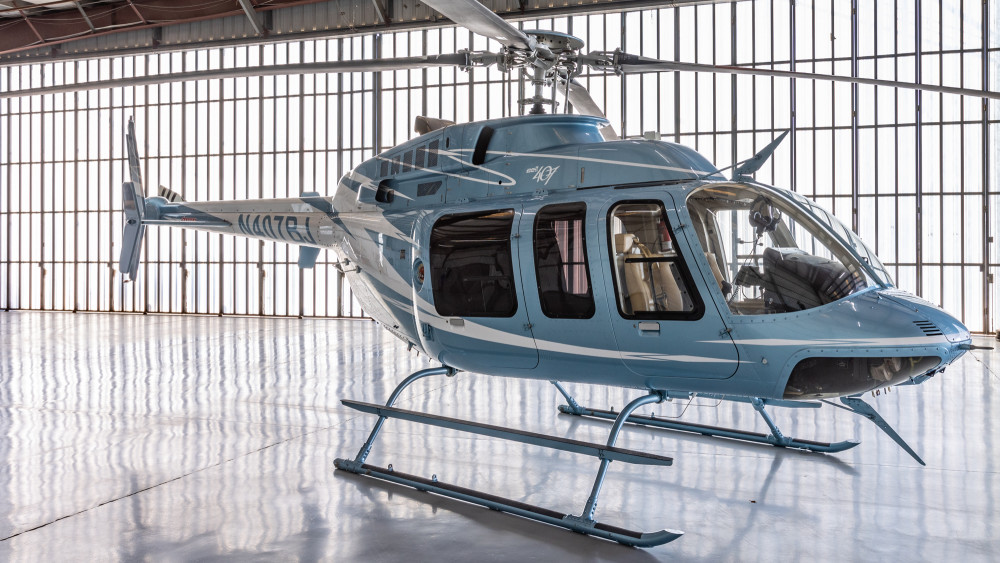
- Interior: Corporate configuration, excellent condition.
- Exterior: Sterling blue and white stripes.
About this Model
Overview
The Bell 407 is a five-place (plus pilot) single-engine light helicopter commonly selected for mixed utility work where speed, hover performance, and straightforward line maintenance matter. It pairs a 4-blade main rotor with a proven turbine powerplant, aiming for predictable handling and good ride quality across a broad range of weights and loading. Typical buyers consider it for business and public-use roles that need quick point-to-point travel, external-load flexibility (as equipped), and access to confined or unimproved landing areas.
Mission Fit
In day-to-day use, the 407 tends to fit operators who want a single-engine platform that can cover passenger movement, light utility, and special-mission profiles with one airframe. It is often used for corporate shuttle, EMS support roles in regions where single-engine is acceptable, public safety, and utility work. If your operating policy, insurance, or customer requirements demand twin-engine capability for overwater, IFR, or critical passenger missions, a twin may align better.
Cabin
The 407’s cabin is designed around easy access and mission flexibility rather than a luxury layout. Large doors and a flat floor support quick loading for passengers or equipment, and typical seating can be configured to balance comfort with payload. Noise and vibration levels are generally acceptable for the class, but the experience will depend heavily on interior specification, soundproofing options, and installed mission equipment.