

Specifications
Broker
Aircraft Details
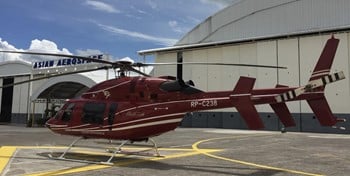
- Model: BELL 427
- Condition: Used
- Engine: Pratt & Whitney Canada PW207D x2 (On P&WC ESP Gold)
- Cabin Layout: 2 Pilot + 6 Passenger VIP Configuration
- Interior: Marlboro Red Leather with Off-white Accents
- Exterior: Carmine Red with White Stripes
- Equipment:
- Four Main Rotor Blades
- Air Conditioning
- Emergency Life Vests
- Sliding Windows
- Avionics:
- King KX-155A
- King KR-196A
- King KMA-24H-71
- King KR-87
- King KI-227
- King KT-76C
- King KLN-90B
- King KI-203
- King KG-102A
- King KI-525A
- Artex C406-1
- Aircraft Location: Pasay City, National Capital Region, The Philippines
- Total Time Since New: 1,202 hours
About this Model
Overview
The Bell 427 is a skid-gear, twin-engine light helicopter developed from the Bell 407/206L lineage, positioned for operators who want straightforward twin-engine capability with familiar Bell handling and support. Typical use cases include corporate and private transport, utility support, and EMS-style configurations where payload flexibility and stable low-speed handling matter more than long-range cruise.
Mission Fit
The 427 generally fits missions that live within a light-twin helicopter’s fuel and payload envelope: multiple daily hops, mixed passenger/cargo loads, and operations that value twin-engine safety margins and stable low-speed work. It is less suited to missions dominated by maximum-range legs, consistently heavy payloads, or hot/high conditions that push performance margins—areas where stepping up in class is usually more efficient.
Cabin
Cabin layout is typically configured for executive transport or missionized roles, with a relatively flat, usable cabin floor area for the class and wide access through large doors. Noise/vibration levels and comfort depend heavily on interior completion and rotor/drive-train condition; buyers should evaluate the specific aircraft’s insulation, seating, and mission equipment integration rather than assuming a uniform standard across the fleet.