

Specifications
Broker
Aircraft Details
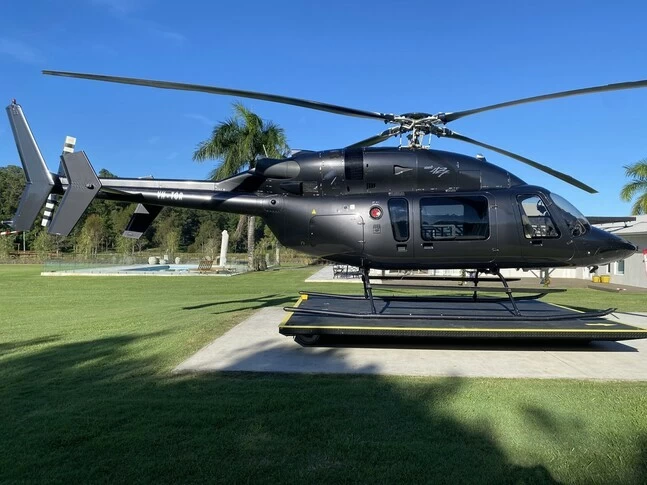
- Corporate configured with recent paint and interior.
- Airframe total time: 9,026 hours.
- Engine #1: 6,001 hours; Engine #2: 5,461 hours.
- Avionics: Garmin 430 NAV/COMM/GPS, Bendix King KY96A COMM, Garmin GTX330 transponder.
- Spider Tracks system, PS Engineering PAC24 audio panel, Kannard RC200 ELT with remote activation.
- Interior features gray leather seats and carpet.
- Exterior painted in dark metallic gray.
- High skid gear with flight steps.
- Dual controls and rotor brake.
- Air conditioning and bleed air heater.
- Automatic door openers and crew inertia reel.
- 5-point shoulder harnesses and cabin lap & shoulder harnesses.
- Cabin fire extinguisher and tinted cabin windows.
- Anti-collision and navigation lighting.
- Empty weight: 4,369 lbs (1,982 kg).
- Includes (2) Bose A30 noise-cancelling headsets.
About this Model
Overview
The Bell 427 is a skid-gear, twin-engine light helicopter developed from the Bell 407/206L lineage, positioned for operators who want straightforward twin-engine capability with familiar Bell handling and support. Typical use cases include corporate and private transport, utility support, and EMS-style configurations where payload flexibility and stable low-speed handling matter more than long-range cruise.
Mission Fit
The 427 generally fits missions that live within a light-twin helicopter’s fuel and payload envelope: multiple daily hops, mixed passenger/cargo loads, and operations that value twin-engine safety margins and stable low-speed work. It is less suited to missions dominated by maximum-range legs, consistently heavy payloads, or hot/high conditions that push performance margins—areas where stepping up in class is usually more efficient.
Cabin
Cabin layout is typically configured for executive transport or missionized roles, with a relatively flat, usable cabin floor area for the class and wide access through large doors. Noise/vibration levels and comfort depend heavily on interior completion and rotor/drive-train condition; buyers should evaluate the specific aircraft’s insulation, seating, and mission equipment integration rather than assuming a uniform standard across the fleet.