

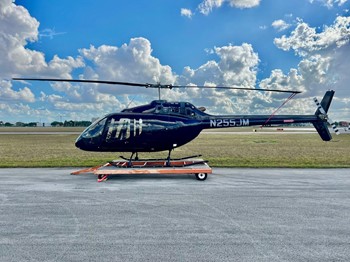
Specifications
Aircraft Details
- Model: BELL 505 JET RANGER X
- Condition: Used
- Flight Rules: IFR
- Location: Miami, Florida
- Ownership: Meticulously maintained by a single owner since new
- Damage History: None
- Service History: Serviced primarily by Bell Helicopter
- Airframe: Fully documented records
- Premium Upgrades:
- Dart emergency pop-out floats (not installed)
- Air conditioning
- Garmin Auto Pilot
- Avionics:
- GARMIN G1000 NXI
- ADS-B Equipped
- Garmin 3 Axis Auto Pilot
- Second VHF Comm - Garmin GTR 225B
- Emergency Locator Transmitter
- Electronic Standby Instruments
- Interior:
- Year: 2021
- Configuration: Passenger / Utility
- Seats: 5 (Premium black leather crew seats, folding utility passenger seats)
- Color Coordinated Carpet
- Exterior:
- Year Painted: 2021
- Color: Gloss Black Solid
- Inspection Status: Current on all maintenance, enrolled in CAMP/Cescom since new
- Airworthy: Yes
About this Model
Overview
The Bell 505 Jet Ranger X is a five-seat, single-turbine helicopter positioned for flight training, private ownership, and light commercial work. It combines a relatively simple airframe with a glass cockpit and features aimed at lowering workload in the traffic pattern and during confined-area operations. Compared with older two-blade trainers and legacy light singles, the 505’s emphasis is on contemporary avionics, predictable handling, and an interior that can be configured for passengers or light utility.
Mission Fit
Mission strength is in repeatable short legs, airwork, and day-to-day flying where ease of operation and cockpit workload matter. It is commonly selected where the aircraft will spend significant time in the training pattern, doing local flights, or supporting light commercial tasks. For consistently demanding hot-and-high, high gross-weight, or missionized roles, buyers often look to larger airframes with greater performance and payload headroom.
Cabin
The 505’s cabin is designed around visibility and accessibility. Large windows support training and observation, while wide doors simplify passenger entry and loading. Seating is typically arranged for one pilot plus up to four passengers, with configurations that can prioritize passenger comfort or practical utility depending on interior and equipment choices.