

Specifications
Broker
Aircraft Details
- Configuration: Corporate
- Engine Type: Safran Arrius 2R
- Engine Total Time: 400 hours
- Module 1 Time Remaining Until TBO: 2,599 hours
- Module 2 Time Remaining Until TBO: 2,599 hours
- Calendar Lifespan Limit: 15 years
- Component Times Remaining:
- TRB: 2,099 hours
- TGB: 5,599 hours
- MGB: 4,100 hours
- MRB: 3,600 hours
- TT Straps: 2,599 hours
- Avionics: Garmin G1000H NXI
- Traffic Advisory System: TCAS
- Helicopter Terrain Awareness and Warning System: HTAWS
- Transponder: GTX335R
- Integrated Avionics Unit: GIA 64H
- Additional Equipment:
- Dual Controls
- Cargo Hook Provisions
- Inlet Barrier Filter
- Blade Tie-Downs
- Ground Handling Wheels
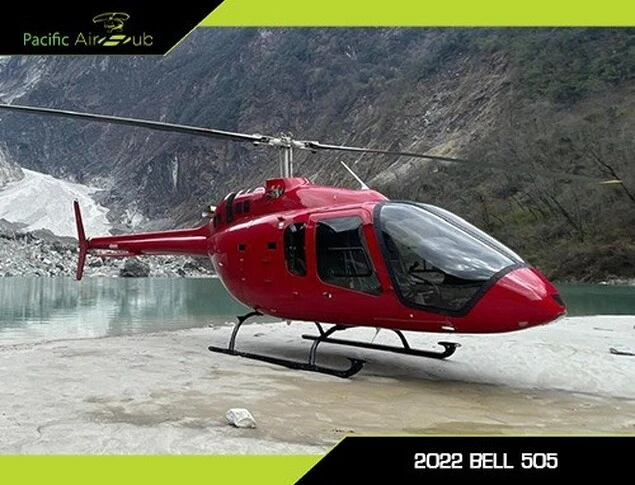
- Exterior Color: Rosso Red
- Interior: Black leather with coin dot flooring
- Crash-Resistant Fuel System: Yes
- Complete Logs: Yes
- Single Pilot Operation: Yes
- Emergency Locator Transmitter: Yes
- Sliding Windows on Both Doors: Yes
- Automatic Door Openers: Yes
About this Model
Overview
The Bell 505 Jet Ranger X is a five-seat, single-turbine helicopter positioned for flight training, private ownership, and light commercial work. It combines a relatively simple airframe with a glass cockpit and features aimed at lowering workload in the traffic pattern and during confined-area operations. Compared with older two-blade trainers and legacy light singles, the 505’s emphasis is on contemporary avionics, predictable handling, and an interior that can be configured for passengers or light utility.
Mission Fit
Mission strength is in repeatable short legs, airwork, and day-to-day flying where ease of operation and cockpit workload matter. It is commonly selected where the aircraft will spend significant time in the training pattern, doing local flights, or supporting light commercial tasks. For consistently demanding hot-and-high, high gross-weight, or missionized roles, buyers often look to larger airframes with greater performance and payload headroom.
Cabin
The 505’s cabin is designed around visibility and accessibility. Large windows support training and observation, while wide doors simplify passenger entry and loading. Seating is typically arranged for one pilot plus up to four passengers, with configurations that can prioritize passenger comfort or practical utility depending on interior and equipment choices.