

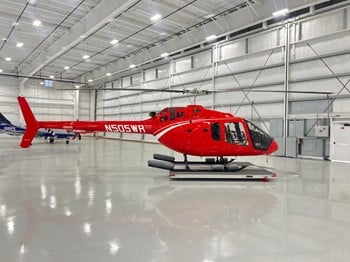
Specifications
Aircraft Details
- Model: BELL 505 JET RANGER X
- Condition: Used
- Flight Rules: IFR
- Location: Miami, Florida
- Max Takeoff Weight: 3,680 lb
- Basic Empty Weight: 2,564 lb
- Useful Load: 1,116 lb
- Fuel Capacity: 84.85 gal
- Complete Logs: Yes
- Engine Make/Model: SAFRAN
- Engine Time: 103 SNEW
- Avionics: GARMIN G1000 NXI
- ADS-B Equipped: Yes
- Auto Pilot: Yes
- Exterior Color: Fire Red Solid with White Lightning Stripe
- Interior: Premium Two Tone Tan Leather, no carpet
- Year Painted: 2023
- Year Interior: 2023
- Inspection Status: Airworthy
- Features:
- Dart emergency pop out floats
- Air conditioning with a third evaporator
- Dual pilot controls
- Automatic door openers for pilot and co-pilot doors
- Ground handling wheels
- Pulselite pulse landing lights
- Solar Advantage windows and windshield (dark grey)
- Emergency locator transmitter
About this Model
Overview
The Bell 505 Jet Ranger X is a five-seat, single-turbine helicopter positioned for flight training, private ownership, and light commercial work. It combines a relatively simple airframe with a glass cockpit and features aimed at lowering workload in the traffic pattern and during confined-area operations. Compared with older two-blade trainers and legacy light singles, the 505’s emphasis is on contemporary avionics, predictable handling, and an interior that can be configured for passengers or light utility.
Mission Fit
Mission strength is in repeatable short legs, airwork, and day-to-day flying where ease of operation and cockpit workload matter. It is commonly selected where the aircraft will spend significant time in the training pattern, doing local flights, or supporting light commercial tasks. For consistently demanding hot-and-high, high gross-weight, or missionized roles, buyers often look to larger airframes with greater performance and payload headroom.
Cabin
The 505’s cabin is designed around visibility and accessibility. Large windows support training and observation, while wide doors simplify passenger entry and loading. Seating is typically arranged for one pilot plus up to four passengers, with configurations that can prioritize passenger comfort or practical utility depending on interior and equipment choices.