

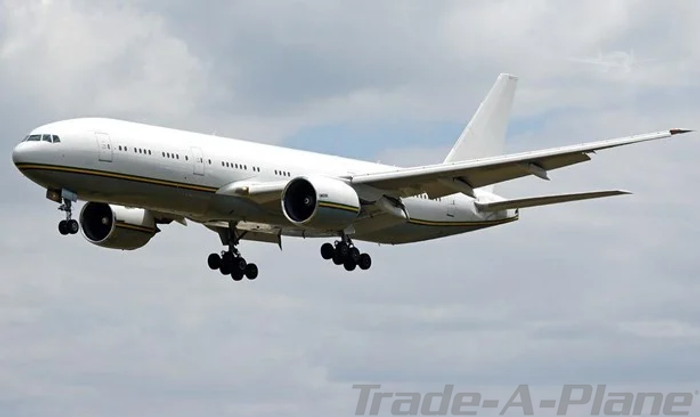
Specifications
AI Description
- Model: Boeing 777-200
- Full VIP interior completed in 2012
- 52 passenger capacity: 12 first class, 17 business class, 6 additional seats not for takeoff
- In-flight entertainment (IFE) system, SATCOM, and Swift Broadband Wi-Fi
- Range: 6,000 nautical miles
- Maximum ramp weight: 537,000 lb
- Maximum takeoff weight: 535,000 lb
- Maximum landing weight: 445,000 lb
- Maximum zero fuel weight: 420,000 lb
- Empty weight: 310,839 lb
- Engines:
- Engine 1: General Electric, 29,581 hours since new, 5,243 cycles
- Engine 2: General Electric, 22,790 hours since new, 4,527 cycles
- Auxiliary Power Unit (APU) time: 2,414 hours, 1,339 start cycles
- Avionics: Rockwell Collins ADC80H, Honeywell PFD, ADS-B equipped
- Interior features include master suite with king-size bed, ensuite bathroom, and multiple monitors
- Year painted: 2012
- Inspection status: Custom Low Utilization Maintenance Program (LUMP) with upcoming checks scheduled through 2036
About this Model
Overview
The BBJ 777X concept applies Boeing’s 777X airframe to head-of-state and corporate shuttle missions that prioritize intercontinental nonstop capability and widebody-level cabin space. Typical completions emphasize multi-zone layouts (work, dining, lounge, and private suites) and high payload margins for passengers, baggage, and installed interior amenities, while operating from major international airports rather than constrained fields.
Mission Fit
This model aligns with long-haul schedules, high-duty travel days, and missions that benefit from multiple dedicated cabin zones. It is less aligned with point-to-point access into secondary airports with runway or infrastructure limits, or with utilization patterns dominated by short legs.
Cabin
As a widebody platform, the BBJ 777X supports a high-comfort environment with generous aisle/circulation space and the ability to separate passengers by function and privacy level. Completions commonly include conference/dining areas, crew rest provisions for long sectors, and private stateroom-style spaces, with significant baggage and service-area volume to support extended-duration missions.