

Specifications
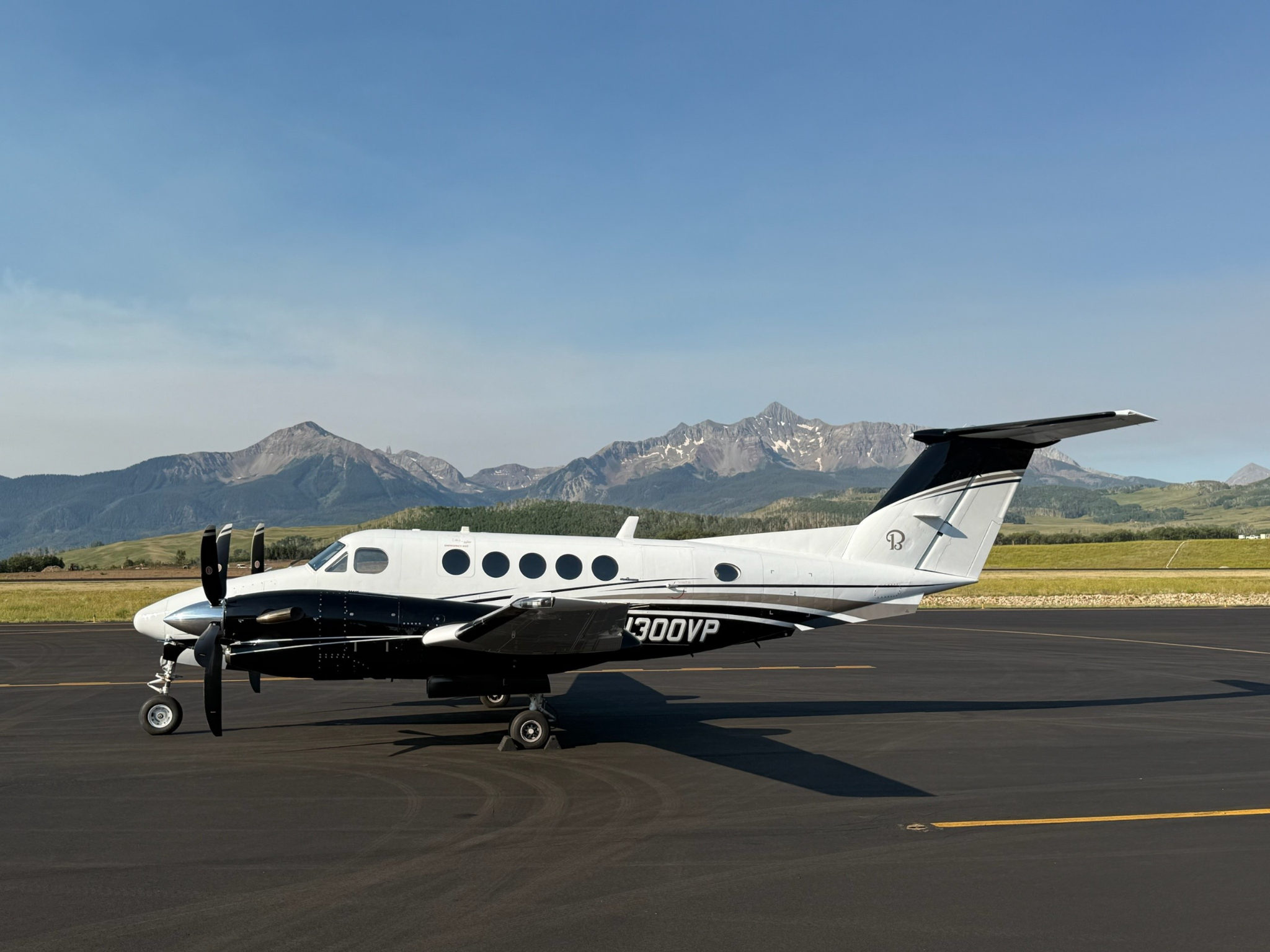
Aircraft Details
- Avionics: NEW Garmin G1000 NXi Suite
- Propellers: NEW Hartzell 5-Blade Swept Composite Props
- Interior: Completely NEW Executive Configuration by Elliott (2025), features club seating, interchangeable forward divan, premium upholstery, carpet, trim, cabinetry, LED cabin lighting, and USB-C ports
- Exterior: Painted in 2018 by Elliott, colors include Matterhorn White, Velvet Black, and Las Vegas Gold stripes
- Air Conditioning: Schiff Air Conditioning System
- Maintenance: Fresh Phase 1-4 Inspections completed December 2025; Landing Gear Overhauled July 2024; Wing Bolt Inspection July 2024
- Engine: Two Pratt & Whitney PT6A-60A engines, both with 5,593 hours since new, TBO of 3,600 hours
- Features: Equipped with Aft Lavatory, Flushing Lav, Synthetic Vision System, Raisbeck Mods, ADS-B Capable, Terrain Awareness & Warning System, and Traffic Collision Avoidance System
- Passenger Capacity: 9 passengers
- Notable Upgrades: Major capital upgrades completed, modern cockpit, premium cabin experience, lower airframe time than typical
About this Model
Overview
The Bombardier Challenger 300 is a super-midsize business jet designed to deliver transcontinental-capable missions with a cabin that prioritizes passenger comfort and baggage accessibility. It is commonly selected by flight departments that want large-cabin usability in a super-midsize footprint, balancing cruise efficiency, airport performance, and day-to-day dispatch reliability.
Mission Fit
In typical use the Challenger 300 fits nonstop missions that span a continent with reserves, while still being practical for shorter hops where turnaround time and airport access matter. The aircraft’s combination of speed, runway performance, and cabin volume tends to suit scheduled corporate shuttles, owner travel with guests, and multi-stop itineraries.
Cabin
The cabin is arranged to feel closer to a large-cabin environment than many midsize jets, with a flat floor, a wide aisle, and a baggage compartment that is often accessible in flight. Seating is typically organized to support both conversation and laptop work, and the environment is aimed at keeping fatigue down on longer legs through stable cabin comfort and predictable noise levels for the class.