

Specifications
Aircraft Details
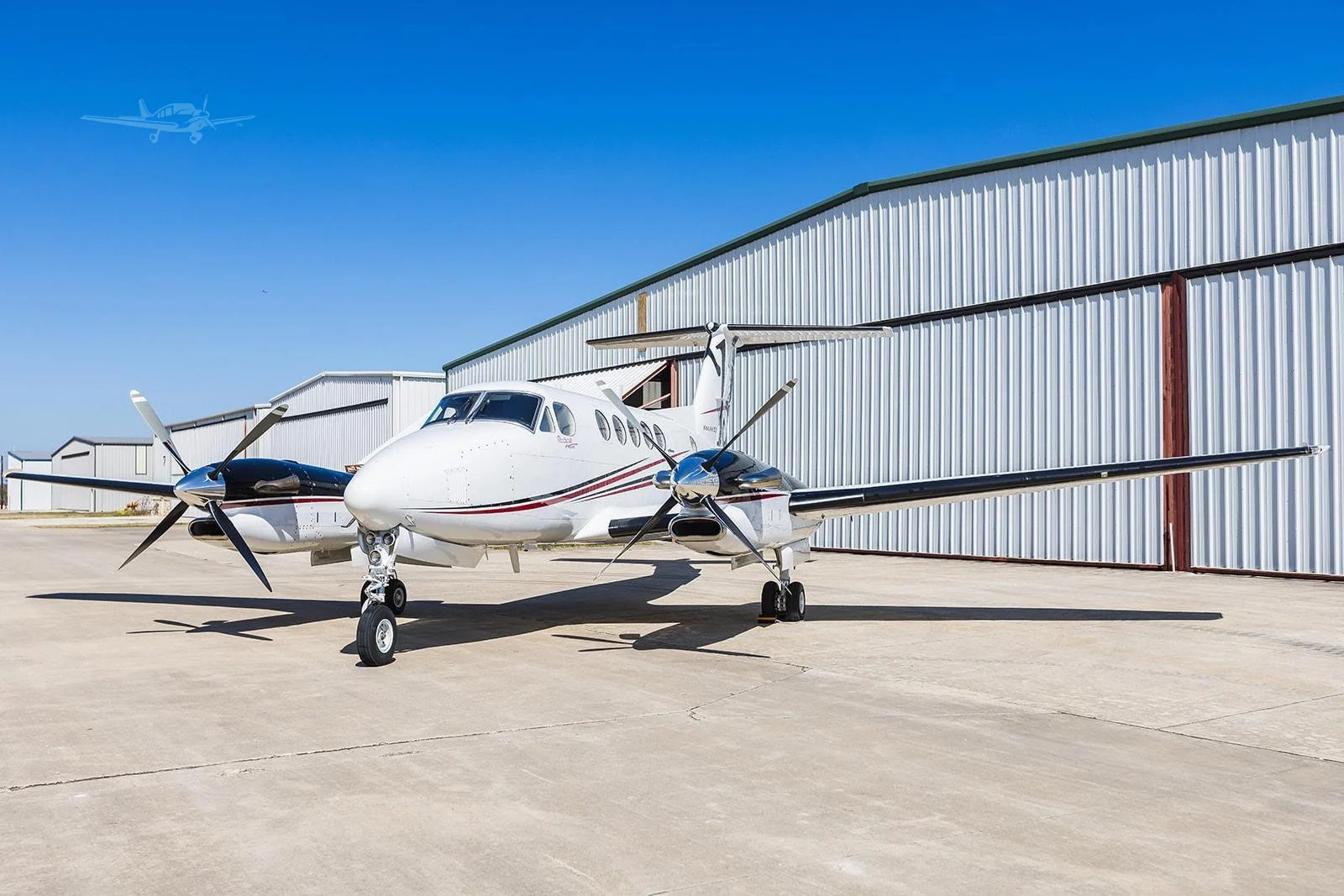
- Model: BEECHCRAFT KING AIR 300
- Type: Turboprop Aircraft
- Condition: Used
- Flight Rules: IFR
- Location: Greer, South Carolina
- Range: 1,500 NM
- Max Ramp Weight: 14,100 lb
- Max Takeoff Weight: 14,000 lb
- Max Landing Weight: 14,000 lb
- Fuel Capacity: 3,610 lb (538 gal)
- Complete Logs: Yes
- Landing Gear Overhaul: Yes
- Engines: 2 x PRATT & WHITNEY PT6A-60A
- Engine 1: 1,897.5 SMOH, TBO 3600, 7,704 cycles
- Engine 2: 1,995.6 SMOH, TBO 3600, 7,824 cycles
- Propellers: 4-blade HARTZELL
- Avionics: GARMIN G1000 NXI, ADS-B Equipped, WAAS, LPV, SVT
- Additional Equipment: Pressurized, FIKI, Oxygen System (77 cu ft)
- Interior: 10 seats, Executive configuration, Galley, Aft lavatory
- Exterior: Painted in 2017, Colors: Matterhorn white, black velvet metallic, deep red, Las Vegas gold
- Modifications: Dual aft body strakes, Ram air recovery, Enhanced performance leading edges
- Inspection Status: Airworthy, with recent maintenance items completed.
About this Model
Overview
The Bombardier Challenger 300 is a super-midsize business jet designed to deliver transcontinental-capable missions with a cabin that prioritizes passenger comfort and baggage accessibility. It is commonly selected by flight departments that want large-cabin usability in a super-midsize footprint, balancing cruise efficiency, airport performance, and day-to-day dispatch reliability.
Mission Fit
In typical use the Challenger 300 fits nonstop missions that span a continent with reserves, while still being practical for shorter hops where turnaround time and airport access matter. The aircraft’s combination of speed, runway performance, and cabin volume tends to suit scheduled corporate shuttles, owner travel with guests, and multi-stop itineraries.
Cabin
The cabin is arranged to feel closer to a large-cabin environment than many midsize jets, with a flat floor, a wide aisle, and a baggage compartment that is often accessible in flight. Seating is typically organized to support both conversation and laptop work, and the environment is aimed at keeping fatigue down on longer legs through stable cabin comfort and predictable noise levels for the class.