

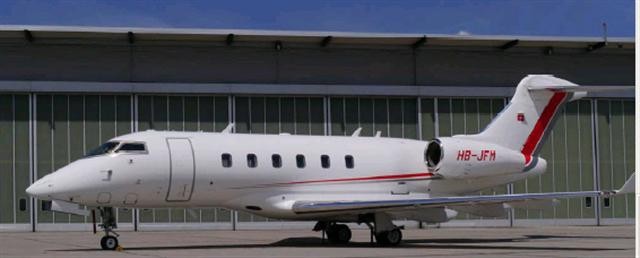
Specifications
Broker
Jet Aviation Brokers
John Carter
+1 (305) 555-0142
broker@example.com
Aircraft Details
- Exceptionally well-maintained, EASA-compliant aircraft operated and maintained by Bombardier service centers under CAMO oversight
- 7,500 landing inspection completed in 2024 at Bombardier Biggin Hill (major maintenance milestone)
- Both engines (Honeywell HTF7000) and APU enrolled on MSP maintenance program; APU time: 10,881 hours
- Total airframe time: 12,349 hours; total landings: 8,029
- Fully refurbished interior and new exterior paint in 2020 to Challenger 350 standards; Matterhorn white with walnut, Raptor Red, and platinum accents
- Nine-passenger executive configuration: four-place executive club seating (forward and aft), aft belted lavatory seat, pocket door separating galley and cabin, dual bulkhead monitors, Airshow 400
- Forward galley with enhanced materials
- Collins Pro Line 21 avionics suite: Dual FMS, EFIS (four tube AFD-5220), dual GPS, dual NAV, Honeywell Mark V EGPWS with RAAS, dual HF with SELCAL, dual transponders, color weather radar, lightning sensor system, CVR, FDR
- Winglets, maximum takeoff weight 38,850 lbs
- Airworthy and available for immediate sale
About this Model
Overview
The Bombardier Challenger 300 is a super-midsize business jet designed to deliver transcontinental-capable missions with a cabin that prioritizes passenger comfort and baggage accessibility. It is commonly selected by flight departments that want large-cabin usability in a super-midsize footprint, balancing cruise efficiency, airport performance, and day-to-day dispatch reliability.
Mission Fit
In typical use the Challenger 300 fits nonstop missions that span a continent with reserves, while still being practical for shorter hops where turnaround time and airport access matter. The aircraft’s combination of speed, runway performance, and cabin volume tends to suit scheduled corporate shuttles, owner travel with guests, and multi-stop itineraries.
Cabin
The cabin is arranged to feel closer to a large-cabin environment than many midsize jets, with a flat floor, a wide aisle, and a baggage compartment that is often accessible in flight. Seating is typically organized to support both conversation and laptop work, and the environment is aimed at keeping fatigue down on longer legs through stable cabin comfort and predictable noise levels for the class.