

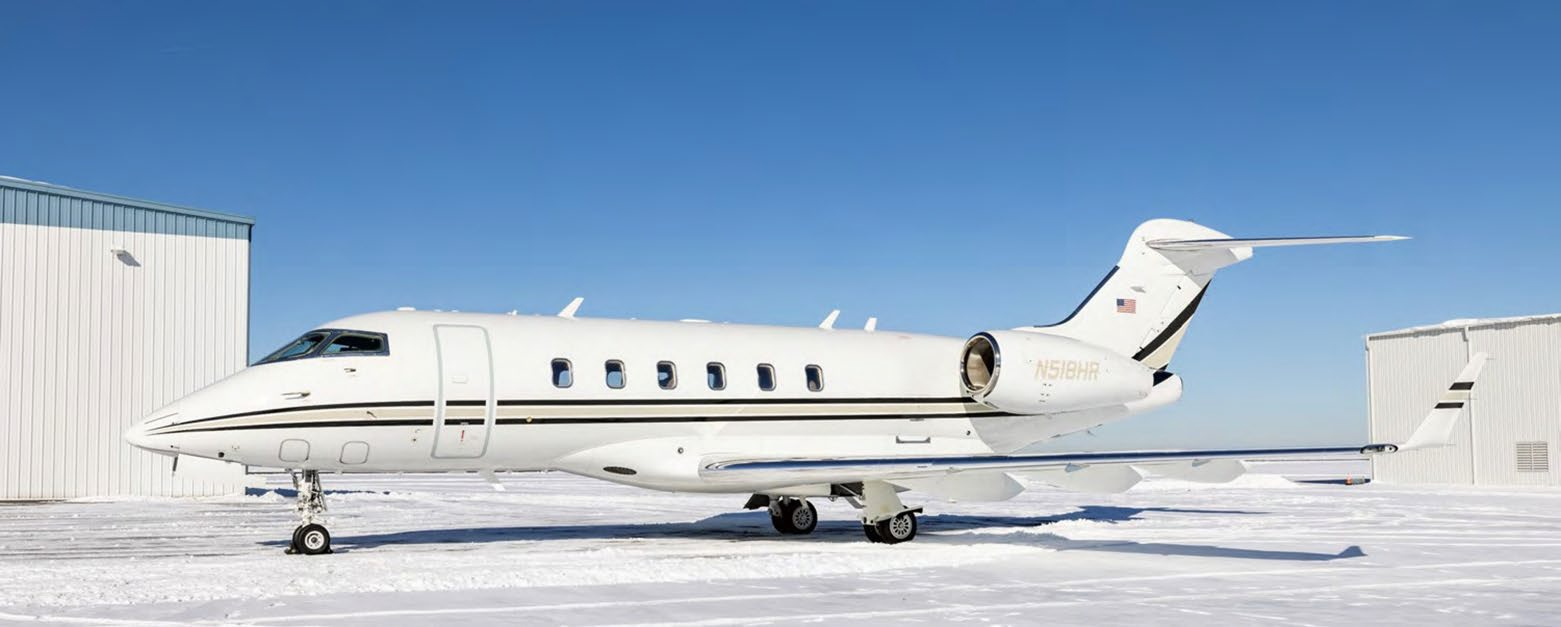
Specifications
Aircraft Details
- Configuration: 9 passengers, double club seating, aft belted lavatory, jump seat (not for takeoff and landing).
- Interior Features: Forward galley with coffee maker and microwave, NICE cabin management system, pullout tables.
- Exterior: Overall white base with black and tan striping.
- Avionics: Rockwell Collins Pro Line 21 advanced avionics, dual Collins IFIS with electronic charts, dual Collins GPS-4000S, XM weather on MFD, Collins MultiScan weather radar.
- Engines: Two HTF7000 engines, each with 2,419.5 hours and 1,619 cycles, enrolled in MSP Gold.
- APU: 1,475 hours, enrolled in MSP Gold.
- Maintenance Programs: JSSI Tip-to-Tail for airframe, MSP Gold for engines and APU.
- Upcoming Inspections: Scheduled for July 6, 2026, including 12, 24, 48, 96, and 192-month inspections.
- Connectivity: Starlink Wi-Fi and ATG-4000 Wi-Fi internet.
- Safety Features: Collins TAS-5000 TAWS, TCAS II, dual Collins transponders, L3 cockpit voice and flight data recorders.
About this Model
Overview
The Bombardier Challenger 300 is a super-midsize business jet designed to deliver transcontinental-capable missions with a cabin that prioritizes passenger comfort and baggage accessibility. It is commonly selected by flight departments that want large-cabin usability in a super-midsize footprint, balancing cruise efficiency, airport performance, and day-to-day dispatch reliability.
Mission Fit
In typical use the Challenger 300 fits nonstop missions that span a continent with reserves, while still being practical for shorter hops where turnaround time and airport access matter. The aircraft’s combination of speed, runway performance, and cabin volume tends to suit scheduled corporate shuttles, owner travel with guests, and multi-stop itineraries.
Cabin
The cabin is arranged to feel closer to a large-cabin environment than many midsize jets, with a flat floor, a wide aisle, and a baggage compartment that is often accessible in flight. Seating is typically organized to support both conversation and laptop work, and the environment is aimed at keeping fatigue down on longer legs through stable cabin comfort and predictable noise levels for the class.