

Specifications
Broker
Jet Aviation Brokers
John Carter
+1 (305) 555-0142
broker@example.com
Aircraft Details
- Maintenance: Maintained under FAR Part 91; certifications include MNPS, RNP-1, RNP-10, RNP-5, RVSM; left and right engine overhauls due; APU hot section inspection required; landing gear overhaul due by September 15, 2025.
- Additional Equipment: Aviation Partners blended winglets; Branson aft fuel modification; thrust reversers.
- Engine: Model ALF-502L-2C; on-condition TBO; two engines with TBO of 4000 hours.
- Avionics: Equipped with Collins ADF-60A, Sperry SPZ-600 autopilot, Collins Pro Line II package, dual Collins VHF-22C radios, Fairchild A100 CVR, dual Collins DME-42, and more.
- Features: Equipped with 8.33 channel spacing, aft lavatory, externally-serviceable lav, high-speed data/Wi-Fi, RVSM, winglets, SATCOM, ADS-B capability, terrain awareness & warning system, and traffic collision avoidance system.
- Interior: Executive configuration for 12 passengers; dual berthable couches; 6-foot galley with microwave and oven; Airshow 400 entertainment system; externally-serviceable aft lavatory.
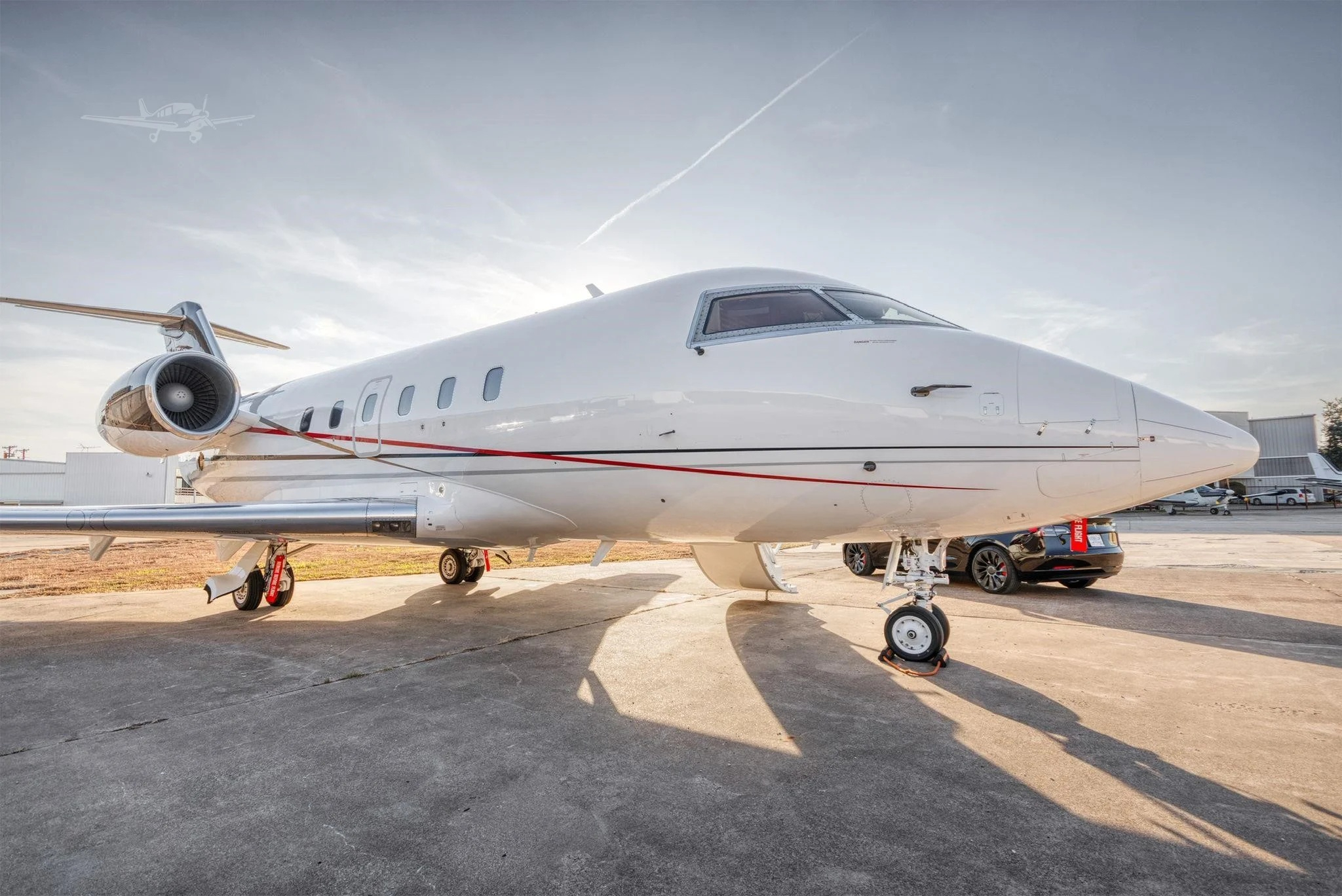
- Exterior: White with black, gold, and red stripes; good condition as of September 15, 2025; painted by King Aerospace.
About this Model
Overview
The Challenger 600 series (including early CL-600 variants) established a wide-cabin layout in the business-jet market, pairing a stand-up style cabin cross-section with intercontinental-leaning range and a relatively simple, analog-era cockpit philosophy. For buyers today, it typically appeals to missions where cabin volume and a true private-jet environment matter more than the latest avionics, lowest fuel burn, or short-field flexibility.
Mission Fit
In practical use, the Challenger 600 is most compelling when flown as a true large-cabin platform—moving 6–10 passengers with luggage, with the ability to stay airborne for long legs depending on variant, weight, winds, and reserves. It is less well-suited to shuttle-style utilization with many daily sectors, where cycle-driven maintenance and older-system reliability planning can become more burdensome.
Cabin
The defining attribute is a wide cabin cross-section that supports a conventional double-club seating environment, broader aisles, and a sense of space that smaller jets cannot replicate. Cabin appointments vary widely by refurbishment history; many aircraft have undergone interior updates that can meaningfully change perceived noise, lighting, connectivity, and galley functionality. Expect a traditional executive layout with an enclosed lavatory, forward galley area, and substantial baggage volume relative to midsize aircraft.