

Specifications
Broker
Aircraft Details
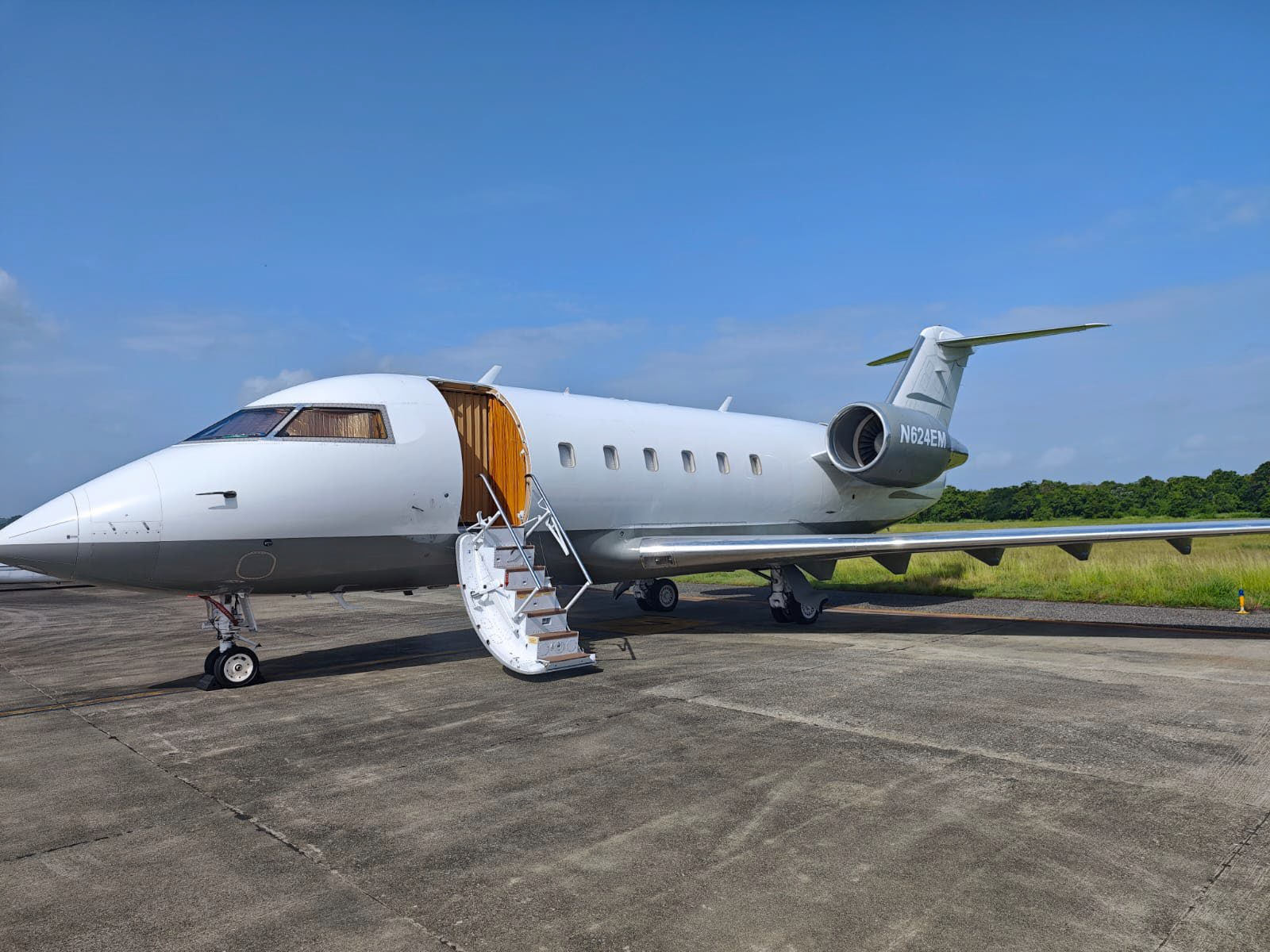
- Interior: Luxurious, refurbished in January 2005, new carpet in 2015, nine-passenger configuration, forward club seating, aft right-hand 4-place divan, two facing seats, full aft lavatory, forward galley with hot/cold water, microwave, coffee maker, and warming oven.
- Exterior: Matterhorn White with Gray, painted by Midcoast Aviation in October 2003, gray lower painted in 2015.
- Engines: Two General Electric CF34-3A engines; left engine has 11,664 hours and 8,508 cycles; right engine has 11,564 hours and 8,329 cycles; JSSI engine maintenance program.
- Auxiliary Power Unit: Honeywell GTCP 36-150(CL), 4,939 hours since new.
- Avionics: Equipped with Sperry EDZ-800 EFIS, Universal MFD-640, dual Collins VHF-22D comms, dual Collins VIR-32 navs, dual Collins DME-42, dual Collins ADF-60A, dual Collins TDR-94D transponders, and more.
- Additional Equipment: Meets RNP-10, RVSM, and MNPS requirements; equipped with SATCOM, TAWS, and TCAS II.
- Entertainment: Airshow 400, forward and aft 20-inch monitors, CD player with 6-disc changer and DVD player.
About this Model
Overview
The Challenger 601-3A is a development of the original Challenger concept aimed at delivering a wide, comfortable cabin and airline-style systems in a business-jet package. In buyer terms, it typically appeals to operators who value cabin comfort, baggage volume, and stable long-range cruise over the latest avionics integrations or the lowest fuel burn seen in newer designs.
Mission Fit
Most 601-3A missions center on comfortable point-to-point travel with a true large-cabin feel, often with a small group and room to work en route. It can cover long stage lengths, but real-world payload/range performance is sensitive to interior weight, reserves, and hot/high conditions—so the best use case is planned long legs with realistic passenger and baggage assumptions rather than maximum-range marketing scenarios.
Cabin
The 601-3A’s defining trait is cabin cross-section: a wide aisle and seating that tends to feel less confining than midsize aircraft. Typical interiors support club seating with additional chairs or a divan, and most configurations provide an enclosed aft lavatory. The cabin supports productive travel—space for laptops, documents, and carry-ons—while the baggage areas (including external baggage) are generally helpful for longer trips.