

Specifications
Aircraft Details
- Model: Challenger 601-3A/ER
- Condition: Used
- Engine Type: General Electric CF34-3A2
- Engine 1 Time: 8,179 hours
- Engine 2 Time: 8,087 hours
- Auxiliary Power Unit (APU) Time: 5,284.2 hours
- Avionics:
- Dual Collins ADF-462
- Honeywell DFZ-800 Autopilot
- Dual Collins VHF-22B Communication Radios
- Honeywell EDZ-815 5-Tube EFIS
- Dual Honeywell NZ-2000 FMS
- Honeywell TCAS-II
- Honeywell Primus 870 Weather Radar
- Features:
- Aft Lavatory
- Cockpit Voice Recorder
- Flight Data Recorder
- Forward Galley
- Traffic Collision Avoidance System
- ADS-B Capable
- RVSM Certified
- Terrain Awareness & Warning System
- Winglets
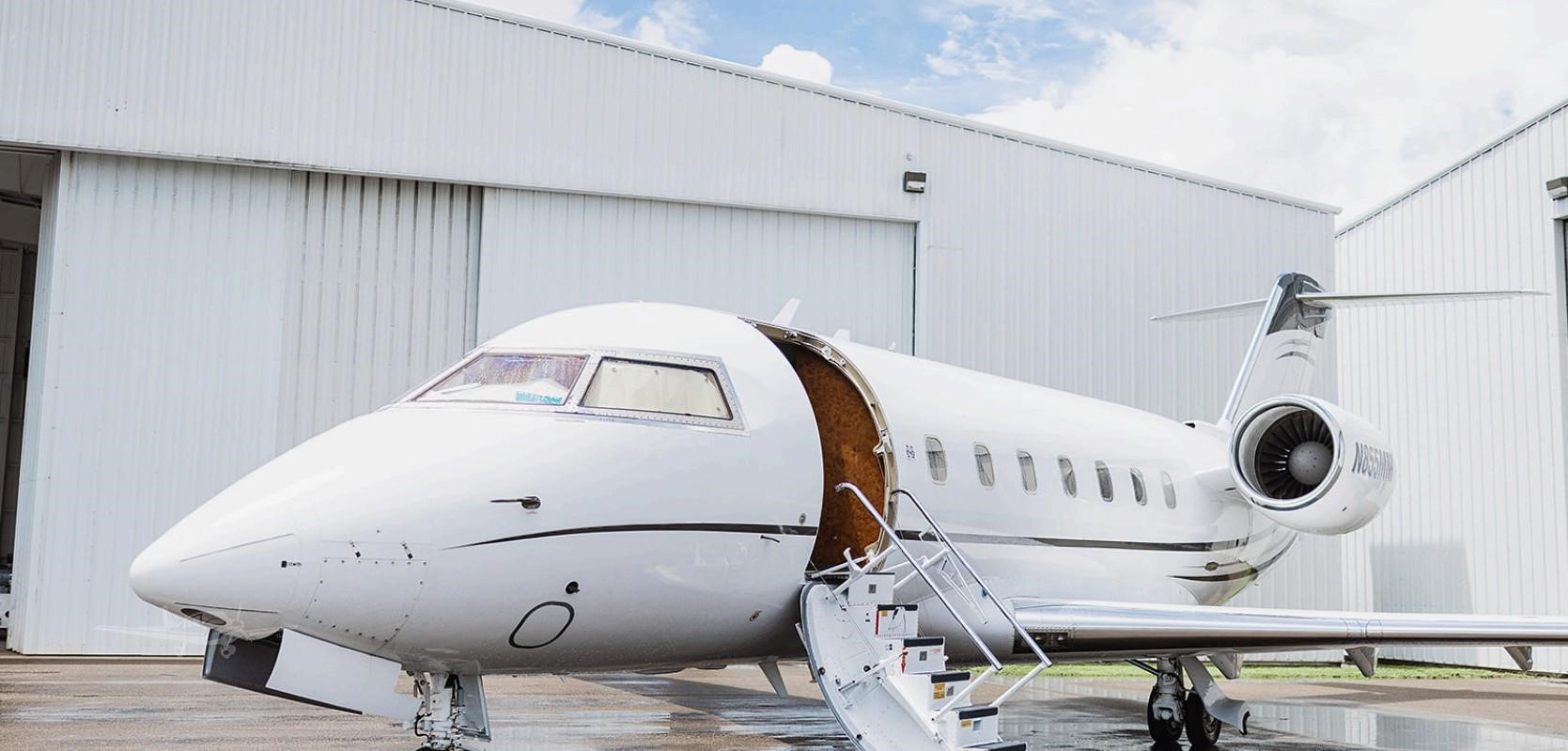
- Exterior: Excellent condition, painted in 2020, Matterhorn White with dark blue & silver stripes
- Interior: Executive configuration for 9 passengers, light beige leather with brown piping, refreshed in 2020.
About this Model
Overview
The Challenger 601-3A is a development of the original Challenger concept aimed at delivering a wide, comfortable cabin and airline-style systems in a business-jet package. In buyer terms, it typically appeals to operators who value cabin comfort, baggage volume, and stable long-range cruise over the latest avionics integrations or the lowest fuel burn seen in newer designs.
Mission Fit
Most 601-3A missions center on comfortable point-to-point travel with a true large-cabin feel, often with a small group and room to work en route. It can cover long stage lengths, but real-world payload/range performance is sensitive to interior weight, reserves, and hot/high conditions—so the best use case is planned long legs with realistic passenger and baggage assumptions rather than maximum-range marketing scenarios.
Cabin
The 601-3A’s defining trait is cabin cross-section: a wide aisle and seating that tends to feel less confining than midsize aircraft. Typical interiors support club seating with additional chairs or a divan, and most configurations provide an enclosed aft lavatory. The cabin supports productive travel—space for laptops, documents, and carry-ons—while the baggage areas (including external baggage) are generally helpful for longer trips.