

Specifications
Broker
Aircraft Details
• Total time: 7,654 hours; 3,687 landings
• Landing gear overhaul and 120-month inspection due 09/2025
• FAR Part 91 maintained; Bombardier MSG-3 airframe maintenance program
• EASA and RVSM certified
• Engines: CF34 (Engine 1: 7,654 hrs/4,087 cycles, Engine 2: 7,532 hrs/4,047 cycles)
• APU: Honeywell GTCP36-100(E), 5,229 hrs
• Avionics: Honeywell Primus 1000 suite, dual Collins ADF-462, dual Collins VHF-22D, Honeywell SPZ-600 autopilot, dual Honeywell FMZ-2000 FMS, triple Honeywell LASEREF II IRS, dual Collins KHF-950 w/SELCAL, SATCOM, Collins TCAS-II w/change 7.1, Honeywell Primus 870 weather radar, ADS-B Out
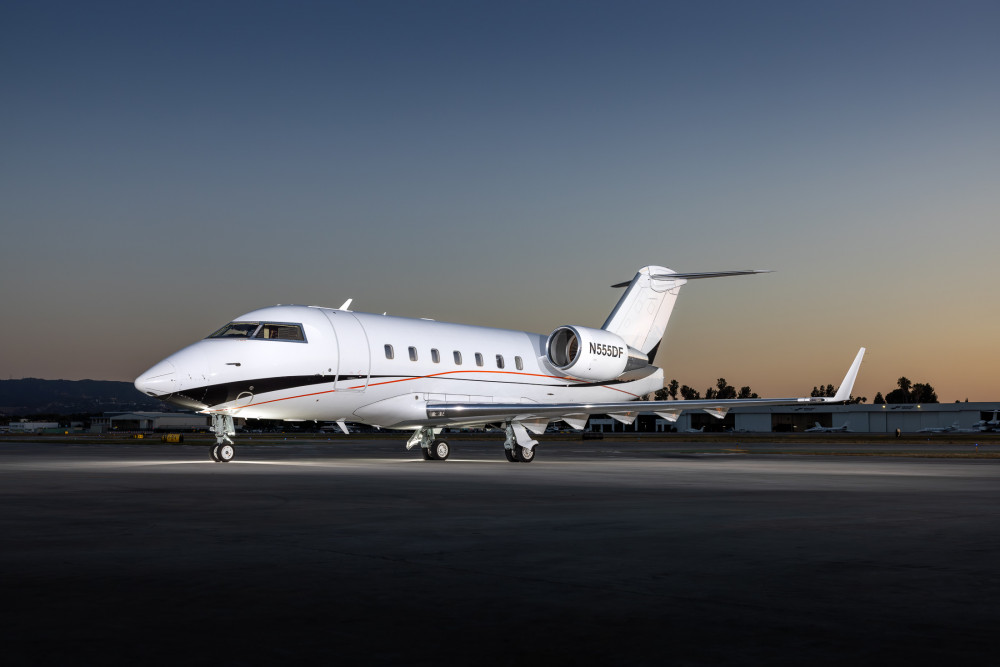
• Additional equipment: Winglets, extended-range fuel tanks, gross weight increase mod, electric cabin door, aft bay storage box, additional soundproofing, corrosion protection, spare main & nose wheel mount, oxygen mod
• Interior refurbished 2021: Executive/10 passengers, fireblocked, gray leather seating (6 individual seats & 4-place divan), light mahogany veneer cabinetry, Airshow 500, Bose sound, bulkhead monitor, high-speed internet, Aviator 300 Wi-Fi, SATCOM Direct router, private aft lav w/sink
• Exterior painted 2016, gloss white
About this Model
Overview
The Challenger 601-3A is a development of the original Challenger concept aimed at delivering a wide, comfortable cabin and airline-style systems in a business-jet package. In buyer terms, it typically appeals to operators who value cabin comfort, baggage volume, and stable long-range cruise over the latest avionics integrations or the lowest fuel burn seen in newer designs.
Mission Fit
Most 601-3A missions center on comfortable point-to-point travel with a true large-cabin feel, often with a small group and room to work en route. It can cover long stage lengths, but real-world payload/range performance is sensitive to interior weight, reserves, and hot/high conditions—so the best use case is planned long legs with realistic passenger and baggage assumptions rather than maximum-range marketing scenarios.
Cabin
The 601-3A’s defining trait is cabin cross-section: a wide aisle and seating that tends to feel less confining than midsize aircraft. Typical interiors support club seating with additional chairs or a divan, and most configurations provide an enclosed aft lavatory. The cabin supports productive travel—space for laptops, documents, and carry-ons—while the baggage areas (including external baggage) are generally helpful for longer trips.