

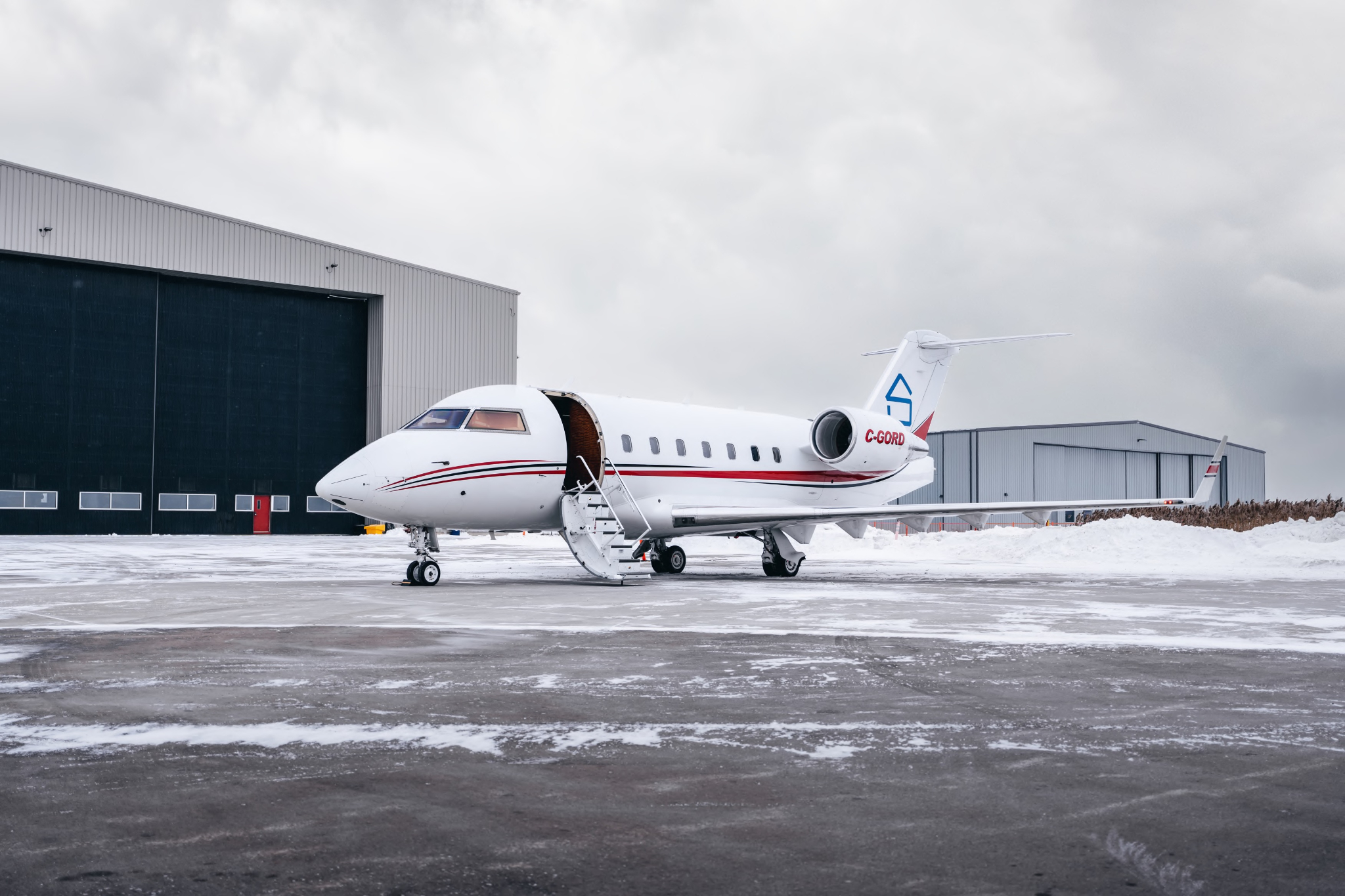
Specifications
Broker
Aircraft Details
• Aircraft located in Toronto, Ontario, Canada
• Total time: 7,740 hours, engines on condition (SB 72-0195, 3R Emulated)
• 10-passenger executive interior: Forward 4-place club, aft 3-place conference group opposite 2-place club, crew jumpseat
• Forward galley, enclosed aft lavatory with dressing area, Airshow Genesys in-flight information system
• Interior and exterior completed in 2003, exterior restriped in 2018
• Engines: CF34-3A2 (JSSI engine and APU program, -150 APU upgrade)
• 10-year inspection and landing gear overhaul in progress (as of May 2024)
• Avionics: Collins Pro Line II, dual Honeywell FMZ-2000 FMS, dual Honeywell LASEREF IRS, Honeywell Mark V EGPWS, Collins TCAS-II (change 7), Honeywell Primus 880 weather radar, SATCOM, and more
• Equipped with winglets, extended-range tail tank, GE engine upgrades, AVS-460 camera system, additional passenger windows, overwater equipment, life rafts, tow bar, aft fuselage stowage
• RNP-10 and RVSM certified, ADS-B capable, thrust reversers, auxiliary power unit, high-pressure turbine blades, power fuel crossfeed
• Engine and APU maintenance programs on JSSI
About this Model
Overview
The Challenger 601-3A is a development of the original Challenger concept aimed at delivering a wide, comfortable cabin and airline-style systems in a business-jet package. In buyer terms, it typically appeals to operators who value cabin comfort, baggage volume, and stable long-range cruise over the latest avionics integrations or the lowest fuel burn seen in newer designs.
Mission Fit
Most 601-3A missions center on comfortable point-to-point travel with a true large-cabin feel, often with a small group and room to work en route. It can cover long stage lengths, but real-world payload/range performance is sensitive to interior weight, reserves, and hot/high conditions—so the best use case is planned long legs with realistic passenger and baggage assumptions rather than maximum-range marketing scenarios.
Cabin
The 601-3A’s defining trait is cabin cross-section: a wide aisle and seating that tends to feel less confining than midsize aircraft. Typical interiors support club seating with additional chairs or a divan, and most configurations provide an enclosed aft lavatory. The cabin supports productive travel—space for laptops, documents, and carry-ons—while the baggage areas (including external baggage) are generally helpful for longer trips.